
How to find snowblower model number?
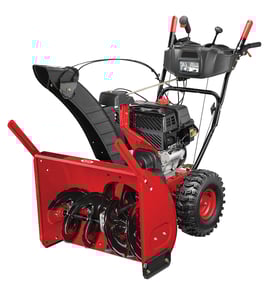
For a Craftsman snow blower, the model number is printed on the model and serial tag (a sticker or metal plate) attached to the machine. On model 536883211, it’s commonly found on the rear of the unit near the axle area, often between the wheels.
Where to look on the snowblower
Check these common tag locations first:
- Rear of the snowblower frame between the wheels
- Back of the housing near the axle or lower frame rail
- Side of the frame near the engine mounting area
- Under the handle panel or behind a small service cover
- Near the chute base on the upper housing (less common)
What the tag looks like (and what to write down)
The tag usually includes multiple identifiers. Use this quick guide so you capture the right one.
| What you see on the tag | What it’s used for | What to record |
|---|---|---|
| Model number | Matches the correct parts diagrams and parts list | The full model number (example: 536883211) |
| Serial number | Identifies production run details | Serial number (helpful, not always required) |
| Engine numbers | Used for engine-specific parts (carburetor, ignition, etc.) | Engine model and type/code if listed |
Why it matters
We use the model number to match the exact Craftsman parts breakdown for your snowblower, so you get the correct items the first time (for example, the correct chute, hardware, or control parts).
If the tag is missing or unreadable
Use these practical options:
- Look for an imprint in the paint where a sticker used to be (a flashlight at an angle helps)
- Check for a second tag on the frame or handle support
- If you’re replacing a visible assembly, match it by shape and mounting points (for example, compare your chute to the chute 762222MA)
- If you only need a basic start/run item, keep a spare ignition key on hand (see the key 583356MA)
Last updated: January 2026
How to find out how old a snowblower is?
To estimate the age of your Craftsman snow blower model 536883211, start by locating the product label and recording the serial number and any date/DOM (date of manufacture) printed on it. If no date is shown, the serial number format often contains a build date code.
Where to look for the build date
Check these common label locations on Craftsman snowblowers:
- Rear of the frame near the wheels
- Under the handle panel or control console area
- On the engine shroud (engine cover)
- Along the auger housing side panel
- Near the belt cover or frame plate
If the label is worn, gently clean it with a damp cloth; avoid solvents that can erase printing.
How to use the serial number (what to try)
Serial number formats vary by manufacturer and production run, but these steps usually work:
- Write down the full serial number exactly as shown (letters and numbers)
- Look for a 4 to 6 digit sequence that could represent a date
- Check for a separate “DOM” or “MFG DATE” field on the label
- Compare the serial number to the engine model information (engine makers sometimes date-stamp engines)
- Use the parts diagrams and part revisions as clues if the label is missing
Common date-code patterns you may see
| Pattern | Example | How to read it |
|---|---|---|
| MMDDYY | 011520 | Jan 15, 2020 |
| YYMMDD | 200115 | Jan 15, 2020 |
| WWYY (week/year) | 0321 | Week 3 of 2021 |
If the label is missing or unreadable
When you cannot recover the serial number, we use parts and configuration clues to narrow the era:
- Identify major assemblies (chute style, control layout, auger housing design)
- Match visible parts to the model’s parts list, such as the chute 762222MA
- Check whether hardware and controls match older or newer revisions
Why it matters
Knowing the approximate build date helps you choose the correct replacement parts (especially controls, chute components, and bearings), and it helps you plan maintenance like lubrication and belt replacement.
Last updated: January 2026
How long do snowblowers last?
A Craftsman snow blower like model 536883211 typically lasts 10 to 15 years with normal seasonal use and consistent maintenance. The biggest lifespan factors are off-season storage, oil and fuel care, and fixing wear items (belts, bearings, and fasteners) before they cause bigger damage.
What affects lifespan the most
- Maintenance frequency: annual oil change, spark plug checks, and lubrication
- Storage habits: dry storage and fuel stabilization during the off-season
- Snow conditions: heavy, wet snow and gravel driveways increase wear
- Operator habits: avoiding impacts and clearing jams safely
- Parts condition: worn bearings, loose hardware, and damaged chute components reduce reliability
Maintenance checklist that helps you reach 10 to 15 years
- Change engine oil at least once per season (or every 25 to 50 hours of use)
- Use fresh fuel; add stabilizer for storage and run the engine briefly to circulate it
- Inspect and tighten common hardware (bolts, lock nuts, washers) before each season
- Lubricate moving points (auger shaft, drive hex shaft, wheel hubs)
- Keep the chute and deflector moving freely and clear packed snow after use
Common “wear-out” items vs. “keep it” items
| Item type | What you’ll notice | Typical fix |
|---|---|---|
| Wear items | slipping drive, squealing, vibration, poor throwing | adjust, lubricate, replace worn parts |
| Long-life items | frame and major housings | clean, protect from rust, repair fasteners |
If your chute is cracked, binding, or not directing snow well, replacing it can restore performance without replacing the whole machine; the chute 762222MA is a common replacement part for this model.
Why it matters
A snowblower that is maintained and repaired early costs less over time, starts more reliably in cold weather, and throws snow farther with less strain on the engine and auger system.
For step-by-step upkeep that directly supports longer life, follow how to make your snowblower last longer.
Last updated: January 2026
What are the signs of a bad snow blower engine?
On a Craftsman snow blower model 536883211, a “bad engine” usually shows up as hard starting, stalling, surging, heavy smoke, loud knocking, or power loss under load. Many of these symptoms are caused by fuel, ignition, or airflow problems that are fixable before you consider major engine work.
Common symptoms (and what they usually mean)
- Won’t start or only starts with choke: stale fuel, clogged carburetor jets, restricted fuel flow
- Surging or hunting at idle: dirty carburetor, air leak, partially plugged main jet
- Stalls when you engage auger or hit deep snow: weak ignition, fuel starvation, governor issue, low compression
- Excessive smoke: oil overfill, oil tipped into cylinder during storage/transport, worn rings (blue smoke)
- Metallic knocking or grinding: internal wear (rod, crank, bearings) or loose external hardware
- Strong vibration/shaking: loose engine mounts, bent auger/impeller components, damaged shear area
Quick checks we recommend before calling the engine “bad”
- Fuel: drain old gas and refill with fresh fuel; clean the fuel cap vent if it is plugged.
- Spark: inspect the spark plug condition and gap; replace if fouled.
- Airflow: check for packed snow or debris restricting intake or cooling fins.
- Oil level: verify correct level (overfilled oil can smoke and run poorly).
- Load test: if it idles fine but dies in snow, suspect fuel delivery or ignition strength.
When it’s likely true engine wear
These signs point to internal problems that typically justify deeper repair or replacement:
| Symptom | What you notice | Typical next step |
|---|---|---|
| Low power even with fresh fuel | Bogging in light snow | Compression/leak-down test |
| Persistent knocking | Noise rises with RPM | Internal inspection |
| Heavy blue smoke continuously | Oil burning smell, oily plug | Check rings/valve guides |
| Repeated failures despite tune-up | Same symptoms return quickly | Evaluate engine replacement |
Why it matters
Catching fuel and ignition issues early prevents hard starting, plug fouling, and carburetor varnish. It also helps protect driveline parts because an engine that surges or stalls under load can stress belts, bearings, and controls.
Helpful DIY video
For a fast ignition check, use how to check a snowblower spark plug video.
Last updated: January 2026