 Owner’s manual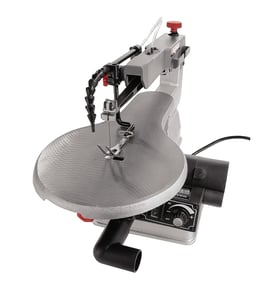

What do the numbers mean on scroll saw blades?
On a Dremel 1680 scroll saw, the blade number generally indicates how fine or aggressive the blade is: lower numbers are finer for thin material and tight detail work, while higher numbers are coarser for faster cutting in thicker stock. For blade types and sizes your saw accepts, use the 1680 owner's manual.
How blade numbers translate to real cutting performance
Most scroll saw blade numbering systems correlate to tooth size and teeth-per-inch (TPI):
- Lower blade numbers: finer teeth, higher TPI; smoother cuts and tighter curves
- Higher blade numbers: larger teeth, lower TPI; faster cuts and more sawdust, rougher edge
- Narrower blades: turn tighter radiuses (better for intricate patterns)
- Wider blades: track straighter in thicker wood but cannot turn as tightly
Blade selection rules we use for the Dremel 1680
The Dremel 1680 uses 5-inch pin-end or 5-inch plain-end blades. We choose blades using these practical rules from the manual:
- Keep at least 3 teeth in contact with the workpiece at all times
- Use very fine, narrow blades for thin wood (about 1/4 inch thick or less)
- For thicker wood, use wider blades with fewer TPI
- Feed thicker stock slowly; increase blade tension and avoid twisting the blade
- Replace blades often; typical sharp life is about 1/2 hour to 2 hours of cutting
Quick guide: fine vs. coarse blades
| If you are cutting… | Choose… | What you will notice |
|---|---|---|
| Thin wood, veneers, delicate fretwork | Lower-number, fine-tooth blade | Cleaner edge, slower feed rate |
| General scrolling in 1/4 to 3/4 inch wood | Mid-range blade | Balanced speed and control |
| Thicker wood or faster rough cutting | Higher-number, coarse-tooth blade | Faster cut, rougher finish |
Why it matters
Matching blade “number” (fineness) to material thickness prevents burning, wandering cuts, and premature blade breakage. It also helps you get accurate curves without forcing the workpiece.
If you need replacement blades or other parts for your Dremel 1680, we recommend starting with the model parts list, or searching by model number on Sears PartsDirect.
Last updated: February 2026
How thick of wood can a 16 scroll saw cut?
On the Dremel 1680 scroll saw, we cut wood up to 2 inches thick when the saw is set up correctly and you use the right blade and feed rate. For best control and blade life, we get the cleanest results on wood under 1 inch thick (see the owner's manual).
What “16-inch scroll saw” means vs. thickness
A “16-inch” scroll saw rating usually describes throat capacity (how far you can cut from the blade to the rear frame), not how thick the wood can be.
| Spec type | What it affects | What to expect on the Dremel 1680 |
|---|---|---|
| Throat size (16-inch class) | How wide a workpiece you can maneuver | Project size and reach, not thickness |
| Cutting capacity (thickness) | Maximum material thickness | Up to 2 inches in wood |
| Practical thickness | Cut quality and blade life | Best under 1 inch |
How to get clean cuts in thicker wood (1 to 2 inches)
When we cut thicker stock, technique matters as much as the saw.
- Feed the wood very slowly; forcing the cut flexes the blade and breaks it.
- Increase blade tension to match the blade type and thickness.
- Use a wider blade with fewer teeth per inch (TPI) for thicker wood.
- Keep at least 3 teeth in contact with the workpiece at all times.
- Avoid twisting the workpiece; side pressure makes the blade wander.
- Expect faster blade wear in plywood, hardwood, and thick stock.
Blade selection guidance (based on the Dremel 1680 manual)
This saw uses 5-inch pin-end or plain-end blades. Blade packaging typically lists the intended thickness range.
| Wood thickness | Blade style to prioritize | Why |
|---|---|---|
| Under 1/4 inch | Very fine, narrow blade | Tight detail cuts, less tear-out |
| 3/16 to 1 inch | General-purpose blade | Balanced speed and control |
| 3/8 to 2 inches | Wider blade, lower TPI | Better chip clearing and stability |
Why it matters
Cutting near the maximum thickness increases heat, blade deflection, and drift with the grain. Slowing your feed rate and matching the blade to the stock thickness gives straighter cuts, fewer broken blades, and better accuracy.
If you need blades or accessories for the Dremel 1680, we recommend searching by model number on Sears PartsDirect.
Last updated: February 2026
What size blade is a 1680 Dremel scroll saw?
The Dremel scroll saw model 1680 uses 5-inch scroll saw blades only, and it accepts both pin-end and plain-end blade styles. For best results, match the blade width and teeth-per-inch (TPI) to your material thickness and the tightness of the curves you need.
Blade size and what it means
On the Dremel 1680, “blade size” typically refers to blade length and blade type:
- Length: 5 inches
- Types: pin-end or plain-end
- Stroke: 3/4 inch (this affects cutting performance, not blade length)
For the exact blade requirements and blade-change steps, use the 1680 owner's manual.
Choosing the right blade for your cut
We recommend these practical guidelines when selecting a 5-inch blade:
- Use narrower blades for tight radius curves and detailed scrollwork.
- Use wider blades with fewer TPI for thicker wood and straighter cuts.
- Keep at least 3 teeth in contact with the workpiece while cutting.
- Expect blades to dull faster in plywood, hardwood, or when you push sideways on the blade.
- Replace the blade if it starts wandering, burning, or breaking frequently.
Quick reference table
| What you’re doing | Blade choice (still 5-inch) | Why it helps |
|---|---|---|
| Tight curves, intricate patterns | Plain-end, narrow | More control for detail work |
| General cutting in thicker stock | Wider blade, lower TPI | Clears sawdust, cuts straighter |
| Thin wood (about 1/4 inch or less) | Very fine, narrow | Reduces tear-out and overcut |
Why it matters
Using the correct 5-inch pin-end or plain-end blade helps the Dremel 1680 track accurately, reduces vibration, and improves cut quality. The wrong blade style or an overly aggressive blade choice is a common cause of rough cuts and broken blades.
For replacement parts and accessories by model number, start with the model parts list, or search by model on Sears PartsDirect.
Last updated: February 2026
Can you use a Dremel as a scroll saw?
Yes, but only if you use a Dremel tool that is designed to function as a scroll saw. The Dremel 1680 is a dedicated benchtop scroll saw; it uses 5-inch pin-end or plain-end blades and is intended for controlled scroll cutting (not handheld rotary cutting). See the 1680 owner's manual for blade types, setup, and safe operation.
What “using a Dremel as a scroll saw” really means
A handheld Dremel rotary tool is built for grinding, sanding, and cutting with rotary accessories. A scroll saw is a reciprocating blade saw designed for tight curves and detailed cuts.
Use a scroll saw (like the Dremel 1680) when you need:
- Tight-radius curves and intricate patterns
- Inside cuts (pierced work) with a fine blade
- Better control on thin stock and delicate work
What the Dremel 1680 is designed to do
From our Dremel 1680 documentation:
- It uses 5-inch blades in pin-end or plain-end styles.
- Best results are achieved cutting wood under 1 inch thick.
- Blades wear quickly in normal use (often about 1/2 hour to 2 hours of cutting), so keeping spare blades on hand is normal.
Blade selection basics (quick guide)
- Keep at least 3 teeth in contact with the workpiece.
- Use narrow, fine blades for thin wood and tight curves.
- Use wider blades with fewer teeth per inch for thicker wood.
| Task | Typical blade choice | Why it matters |
|---|---|---|
| Thin wood (about 1/4 inch or less) | Very fine, narrow blade | Cleaner detail cuts, tighter turns |
| General scrolling under 1 inch | Medium blade | Balance of speed and control |
| Thicker stock (over 1 inch) | Wider blade, slower feed | Reduces blade twisting and breakage |
Safety and setup that affect results
For safe, accurate cutting on the Dremel 1680:
- Turn the saw off and unplug it before changing blades or accessories
- Keep the access door closed before operation
- Set the quick release tension lever down before operating
- Wear ANSI Z87.1 safety goggles
Why it matters
Trying to “make” a rotary tool act like a scroll saw usually leads to rough cuts, poor control, and higher risk of kickback or broken accessories. Using the correct tool (a true scroll saw with the right blade tension and tooth count) gives cleaner curves and safer, more predictable results.
If you need replacement parts for the Dremel 1680, start with the parts list for model 1680, or search by model number on Sears PartsDirect.
Last updated: February 2026
Can you make straight cuts with a scroll saw?
Yes. You can make straight cuts with the Dremel 1680 scroll saw, but it takes careful setup and a steady feed because scroll saw blades tend to drift and can follow the wood grain. For long, perfectly straight cuts, other saw types are usually easier.
How to get straighter cuts on a Dremel 1680
- Set blade teeth to cut on the downstroke (teeth pointing down toward the table).
- Adjust blade tension correctly; higher tension reduces deflection.
- Use a wider blade when you want straighter tracking; narrow blades are for tight curves.
- Feed slowly and evenly; pushing too fast bends the blade and increases drift.
- Keep the work flat on the table and support large pieces at table height.
Blade and material guidance
The 1680 uses 5-inch pin-end or plain-end blades. For accuracy, keep at least three teeth in contact with the workpiece; thicker wood needs a slower feed and extra care to avoid twisting the blade.
| Cutting situation | Setup focus | Typical result |
|---|---|---|
| Thin wood (around 1/4 inch) | Narrow blade, controlled feed | Easy to steer, drift is manageable |
| General straight cuts | Wider blade, firm tension | Straighter tracking |
| Thick wood (over 1 inch) | Very slow feed, higher tension | More drift risk if forced |
Why it matters
Straight cuts go off-line when the blade flexes or follows grain. Proper blade direction, tension, and support keep the kerf consistent and reduce wandering.
For operating and setup details (blade direction, tension, and safe feeding), use the 1680 owner's manual. To find replacement blades and other parts by model number, use the parts list for this model or search on Sears PartsDirect.
Last updated: February 2026