Owner’s manual



How to tell the size of a Goodman furnace?
For your Goodman GMNT100-4B gas furnace, the “size” is typically the heating capacity (input in BTU/hr). The most accurate way to confirm it is to read the series and rating plate on the furnace cabinet and match it to the specifications in the owner's manual.
What “size” means for a furnace
Furnace size is usually discussed in BTU/hr, not tons (tons is commonly used for air conditioners and heat pumps). You may see:
- Input BTU/hr (gas burned)
- Output BTU/hr (heat delivered after efficiency losses)
- Airflow (CFM) and temperature rise ranges
Where to find the size on a Goodman GMNT100-4B
Check these common locations:
- The series and rating plate (often inside the blower door or on the cabinet side)
- The model/serial data sticker on the furnace
- The specification section in the owner's manual
Quick checks that help confirm you are reading the right number
Use these tips so you do not confuse capacity with other specs:
- Look for wording like “Input” or “BTU/hr”
- Do not use motor HP, voltage, or amp ratings as “size”
- If your home is at higher elevation, the effective input can be lower after derating
Altitude note (important)
For installations above 2,000 feet, the manual explains that furnaces are typically derated 4% per 1,000 feet above sea level and may require an orifice change. That means the rating plate input is the starting point, but the actual firing rate can be adjusted for altitude.
Common “size” terms at a glance
| Term you see | What it tells you | Where to look |
|---|---|---|
| Input (BTU/hr) | Gas input rating | Rating plate, manual |
| Output (BTU/hr) | Delivered heat | Manual/spec sheet |
| Temperature rise | Proper heating range | Manual |
Why it matters
Correct furnace sizing helps prevent short cycling, comfort problems, and overheating conditions that can trip safety limits. It also helps you choose the right replacement parts when troubleshooting ignition, venting, or airflow issues.
Last updated: February 2026
How to fix furnace pressure switch stuck open?
On the Goodman GMNT100-4B gas furnace, a “pressure switch stuck open” condition almost always means the furnace is not proving draft because of a vent restriction, condensate/drain issue, or an inducer (venter) problem. We fix it by restoring proper airflow through the venting and confirming the inducer creates enough negative pressure to close the switch.
Safety first
- Turn off electrical power to the furnace at the service switch or breaker.
- Shut off the gas supply if you will be opening the burner compartment.
- Let the furnace cool before touching the inducer housing or vent pipe.
- Keep the blower door installed; the door interlock shuts the furnace down when the door is off.
What to check (in order)
- Vent and intake piping: Look for snow, leaves, nests, sagging pipe, or a blocked termination.
- Pressure switch hose: Remove the hose and clear water, cracks, soft spots, or kinks; re-seat it firmly.
- Condensate drain (if equipped): Clear clogs and standing water that can back up into the pressure tubing/collector box.
- Inducer (venter) operation: On a call for heat, the inducer should start and run smoothly; scraping, slow start, or stalling points to a failing inducer.
- Electrical connections: Verify the spade terminals at the pressure switch and control board are tight and not corroded.
Quick functional checks from the manual
The GMNT100-4B uses a vent pressure switch to prevent operation if the vent is restricted or the venter fails. A simple check is to run the furnace and remove the hose from the switch; the burners should go out, and reinstalling the hose should allow normal operation (once draft is proven). Use the owner's manual for the exact sequence and status light behavior.
Common fixes and when to replace parts
| Symptom | Most likely cause | What we do next |
|---|---|---|
| Inducer runs, switch never closes | Vent restriction or water in hose | Clear vent, drain, and tubing |
| Inducer noisy or won’t reach speed | Failing inducer motor | Replace inducer assembly |
| Hose and vent clear, wiring good | Weak/failed pressure switch | Replace pressure switch |
If the inducer is the issue, the model-specific replacement is the motor 0131M00002PSP. If the switch itself is faulty, use the furnace air pressure switch B1370176.
Why it matters
The pressure switch is a safety device; it stops burner operation when the furnace cannot vent combustion gases correctly. Fixing the underlying draft or drainage problem restores safe ignition and prevents nuisance shutdowns.
Last updated: February 2026
What is code 4 on Goodman furnace?
On the Goodman GMNT100-4B gas furnace, code 4 (four status light flashes) means the control detected an open main limit (high-temperature limit) switch. The furnace stops heating until the limit closes; during an open-limit condition, the control energizes the circulating blower (see the owner's manual).
What usually causes a 4-flash limit code
An open limit is an overheating protection response; airflow problems are the most common trigger.
- Dirty or restrictive air filter
- Supply registers closed, blocked, or undersized
- Return air grilles blocked (starving the blower)
- Blower wheel packed with dust or slipping on the shaft
- Blower motor not running at the correct speed
- Limit switch wiring loose, damaged, or the switch is weak
What we recommend you check first (safe, homeowner-level)
Shut off power to the furnace at the switch or breaker before inspecting anything.
- Replace the filter with the correct size and type
- Open all supply registers; clear obstructions from return grilles
- Make sure the blower door is fully seated (the door interlock must be engaged)
- Check for obvious duct restrictions (collapsed flex duct, closed dampers)
- After the furnace cools, restore power and call for heat to see if the code returns
Parts that commonly relate to a 4-flash limit issue
If airflow is correct and the code repeats, these parts are commonly involved on this model.
| What you observe | What it points to | Example GMNT100-4B part |
|---|---|---|
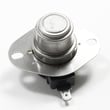
| Heat starts, then shuts off; blower keeps running | Limit opening from overheating | Furnace temperature limit switch B1370198 |
| Blower is weak or noisy; poor airflow | Blower wheel or motor issue | Blower fan wheel D6723311S |
| Erratic operation or repeated fault behavior | Control board monitoring/logic | Furnace hot-surface ignition control board B1809913S |
Why it matters
The limit switch is a safety device. Correcting the airflow restriction or replacing the failed limit-related component prevents repeated shutdowns and helps protect the heat exchanger.
Last updated: February 2026