 Owner’s manual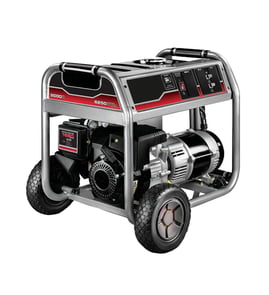

How much of a house will a 7500 watt generator run?
A 7,500-watt portable generator like the Craftsman CMXGGAS030733 typically runs a set of essential circuits, not an entire average home. In most houses, it can power items like a refrigerator, some lights, a TV/router, and a sump or well pump, as long as you manage starting watts.
What a 7,500-watt generator can usually handle
Most 7,500 running-watt generators are best used for “load management” (turning big loads on one at a time).
- Refrigerator or freezer (one or both, depending on size)
- Lighting circuits (LEDs use far less power than incandescent)
- Gas furnace blower or boiler circulator pump
- Sump pump or well pump (often OK, but starting surge matters)
- Microwave or coffee maker (one at a time with other loads)
- TV, modem/router, phone chargers
Quick planning method (running watts vs starting watts)
Use this simple approach before you plug in:
- Add up running watts for everything you want on at the same time.
- Identify the largest starting surge item (pump, fridge, freezer, some power tools).
- Keep a cushion so the generator is not constantly at max output.
| Load type | Examples | What to watch |
|---|---|---|
| Continuous loads | lights, TV, router | add running watts |
| Motor loads | fridge, freezer, pumps | starting surge can be 2 to 3 times running |
| High-heat loads | electric range, central AC, electric water heater | usually too large for 7,500W |
What it usually will not run
A 7,500-watt unit usually cannot support whole-home “everything on” use.
- Central air conditioner (many systems exceed capacity on startup)
- Electric oven/range and multiple burners
- Electric water heater
- Whole-house electric heat
Why it matters
Sizing is about preventing breaker trips, voltage drop, and stalled motors. Managing starting watts helps protect your generator and the appliances you are trying to keep running.
For model-specific operating limits, receptacle ratings, and load guidance, use the CMXGGAS030733 owner’s manual.
Last updated: January 2026
What is the 20/20/20 rule for generators?
The 20/20/20 rule is a simple generator-safety checklist: run your Craftsman CMXGGAS030733 at least 20 feet from the home, let it cool for about 20 minutes before refueling, and use a carbon monoxide (CO) alarm (often around $20) to help detect dangerous CO.
How to apply the 20/20/20 rule (step-by-step)
- 20 feet away: Place the generator outdoors, at least 20 feet from doors, windows, vents, and garage openings.
- 20-minute cool-down: Shut the engine off and wait before adding gasoline so hot parts cannot ignite fuel vapors.
- $20 CO alarm: Use a battery-powered CO alarm in the home (and replace batteries as recommended).
- Point the exhaust away from the house and neighboring structures.
- Keep the unit on a dry, level surface; protect it from rain using a generator tent or canopy designed for generators (never indoors).
Quick safety checklist for the CMXGGAS030733
| Safety item | What to do | What it prevents |
|---|---|---|
| Placement | 20 ft away, outdoors only | CO entering living spaces |
| Refueling | Cool down 20 minutes | Flash fire, burns |
| Detection | Use CO alarms | Unnoticed CO exposure |
| Electrical | Use heavy-duty cords rated for the load | Overheating, voltage drop |
Why it matters
Portable generators can produce carbon monoxide quickly, and gasoline refueling can ignite if the muffler or engine is still hot. The 20/20/20 rule keeps the biggest risks (CO and fire) front and center.
Related parts that can affect safe operation
If the generator runs rough, stalls, or smells strongly of fuel, address fuel delivery issues before extended use.
- Inspect fuel lines for cracks, softness, or leaks
- Check clamps and fittings for seepage
- Replace damaged fuel line components with the correct kit for your model
A common replacement option is the fuel line kit 791745. For model-specific operating and safety details, use the CMXGGAS030733 owner's manual.
Last updated: January 2026
How long will a Craftsman CMXGGAS030733 run?
A Craftsman CMXGGAS030733 generator typically runs up to about 12 hours on a full tank under a moderate load; actual runtime changes with load size, fuel condition, and maintenance. For the most accurate guidance for your unit, follow the run-time and refueling instructions in the CMXGGAS030733 owner's manual.
What affects runtime the most
Runtime is mainly a fuel-consumption question: the harder the generator works, the faster it uses gasoline.
- Load level: higher watt draw shortens runtime
- Starting surges: motors and compressors can spike demand
- Fuel quality: old fuel can cause poor running and higher consumption
- Altitude and temperature: can reduce engine efficiency
- Maintenance: dirty air filter or spark plug issues can increase fuel use
Quick runtime expectations (typical)
Use this as a practical planning guide when you are estimating how often you will refuel.
| Load level | What it looks like | Typical runtime impact |
|---|---|---|
| Light (small electronics, a few lights) | Low steady draw | Longest runtime |
| Medium (fridge plus lights, fans) | Mixed cycling loads | Moderate runtime |
| Heavy (multiple large loads) | Near continuous high draw | Shortest runtime |
Tips to get the longest run time per tank
- Keep the load steady and avoid running unnecessary devices
- Stagger high-surge appliances (do not start everything at once)
- Use fresh gasoline and store fuel properly
- Check for fuel line cracks or leaks; replace with fuel line kit 791745 if needed
- Let the engine cool before refueling and keep the generator outdoors in a well-ventilated area
Why it matters
Knowing expected runtime helps you plan safe refueling intervals and avoid overloads that can trip a breaker or cause unstable power during home backup, job site use, or outdoor events.
Last updated: January 2026