Owner’s manual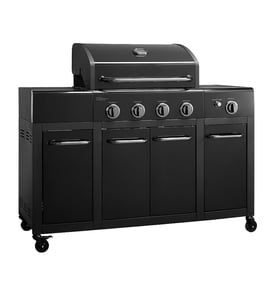




How do I tell if my gas grill regulator is bad?
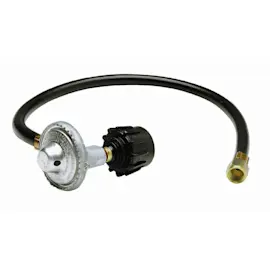
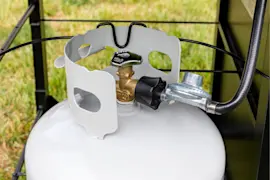
On your Kenmore 415162130 LP gas grill, a “bad” regulator is most often noticed as abnormal flame behavior (very low flame, sudden drop in flame, or inconsistent heat) or regulator icing. Start by doing a proper LP tank leak test and confirming the tank, hose, and regulator connections are correct per the 415162130 owner’s manual.
- Sudden drop to a very low flame after the grill has been running
- Only a small flame even on HIGH (and it does not respond normally from HI to LO)
- Regulator frosting/icing; turn the grill and LP tank valve off immediately if this happens
- Humming or whistling from the regulator can be normal; treat it as a concern only if performance is also poor
- Grease or hot drips onto the valve, hose, or regulator; shut off gas, correct the cause, then clean, inspect, and leak test
- Turn all control knobs OFF.
- Close the LP tank valve (turn clockwise to a full stop).
- Inspect the hose for cuts, wear, or kinks; replace damaged hoses before using the grill.
- Reconnect the regulator correctly: keep it straight, hand-tighten the coupling nut, and make sure the regulator nipple is centered in the tank valve.
- Leak test outdoors using a 50/50 mild soap and water solution; growing bubbles indicate a leak.
| What you see | Most likely cause | What we recommend |
|---|---|---|
| Growing bubbles during soap test | Leak at connection or component | Shut off gas; correct connection or replace leaking part; retest |
| Regulator frosts | Tank-related problem | Stop using that tank; replace/exchange the tank |
| Low flame on HIGH, no improvement after reconnecting | Flow restriction or failing regulator | Recheck tank valve operation and hose condition; replace the valve/hose/regulator assembly specified for the grill |
A weak or restricted gas supply can cause poor heating and unsafe operation. Leak testing and correct regulator connection help prevent flare-ups, gas leaks, and damage to the gas train components.
Last updated: January 2026
What is the average lifespan of a gas grill?
Most residential gas grills last about 5 to 15 years with normal use and routine maintenance. For the Kenmore 415162130 LP gas grill, lifespan depends heavily on keeping grease under control, cleaning cooking surfaces, and protecting the grill from weather; see the 415162130 owner's manual for care and safety details.
A grill’s “life” is usually limited by corrosion, burner wear, and grease-related flare-ups that overheat components.
- 5 to 8 years: common for budget grills or grills left uncovered outdoors
- 8 to 12 years: common with regular cleaning and a cover
- 12 to 15+ years: achievable with consistent maintenance and timely part replacement
- Grease buildup in the firebox or drip area (leads to flare-ups and overheating)
- Leaving the grill exposed to rain, snow, and salty air
- Skipping burner flame checks and continuing to use uneven flames
- Using harsh cleaners on plastic parts (can damage knobs and trim)
- Storing the grill dirty between cookouts
The manual emphasizes cleaning and safe operation; these habits typically make the biggest difference.
- Brush grates after cooking and clean the inside of the lid and bottom regularly
- Check the bottom of the grill for grease buildup often, especially after fatty foods
- Keep the grill in a well-ventilated outdoor area and maintain clearances from combustibles
- Turn off control knobs and close the LP tank valve when not in use
- Replace worn grease-management parts so grease does not overflow
| Task | How often | Why it matters |
|---|---|---|
| Brush grates | Every cookout | Reduces sticking and corrosion |
| Empty/clean grease area | Every 1 to 3 cookouts | Prevents flare-ups and rust |
| Deep clean firebox/lid | Monthly (heavy use) or seasonally | Prevents grease fires and overheating |
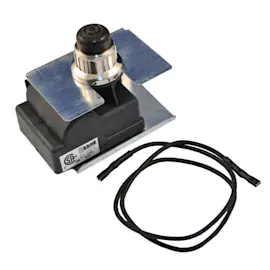
| Inspect ignition wiring | Seasonally | Improves reliable lighting |
Replacing small wear items early helps prevent bigger damage.
- Char-broil gas grill grease tray 7000046: helps keep grease contained and away from the firebox
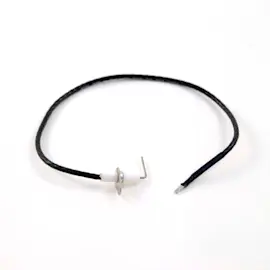
- Igniter wire 4153196: restores consistent spark when ignition becomes intermittent
A clean, properly vented grill runs at steadier temperatures, lights more reliably, and avoids flare-ups that can warp components. That combination is what most often separates a 5-year grill from a 12-year grill.
Last updated: January 2026
Is it worth fixing a gas grill?
Yes, it’s usually worth fixing a Kenmore 415162130 LP gas grill when the problem is limited to normal wear items (ignition, knobs, grease handling, or cleaning). If you have an LP gas leak you can’t stop, stop using the grill and follow the safety steps in the 415162130 owner’s manual.
Repairs make sense when the grill frame and firebox are solid and the issue is isolated to a few parts or maintenance.
- The grill lights inconsistently or not at all (often ignition wiring or connections)
- Controls are loose or hard to turn (knob or valve-area wear)
- Grease is dripping or pooling (tray missing, bent, or overloaded)
- Burners seem uneven due to buildup (cleaning and inspection)
- You can do a safe leak test and the grill passes
The manual calls out key safety rules that matter before you invest time or money:
- Use the grill only with LP (propane) gas and the supplied regulator/valve assembly
- Leak-test before using the grill; if bubbles grow, close the LP tank valve and correct the connection
- Never use the grill in enclosed spaces (garage, carport, covered patio)
- Keep clearances: at least 3 ft from walls and 10 ft from ignition sources
- Never light burners with the lid closed
These are typical low-cost, high-impact fixes that restore safe operation and convenience.
| Symptom | Likely focus | Example part for this model |
|---|---|---|
| Clicking but no spark | Ignition lead and connections | Igniter wire 4153196 |
| Grease mess or flare-ups from buildup | Grease management and cleaning | Char-broil gas grill grease tray 7000046 |
| Knob cracked or slipping | Control interface | Control knob 29102017 |
Choose replacement over repair when any of these are true:
- The firebox is rusted through or the frame is structurally unsafe
- You smell gas and cannot stop the leak after tightening connections and closing the LP tank valve
- Multiple major systems are failing at once (controls, burners, and structure)
A small repair can restore reliable ignition and safer grease handling, but LP gas safety is non-negotiable. A grill that cannot pass a leak test or has unsafe corrosion is not a good repair candidate.
Last updated: January 2026