Owner’s manual
 View engine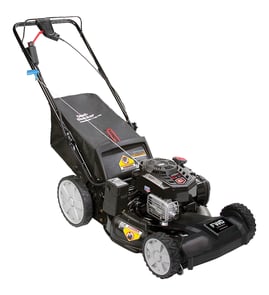



How to find Craftsman model number?
On a Craftsman gas walk-behind lawn mower like model 917388610, the model number is typically printed on an ID sticker on the back of the mower deck, usually between the lower handle mounts. Once you find it, write it down exactly as shown for parts lookup.
Where to look on the mower
Check these common ID-label locations first:
- Back of the deck (rear of the cutting housing), between the lower handle mounts
- Top rear edge of the deck near the discharge opening
- Under the handle crossbar area (near where the handle brackets bolt to the deck)
- Near the engine mounting area on the deck (less common)
If the sticker is dirty or faded, wipe the area with a damp rag and mild soap, then dry it and re-check.
What to record (so parts match correctly)
We recommend recording all of the following from the sticker:
- Model number (example: 917388610)
- Serial number (helps confirm production run)
- Any product number or manufacturing code listed
- Engine model number if shown (useful for engine-specific parts)
Model number vs. engine model number
Your mower has a separate engine identification. The manual for this mower shows an engine model number 143.016702 for the engine used on this platform.
| Item you’re identifying | What it’s used for | Example you may see |
|---|---|---|
| Mower model number | Deck, wheels, handle, drive parts | 917388610 |
| Engine model number | Carburetor, recoil starter, ignition parts | 143.016702 |
Why it matters
Using the exact model number prevents ordering the wrong blade adapter, control cable, or hardware. Even small differences in deck design or handle setup can change which parts fit.
For diagrams and the official parts list layout, use the 917388610 owner's manual.
Last updated: January 2026
Should I use 87 or 91 gas for lawn mower?
For the Craftsman 917388610 gas walk-behind lawn mower, we recommend using fresh regular unleaded gasoline (typically 87 octane). Using higher octane (like 91) does not add power or improve starting in a small mower engine; fuel freshness and clean storage matter more.
What to use (and what to avoid)
- Use fresh, clean, regular unleaded gasoline (87 octane).
- Avoid stale fuel; old gas is a common no-start cause.
- Keep water and dirt out of the fuel; contamination can cause hard starting and poor performance.
- Use a clean gas can; replace it if it starts to rust.
- Add fuel stabilizer when storing fuel or the mower for extended periods (see 917388610 owner's manual).
Quick comparison: 87 vs 91 octane
| Fuel choice | Best for this mower | What you will notice |
|---|---|---|
| 87 octane (regular) | Yes | Normal starting and power when fuel is fresh |
| 91 octane (premium) | Not needed | Usually no performance benefit in mower engines |
If the mower runs rough or will not start
Stale fuel, water in fuel, and ignition maintenance issues are more likely than octane.
- Drain and replace old gasoline with fresh fuel
- Check the air filter and clean the mower housing (built-up debris can reduce power)
- Inspect the spark plug and set the gap to 0.030 in (the manual calls for yearly replacement)
- If you suspect blade vibration or poor cutting, inspect the blade adapter; a loose or damaged adapter can cause problems (see lawn mower blade adapter 581547901)
Why it matters
Using the correct fuel is less about octane and more about preventing stale fuel, water contamination, and carburetor issues. Fresh fuel and proper storage help your Craftsman mower start easier and run more consistently.
Last updated: January 2026
What is the average lifespan of 917388610?
A Craftsman gas walk-behind mower like model 917388610 typically lasts 8 to 12 years with normal residential use and consistent maintenance. Engine cooling and clean, sharp cutting components have the biggest impact on how long this mower stays reliable.
What affects lifespan most
- Maintenance schedule: oil changes, air filter service, and spark plug upkeep
- Cooling and cleanliness: keeping debris off the engine so it runs cooler
- Blade condition: a dull blade overloads the engine and drive system
- Storage habits: dry storage and proper off-season prep reduce corrosion and fuel issues
- Usage intensity: large lots, heavy grass, and frequent mowing shorten life
Maintenance priorities (based on the manual)
The manual emphasizes cleaning and heat management: a clogged engine runs hotter and shortens engine life, and spraying with a hose can force water into the engine and shorten engine life. Use the cleaning and service guidance in the 917388610 owner's manual.
Quick do and do not list
- Do scrape grass buildup from the underside of the deck
- Do keep the engine area clear so air can circulate
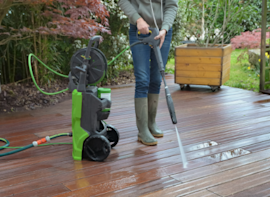
- Do not wash the mower with a garden hose unless sensitive components are fully protected
- Do disconnect the spark plug wire before service
Typical lifespan by care level
| Care level | What it looks like | Typical lifespan |
|---|---|---|
| Minimal | Infrequent cleaning, dull blade, old fuel | 5 to 7 years |
| Average | Seasonal tune-up, basic cleaning | 8 to 12 years |
| Excellent | On-schedule service, clean cooling fins, proper storage | 12 to 15 years |
Why it matters
Most “worn out” mowers fail early from overheating, corrosion, or neglected wear items, not from the deck itself. Keeping the engine clean and the cutting system in good shape reduces strain and extends the service life of your Craftsman 917388610.
Last updated: March 2026