Error Codes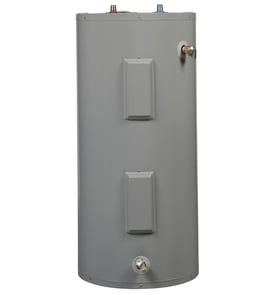



How long can you shower with an 80-gallon water heater?
With an 80-gallon electric water heater like the Ao Smith EES80T920, most households get about 25 to 40 minutes of continuous showering before the water turns lukewarm, depending on shower flow rate, thermostat setting, and incoming cold-water temperature.
What changes your shower time most
- Showerhead flow rate (GPM): 1.5 GPM lasts much longer than 2.5 GPM
- Water temperature setting: hotter tank water stretches usable hot water by mixing more cold
- Incoming water temperature: colder winter water shortens shower time
- Recovery rate: electric elements reheat while you shower, extending time somewhat
- Simultaneous hot-water use: laundry, dishwasher, and faucets reduce shower time
Quick estimate table (typical shower-only use)
Assuming a typical mixed shower temperature and normal household conditions:
| Shower flow rate | Typical continuous shower time with an 80-gal tank |
|---|---|
| 1.5 GPM (low-flow) | ~35 to 55 minutes |
| 2.0 GPM | ~25 to 40 minutes |
| 2.5 GPM (standard) | ~20 to 32 minutes |
How to get more hot water from the same tank
- Set the thermostat to a safe, consistent temperature (many homes use around 120°F)
- Use a low-flow showerhead to reduce gallons per minute
- Avoid running the dishwasher or clothes washer during back-to-back showers
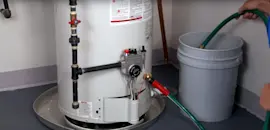
- Flush sediment periodically to help heating efficiency (especially in hard-water areas)
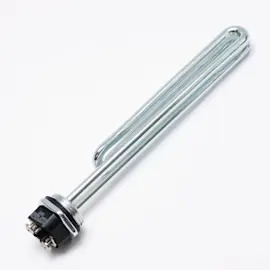
- If hot water runs out fast, test and replace a failed heating component when needed (common culprits are the heating element or thermostat)
Why it matters
Shower time is limited by how quickly your tank’s stored hot water is diluted by incoming cold water. If your EES80T920 suddenly delivers much shorter showers than it used to, that often points to a heating or control issue rather than tank size.
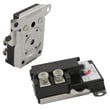
If you suspect a heating problem, common replacement parts for this model include the element 100110051 and thermostat 100109846.
Last updated: February 2026
Do I need a 20 or 30 amp breaker for a water heater?
Most full-size electric water heaters like the Ao Smith EES80T920 are typically on a 30-amp, 240-volt dedicated circuit; a 20-amp breaker is more common on smaller, lower-wattage heaters. The correct breaker size must match the heater’s nameplate wattage and the wire size feeding it.
How to choose the right breaker size
Use the water heater’s electrical rating label (usually near the upper access panel) and match it to a dedicated circuit.
- Confirm the heater voltage (most are 240V for full-size electric tanks).
- Find the wattage on the nameplate (common values are 3,000W, 4,500W, or 5,500W).
- Use a dedicated circuit (no other loads on that breaker).
- Match breaker size to wire gauge (breaker and wire must be sized together).
- If the breaker trips repeatedly, do not upsize the breaker without confirming wire size and heater rating.
Quick sizing guide (typical)
These are common pairings for residential electric tank water heaters.
| Nameplate wattage (240V) | Approx. amps | Typical breaker | Typical copper wire |
|---|---|---|---|
| 3,000W | 12.5A | 20A | 12 AWG |
| 4,500W | 18.8A | 25A or 30A | 10 AWG (often used) |
| 5,500W | 22.9A | 30A | 10 AWG |
Why it matters
An undersized breaker can nuisance-trip and leave you without hot water. An oversized breaker can fail to protect the wiring, which is a safety hazard. Correct sizing protects the circuit, the thermostats, and the heating elements.
Related parts that often come up during electrical troubleshooting
If you are diagnosing “no hot water” or inconsistent heating on the EES80T920, these parts are commonly involved:
- Thermostat 100109846 (temperature control and high-limit function)
- Element 100109061 (heating element)
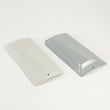
- Front panel 100109599 (access cover for service areas)
Last updated: February 2026
What is the life expectancy of an A. O. Smith electric water heater?
Most A. O. Smith electric water heaters typically last 8 to 12 years. For your Ao Smith EES80T920, lifespan depends most on water quality, installation, and maintenance, especially keeping corrosion under control with routine anode-rod checks.
Typical lifespan and what changes it
- Water quality: Hard or aggressive water shortens tank life by accelerating scale and corrosion.
- Maintenance: Flushing sediment and checking the anode rod extends service life.
- Temperature setting: Higher setpoints increase stress and scale buildup.
- Usage pattern: Heavy daily demand cycles the elements and thermostats more often.
- Installation factors: Poor venting of heat, incorrect wiring, or chronic leaks reduce longevity.
Maintenance that most improves life
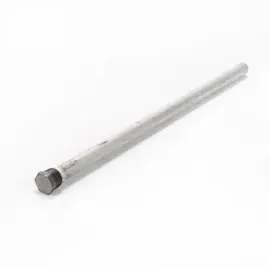
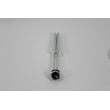
- Inspect the anode rod every 1 to 3 years and replace it when heavily depleted; see anode rod 100109434.
- Flush a few gallons from the drain periodically to reduce sediment.
- Check for slow leaks at fittings and around access panels.
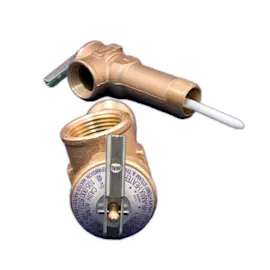
- Test the T&P relief valve occasionally for proper operation; replace if it drips or will not reset (use a matching part such as t & p valve 100108279).
- Keep access panels and insulation in place to prevent heat loss and protect wiring.
Quick “replace vs. repair” guide
| What you notice | Most likely meaning | Typical next step |
|---|---|---|
| Rusty water or tank sweating/rusting | Internal corrosion progressing | Check/replace anode rod; plan for replacement if corrosion is advanced |
| Not enough hot water | Element or thermostat issue | Test and replace failed component |
| Water on the floor near the tank base | Tank leak | Replace the water heater |
| T&P valve dripping | Excess pressure/temperature or bad valve | Diagnose cause; replace valve if faulty |
Why it matters
Once a tank starts leaking from internal corrosion, it is not a “part replacement” repair. Staying ahead of corrosion with an anode rod replacement is the single most effective way to reach the upper end of the 8 to 12 year range.
Last updated: February 2026
What is the most common issue on an AO Smith Corporation hot water heater?
On the Ao Smith EES80T920 electric water heater, the most common problem is reduced or no hot water caused by a failed heating element or a thermostat that is not regulating temperature correctly. Sediment buildup can also reduce heating efficiency and shorten element life.
Quick symptoms and what they usually point to
- No hot water at all: tripped breaker, high-limit reset tripped, failed upper thermostat, failed upper element
- Hot water runs out fast: failed lower element, thermostat out of calibration, heavy sediment
- Water is too hot or not hot enough: thermostat issue or incorrect thermostat setting
- Popping or rumbling sounds: sediment buildup on the bottom of the tank
- Water leaking from the discharge pipe: temperature and pressure relief valve opening (often from overheating or high pressure)
What to check first (safe, high-value checks)
- Confirm power at the breaker (electric water heaters commonly use 240V).
- Look for signs of overheating (burnt wiring, melted insulation, strong electrical odor). If present, stop and have it serviced.
- Check the access panels and insulation for moisture; water intrusion can damage thermostats and wiring.
- Test the heating circuit with a meter if you are qualified; a failed element is a frequent cause of “no hot water” or “runs out fast.”
Common parts involved on the EES80T920
| Symptom | Most likely part area | Example part on this model |
|---|---|---|
| No hot water or inconsistent heating | Thermostat or element | Thermostat 100109846, element 100110051 |
| Hot water runs out quickly | Lower element or sediment | Element 100109061 |
| Dripping from relief line | Safety relief system | T & p valve 100108279 |
| Odor, corrosion, faster tank wear | Corrosion protection | Anode rod 100109434 |
Why it matters
A weak element or misreading thermostat makes the heater run longer and hotter than it should, which increases energy use and can accelerate scale buildup. Catching the issue early often prevents repeat failures and helps keep recovery time consistent.
Last updated: February 2026