 Owner’s manual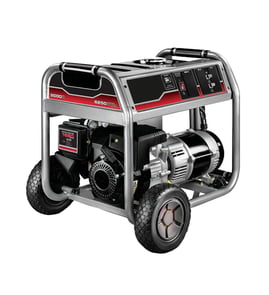

What can a 7500 watt generator run in a house?
A 7,500-watt portable generator like the All Power APG3075 can run many household essentials (refrigerator, lights, TV, router, sump pump, and some small kitchen loads) as long as the total running watts plus startup surge watts stay under the generator’s capacity. Plan your loads so you are not starting multiple motor-driven items at the same time.
A 7,500-watt class generator is best for “priority circuits” rather than an entire All-electric home.
- Refrigerator or freezer (one at a time is easiest)
- Sump pump or well pump (watch startup surge)
- Furnace blower (gas or oil heat) or boiler controls
- Lighting circuits (LEDs are very low draw)
- TV, modem/router, phone chargers
- Microwave or coffee maker (run briefly, then shut off)
These loads often require a larger generator or strict one-at-a-time use because they draw a lot of power or have big startup surges.
- Central air conditioning or large heat pumps
- Electric water heater
- Electric dryer
- Electric range/oven
- Multiple high-watt space heaters
Use this as a starting point, then confirm your appliance nameplate ratings.
| Item | Typical running watts | Typical startup surge | Notes |
|---|---|---|---|
| Refrigerator | 150 to 800 | 1,200 to 2,200 | Surge happens at compressor start |
| Sump pump (1/2 HP) | 800 to 1,200 | 1,500 to 3,000 | Biggest surge in many homes |
| Microwave | 900 to 1,500 | Low | Short-duration load |
| LED lighting (several rooms) | 50 to 300 | None | Easy to keep on |
The APG3075 manual stresses matching voltage, wattage, and amperage capacity to your connected loads, and it warns against overloading. It also calls out serious safety risks if the generator is used incorrectly. Review the operating and safety sections in the owner's manual.
- Run the generator outdoors only; never in a home, garage, or enclosed area (carbon monoxide hazard)
- Add loads gradually; avoid starting multiple motor loads at once
- Use heavy-duty, outdoor-rated extension cords sized for the amperage
- If you connect to home wiring, use a properly installed transfer switch/interlock by a licensed electrician
- Protect sensitive electronics; use an approved line conditioner as directed in the manual
Correct load planning prevents nuisance breaker trips, voltage drop that can damage motors and electronics, and dangerous overheating of cords and connections.
Last updated: February 2026
What is the 20/20/20 rule for generators?
The “20/20/20 rule” is a commonly shared generator safety reminder: keep the generator about 20 feet from the home, let it cool about 20 minutes before refueling, and use a carbon monoxide (CO) alarm in the home. For your All Power APG3075, follow the specific safety and placement instructions in the APG3075 owner's manual.
- Place the generator outdoors and aim exhaust away from doors, windows, and vents.
- Shut the generator off before refueling; wait for the engine to cool (about 20 minutes).
- Use a battery-powered CO alarm indoors; test it and replace batteries on schedule.
- Keep air inlets and outlets clear of obstructions (snow, bushes, stored items).
- Plan for service clearance; the APG3075 installation guidance calls for about 4 feet of access on All sides.
The APG3075 manual adds practical, model-specific points that pair well with the 20/20/20 reminder:
| Safety area | APG3075 guidance | Why it matters |
|---|---|---|
| Placement | Mount on a concrete slab or stable surface with drainage | Reduces tipping and water exposure risk |
| Maintenance prep | Power switch OFF, disconnect spark plug wire, let engine cool | Prevents accidental start and burn injuries |
| Airflow and access | Keep airflow paths open; allow about 4 feet around the unit | Helps cooling and safer servicing |
| Overload response | If the AC breaker trips, disconnect loads, then reset | Prevents overheating and electrical damage |
Generators create two major hazards during outages: carbon monoxide exposure and fuel ignition on hot engine parts. Using distance, cool-down time, and CO detection together lowers risk while you power tools and equipment.
Last updated: February 2026
What is the downside of an inverter generator?
The downside of an inverter generator is that you pay more for the technology and usually get less maximum wattage than a similar-size conventional generator. Inverter units excel for clean, stable power, but they are not the best choice for large surge loads or whole-home style demands.
- Higher upfront cost per watt than a conventional generator
- Lower peak output choices; many top out below larger open-frame units
- Surge-heavy loads (compressors, well pumps) can overload smaller inverter models
- More electronic components; troubleshooting and repairs are more specialized
- Parallel kits and special cords may be needed to increase capacity
Your All Power APG3075 is a conventional generator, not an inverter model. The generator guidance in the APG3075 owner's manual emphasizes managing load and using proper protection for sensitive electronics.
| Topic | Inverter generator | Conventional generator (like APG3075) |
|---|---|---|
| Power quality | Cleaner output for electronics | Can be rougher; use conditioning for sensitive devices |
| Cost | Higher | Lower for similar watts |
| Best use | Electronics, light loads, quiet operation | Higher loads, tools, general backup power |
- Add up running watts and starting watts before plugging anything in
- Start and run one large motor load at a time to avoid overload
- If the breaker trips, unplug loads, reset, then reconnect one item at a time
- For TVs, computers, and chargers, use an approved line conditioner or UPS
Choosing the wrong generator type leads to nuisance trips, poor performance on motor starting, or damaged electronics. Matching wattage and surge capacity to your loads delivers safer, more reliable backup power.
Last updated: February 2026
What is the most reliable brand of generator?
Honda is the most reliable choice for many portable generators, especially inverter-style units, because they consistently run smoothly and hold up well with routine maintenance. For standby (whole-home) generators, Generac and Kohler are widely trusted; reliability still depends heavily on correct installation, grounding, and scheduled service.
Reliability is different for a camping portable generator versus a home backup unit. We recommend matching the brand and design to your use case:
- Portable/inverter use (quiet, fuel-efficient): Honda is a common top pick
- Standby/whole-home backup: Generac and Kohler are common leaders
- Jobsite/value-focused portables: brands like Champion, DeWalt, and Ryobi can be solid when maintained
- Long run times and heavy loads: prioritize engine quality, alternator build, and cooling
- Parts and serviceability: choose a model with clear documentation and available replacement components
Even a great brand becomes unreliable if the generator is used or maintained incorrectly. For the All Power APG3075, the APG3075 owner's manual emphasizes safe operation, keeping guards in place, and completing scheduled engine and generator maintenance.
Key reliability drivers you can control:
- Keep up with oil changes and basic tune-ups (spark plug, air filter)
- Avoid overloading; size the generator to your starting and running watts
- Inspect for loose fasteners, binding, or damaged parts before use
- Use only recommended accessories for your model
- Store it properly and run it periodically to keep fuel systems from gumming up
| Generator type | Typical reliability advantage | Common tradeoff |
|---|---|---|
| Inverter portable | Smooth power, efficient, often quieter | Higher upfront cost |
| Conventional portable | Simple design, good surge capability | Louder, less fuel-efficient |
| Standby (fixed) | Automatic backup, designed for long outages | Installation and maintenance are critical |
A “reliable” generator is one that starts when you need it and produces stable power without overheating or tripping breakers. Brand reputation helps, but correct grounding, safe wiring practices, and routine maintenance are what keep a generator dependable over time.
Last updated: February 2026