Error Codes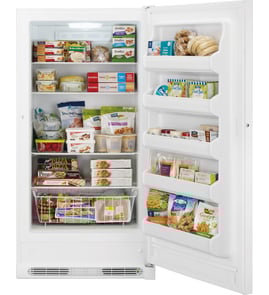






How to find the size of a whirlpool refrigerator?
To find the size (capacity) of a Whirlpool refrigerator or freezer like model WZF34X16DW08, we calculate interior volume in cubic feet: measure the usable inside length, width, and depth in inches, multiply them, then divide by 1,728. This gives a consistent capacity estimate.
How to measure capacity (cubic feet)
- Empty the compartment enough to measure the usable interior space.
- Measure length (L), width (W), and depth (D) in inches.
- Use this formula:
| What you measure | What to do | Result |
|---|---|---|
| L x W x D (inches) | Multiply all three numbers | Cubic inches |
| Cubic inches ÷ 1,728 | Divide by 1,728 | Cubic feet (cu. ft.) |
Quick example
If the usable interior measures 20 in x 18 in x 48 in:
- 20 x 18 x 48 = 17,280 cubic inches
- 17,280 ÷ 1,728 = 10.0 cu. ft.
Tips to get an accurate measurement
- Measure inside wall to inside wall, not the outside cabinet.
- Subtract space taken up by fixed items (like an interior hump, fan housing, or control cover) if they reduce usable storage.
- If airflow parts are missing or broken, fix them first so storage and temperatures stay consistent; for example, a damaged fan blade can affect circulation (see refrigerator evaporator fan blade WP2169142).
Why it matters
Capacity helps you compare models, plan food storage, and confirm whether your appliance is performing normally. A freezer that seems “small” often has reduced usable space due to frost buildup or blocked airflow, not a true capacity change.
Last updated: February 2026
Is the WZF34X16DW08 garage ready?
Yes. The Whirlpool WZF34X16DW08 upright freezer is designed to run in a wide range of ambient temperatures, so it works well in many garage setups as long as the space stays within the unit’s rated operating range and has good airflow around the cabinet.
What “garage ready” means in real use
A freezer is “garage ready” when it can keep food frozen and cycle the compressor normally even when the room temperature swings. In a garage, the two common problems are warm summer air and cold winter air affecting cooling performance.
Quick garage setup checklist
- Keep the freezer plugged directly into a grounded outlet (avoid extension cords).
- Leave clearance around the cabinet for airflow (especially at the back).
- Keep the door closed as much as possible during hot days.
- Confirm the door seals tightly all the way around.
- Set the temperature to maintain about 0°F for safe frozen storage.
Symptoms that look like “not garage ready” (and what to check)
If the freezer struggles in the garage, these are the most common causes:
| Symptom | Most common cause | What we recommend |
|---|---|---|
| Freezer warms up in summer | Poor airflow, dirty condenser area, heavy loading | Improve ventilation; reduce warm food loading |
| Runs constantly | Door not sealing, frequent openings | Check gasket seal and door alignment |
| Frost builds up fast | Door left ajar, humid air leaks | Inspect hinges and closing force |
| Warm spots inside | Weak air circulation | Check evaporator fan operation |
If you suspect weak air circulation, the evaporator fan system is a key place to start; a damaged fan blade can reduce airflow across the evaporator. See refrigerator evaporator fan blade WP2169142.
Why it matters
Garage temperatures directly affect compressor run time, energy use, and how evenly the freezer holds 0°F. A stable environment and good airflow help the WZF34X16DW08 maintain consistent freezing and reduce frost and temperature swings.
For more garage and performance tips, we recommend freezer common questions.
Last updated: February 2026
Is the Whirlpool 15.7 upright freezer any good?
Yes. The Whirlpool upright freezer model WZF34X16DW08 is a solid choice for most homes because it is designed for convenient frozen-food storage with consistent temperatures and practical organization. Overall satisfaction usually comes down to fit, noise expectations, and keeping the door seal and airflow in good shape.
What “good” means for an upright freezer
A “good” upright freezer typically delivers three things reliably:
- Stable freezing (food stays hard-frozen with minimal temperature swings)
- Usable space (shelves/bins that make items easy to find)
- Low maintenance (less frost buildup when the door seals well and airflow is clear)
If you want to compare models, focus on capacity, frost management, and how the interior layout matches what you store most.
Quick checklist before you buy (or right after setup)
These steps have the biggest impact on performance and satisfaction:
- Place it where it can ventilate (do not block air openings inside)
- Let it cool down fully before loading a lot of unfrozen food
- Keep the door closed as much as possible; frequent openings raise temps
- Confirm the door closes squarely; replace worn hinge parts if needed
- Keep the evaporator area clear so the fan can move air
Common “good vs. not good” symptoms and what they point to
| What you notice | What it usually means | What to check first |
|---|---|---|
| Warm spots or soft food | Poor airflow or cooling issue | Frost buildup, blocked vents, evaporator fan operation |
| Loud fan noise | Fan blade rubbing ice or cover | Ice buildup, fan cover alignment, fan blade condition |
| Frost around the door | Air leak at the door | Door alignment, gasket condition, hinge wear |
If you suspect an airflow issue, the evaporator fan system is a common place to start; for example, inspect the refrigerator evaporator fan blade WP2169142 for damage or rubbing.
Why it matters
A freezer can seem “bad” even when the sealed system is fine; most complaints come from air leaks (door sealing/alignment) or restricted airflow (ice buildup, blocked vents, fan issues). Fixing those early protects food quality and reduces run time.
For repair-level guidance on airflow and fan-related problems, use our how to replace a freezer evaporator fan resource.
Last updated: February 2026
What are the key features of WZF34X16DW08?
The Whirlpool WZF34X16DW08 upright freezer is built for convenient, consistent freezing with features like Fast Freeze, electronic temperature controls, frost-free defrost, adjustable full-width wire shelves, and a reversible door. These features help you freeze groceries quickly, organize food easily, and reduce manual defrost work.
Key features at a glance
- Fast Freeze option: Quickly drops the temperature to help freeze fresh food faster.
- Electronic temperature controls: Lets you set and maintain a steady freezer temperature.
- Frost-free defrost: Automatically manages frost so you do not have to manually defrost under normal use.
- Adjustable full-width wire shelves: Makes it easier to fit bulky items and reorganize storage.
- Reversible door: Allows left- or right-swing installation to match your space.
What these features do for you (quick comparison)
| Feature | What it helps with | When you will notice it most |
|---|---|---|
| Fast Freeze | Faster freezing, better food quality | After a big grocery trip |
| Electronic controls | More consistent temps | Day-to-day operation |
| Frost-free defrost | Less frost buildup | Long-term maintenance |
| Adjustable shelves | Better organization | Storing tall or wide items |
| Reversible door | Better fit in your room layout | During installation or relocation |
Why it matters
These features work together to protect food quality and reduce hassle. For example, frost-free defrost supports airflow and efficiency, while Fast Freeze helps newly added items freeze quickly without warming nearby frozen foods.
Related repair and maintenance help
If performance issues ever make it seem like these features are not working (warm temps, heavy frost, weak airflow), we use these common checks first:
- Confirm the temperature setting is correct on the control panel.
- Make sure the door closes tightly and is not blocked by packages.
- Keep vents clear so air can circulate.
- Listen for the evaporator fan running; airflow problems often point to a fan or frost issue.
- If you suspect a fan-related airflow problem, the how to replace a freezer evaporator fan guide walks through the process.
Last updated: February 2026