 Owner’s manual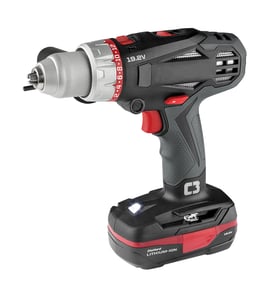


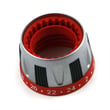
What size chuck is a Craftsman hammer drill?
For the Craftsman hammer drill model 315115430, the chuck size is typically 1/2 inch, which accepts common round-shank and hex-shank drill bits up to that capacity. For the exact chuck specification and any bit-shank limitations, use the owner's manual.
How to confirm the chuck size on your drill
- Look for a "1/2" marking stamped on the chuck sleeve or printed on the drill’s data label.
- Check the model tag to confirm you are working with Craftsman 315115430.
- Open the chuck fully and measure the maximum jaw opening (a ruler works; calipers are better).
- Verify whether your chuck is keyed (uses a chuck key) or keyless (hand-tightened).
- Match the bit shank to the chuck type: most 1/2-inch chucks accept straight shanks and many accept hex shanks.
What “1/2-inch chuck” means in practice
| Chuck size | Max bit shank diameter | Common use cases |
|---|---|---|
| 3/8 inch | 0.375 in | Light drilling, smaller bits |
| 1/2 inch | 0.500 in | Heavier drilling, larger bits, hole saw arbors |
Why it matters
Using the correct chuck size helps you choose bits that clamp securely. Oversized shanks can slip or damage the jaws, and undersized shanks can wobble, which reduces drilling accuracy and increases wear on the chuck.
Last updated: February 2026
How to change bits on a Craftsman drill?
To change bits on your Craftsman hammer drill model 315115430, loosen the chuck, remove the old bit, insert the new bit fully, then tighten the chuck securely so the bit does not slip under load. For model-specific chuck and control details, use the owner's manual.
Quick steps (keyed chuck vs. keyless chuck)
- Unplug the drill (corded) or remove the battery (cordless) before touching the chuck.
- Set the drill to low speed (speed 1) for better control while tightening.
- Open the chuck wide enough to accept the bit shank.
- Insert the bit straight and fully; center it between the jaws.
- Tighten the chuck firmly; re-check by tugging the bit.
| Chuck type | How to loosen | How to tighten | What to watch for |
|---|---|---|---|
| Keyless chuck | Hold the rear sleeve, turn the front sleeve counterclockwise | Turn clockwise until snug, then hand-tighten firmly | Bit slipping means it is not tight or not centered |
| Keyed chuck | Insert key, turn counterclockwise at 2 to 3 key holes | Turn clockwise at 2 to 3 key holes for even clamping | Uneven tightening can wobble the bit |
If the bit keeps slipping
- Clean dust from the chuck jaws and bit shank.
- Make sure you are using the correct shank size for the chuck capacity.
- Tighten in low speed; avoid using hammer mode while tightening.
- Replace worn or rounded bits; they clamp poorly.
Why it matters
A properly tightened, centered bit reduces wobble, improves drilling accuracy in masonry or wood, and helps protect the chuck, gearbox, and motor from unnecessary strain.
Last updated: February 2026
Do I need special bits for a hammer drill?
You do not need “special” bits just because it is a hammer drill, but you do need the right bit for the material. For your Craftsman 315115430 hammer drill, use masonry bits for concrete, brick, and block; standard twist bits are for wood and metal. See the owner's manual for chuck type and bit size limits.
What bits to use (by material)
- Concrete, brick, block: carbide-tipped masonry drill bit (best match for hammer action)
- Wood: brad-point, spade, auger, or hole saw (hammer mode off)
- Metal: HSS or cobalt twist bit (hammer mode off)
- Tile/stone: tile/glass bit or diamond hole saw; start slow, light pressure (hammer mode usually off)
- Masonry anchors: use the bit size specified on the anchor package
Bit shank and chuck fit: what to check
Hammer drills commonly use a standard 3-jaw chuck, so you typically use round-shank or hex-shank bits (not SDS bits unless the tool is an SDS rotary hammer).
| What you’re checking | Why it matters | What to do |
|---|---|---|
| Chuck type (3-jaw vs SDS) | Determines which shank styles fit | Match the bit shank to the chuck style in the manual |
| Max chuck capacity | Prevents slipping and wobble | Stay within the listed max bit diameter |
| Bit condition (sharp/straight) | Reduces overheating and binding | Replace dull or bent bits |
Quick tips for better results
- Use hammer mode only for masonry; turn it off for wood/metal to avoid rough holes and bit damage.
- Let the tool do the work; steady pressure drills faster than forcing it.
- For deep masonry holes, pull the bit out periodically to clear dust.
- If the bit slips, re-seat it and tighten the chuck firmly.
Why it matters
Using the correct bit and mode protects the chuck, reduces motor strain, and gives cleaner holes, especially when drilling concrete or brick with a hammer drill.
Last updated: February 2026
Can a hammer drill be used like a normal drill?
Yes. You can use the Craftsman 315115430 hammer drill like a normal drill by switching it to drill-only mode (hammering off). In drill-only mode it works well for wood, plastic, and metal with the right bit; it is just typically heavier and less compact than a standard drill.
How to use it like a regular drill
- Set the mode selector to drill (not hammer-drill).
- Use the correct bit for the material (twist bit for metal, brad-point for wood, etc.).
- Start at a low speed to keep the bit from walking, then increase speed.
- Use steady pressure; do not force the tool (forcing overheats the motor and dulls bits).
- If the drill has a clutch setting, use it for driving screws; use drill mode for drilling holes.
When a hammer drill is the right choice (and when it is not)
A hammer drill is a versatile “one-tool” option, but it is not always the best tool for every job.
| Task | Use hammer drill in drill-only mode? | Better tool if you have one |
|---|---|---|
| Drilling wood studs, plywood, drywall | Yes | Standard drill/driver (lighter) |
| Drilling metal (with cutting oil) | Yes | Standard drill/driver (often smoother) |
| Driving lots of screws | Sometimes | Impact driver (faster, less cam-out) |
| Drilling brick/block/concrete | Use hammer mode | Rotary hammer for frequent concrete work |
Common drawbacks vs a standard drill
- More weight and bulk, especially overhead.
- More vibration and noise (even if hammer mode is off, the tool is built heavier-duty).
- Can feel less “fine control” for small bits or delicate work.
Why it matters
Using drill-only mode prevents unnecessary vibration and reduces bit wear. Saving hammer mode for masonry also helps the chuck, gears, and motor last longer.
For model-specific controls and operating steps, follow the owner's manual.
Last updated: February 2026