Installation guide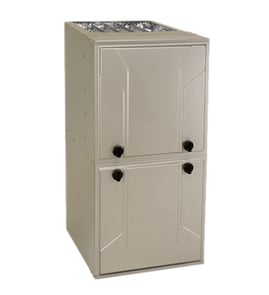




How do I reset the error code on my Goodman furnace e3?
To reset an E3 error on your Goodman GMT070-3B gas furnace, turn off power to the furnace at the switch or breaker for a few minutes, then restore power. This power-cycle resets the control board and often clears a stored fault after the underlying issue is corrected.
- Set the thermostat to OFF.
- Turn OFF power to the furnace at the service switch or circuit breaker.
- Wait 3 to 5 minutes.
- Turn power ON.
- Set the thermostat back to HEAT and call for heat.
An E3 code usually returns because the furnace is still detecting a problem. These checks are the most common next steps:
- Replace a dirty air filter and make sure supply registers are open.
- Confirm the blower door is fully closed (door switch engaged).
- Check the venting and intake for blockage (snow, nests, debris).
- Listen for the inducer motor starting; if it does not, the pressure switch may not close.
- Watch the ignition sequence; if it fails to light reliably, the igniter or ignition control may be involved.
If troubleshooting points to a failed component, these model-matched parts are commonly involved:
| Symptom you notice | Common part to inspect/replace | Example part for GMT070-3B |
|---|---|---|
| Inducer does not run, pressure switch never proves | Pressure switch or inducer assembly | Furnace air pressure switch B1370176 or vent motor B4833000S |
| Ignition sequence fails or is erratic | Igniter or ignition control | Igniter B1401018S or furnace hot-surface ignition control board B1809913S |
| Furnace starts then shuts down quickly | Limit or rollout switch opening | Furnace temperature limit switch B1370198 or furnace burner roll-out limit switch B1370145 |
Resetting clears the control’s stored fault, but it does not fix the condition that triggered E3. If E3 repeats, addressing airflow, venting, ignition, or safety-switch issues prevents nuisance shutdowns and protects key components like the heat exchanger.
For model-specific access panels, wiring routing, and the exact ignition sequence for the GMT070-3B, use the installation guide.
Last updated: February 2026
How to fix furnace pressure switch stuck open?
On a Goodman GMT070-3B gas furnace, a “pressure switch stuck open” condition usually means the inducer is not creating enough draft or the switch is not sensing it through the tubing. We fix it by restoring proper airflow (venting, condensate, hoses) and then testing the pressure switch circuit per the installation guide.
- Turn off electrical power at the furnace switch or breaker.
- Shut off the gas supply valve if you will open the burner compartment.
- Let the furnace cool; limit switches and burners can be hot.
- If you smell gas, stop and have a qualified technician handle the repair.
- Check the inducer starts and runs: If the inducer does not run, the pressure switch will stay open.
- Inspect the pressure switch hose: Remove the hose and look for water, cracks, soft spots, or blockage; clear it and reinstall firmly.
- Clear the inducer port: The small port on the inducer housing that the hose connects to can plug with debris; clean it carefully.
- Verify venting and intake are open: Look for snow, nests, leaves, or sagging pipe that traps water.
- Check condensate drainage (high-efficiency setups): A backed-up drain can flood the pressure tubing and prevent the switch from closing.
- Confirm wiring connections: Loose spade terminals at the pressure switch or control board can mimic an “open” switch.
| What you observe | Most likely cause | What to do next |
|---|---|---|
| Inducer never starts | Control issue, motor issue, or no power | Check power, door switch, wiring; test inducer circuit |
| Inducer runs but no “click” from switch | Blocked hose/port, vent restriction, weak inducer | Clear restrictions; inspect venting; verify inducer performance |
| Switch clicks but furnace still faults | Wiring, control board input, intermittent draft | Inspect connectors; check for water in tubing; test continuity |
Replace the pressure switch when the hose/port/venting are clear, the inducer runs properly, and the switch will not close reliably under normal draft.
- Pressure switch option for this model: furnace air pressure switch B1370176
- If the inducer is weak/noisy or not moving air: motor 0131M00002PSP
The pressure switch is a safety device; it proves the inducer is venting combustion gases before ignition. Bypassing it or forcing it closed can create unsafe operation and repeated lockouts.
Last updated: February 2026
What does code 7 mean on a furnace?
On a Goodman GMT070-3B gas furnace, “code 7” is commonly used to indicate a gas valve fault or a problem in the gas valve control circuit. We use the furnace’s diagnostic chart and wiring diagram in the installation guide to confirm the exact meaning for your setup before replacing parts.
- Set the thermostat to OFF, then restore a call for heat and watch the LED sequence again.
- Confirm the gas shutoff valve is fully open and other gas appliances are working.
- Replace the air filter and make sure supply and return vents are open (overheating can create confusing symptoms).
- Inspect the low-voltage wiring at the control board and gas valve for loose spade terminals or rubbed insulation.
- Verify the furnace has a solid ground and correct polarity (hot and neutral not reversed).
| Likely cause | What you may notice | What we typically do next |
|---|---|---|
| Gas valve not opening or valve circuit issue | No burner flame, repeated ignition attempts | Check wiring, then test voltage to valve during ignition |
| Ignition control problem | Igniter glows but burners do not light, or no ignition sequence | Inspect/diagnose the control board and safety circuit |
| Draft/pressure proving issue (can stop gas valve command) | Inducer runs, then shutdown before flame | Check venting, hoses, and pressure switch operation |
If your troubleshooting confirms the furnace is not properly commanding or proving ignition, these model-matched parts are common suspects:
- Furnace hot-surface ignition control board B1809913S (controls the ignition sequence and safety timing)
- Igniter B1401018S (lights the burners when energized)
- Furnace air pressure switch B1370176 (proves inducer draft before gas is allowed)
A code tied to the gas valve or its control circuit is a safety-related shutdown. Correct diagnosis prevents unnecessary part replacement and helps ensure the ignition sequence, draft proving, and flame lighting all happen in the right order.
Last updated: February 2026
What is the life expectancy of a Goodman furnace?
A Goodman gas furnace like model GMT070-3B typically lasts 15 to 20 years. With correct setup, clean airflow, and annual service, it reaches the high end of that range; chronic overheating, short-cycling, or poor venting shortens lifespan.
- 15 to 20 years: normal life expectancy for a residential gas furnace
- 10 to 12 years: common when maintenance is skipped or the furnace frequently overheats
- 20+ years: achievable with consistent upkeep and stable operating conditions
| Condition | What it usually looks like | Expected outcome |
|---|---|---|
| Well maintained | Clean filter, steady airflow, annual tune-up | Longer service life |
| High stress use | Long run times, frequent cycling, dusty returns | Shorter service life |
| Airflow restricted | Dirty filter, blocked vents, weak blower performance | Overheating and early wear |
- Airflow and filtration: A clogged filter or closed registers can trip the limit switch and overheat the heat exchanger.
- Ignition reliability: Repeated ignition failures add wear to controls and igniters.
- Venting and draft: Poor draft can cause nuisance shutdowns and stress the inducer system.
- Heat exchanger condition: Cracks, corrosion, or repeated overheating are end-of-life indicators.
- Electrical health: Loose or damaged wiring can cause intermittent failures.
- Replace the air filter on schedule (many homes need every 1 to 3 months).
- Keep supply registers open and return grilles unobstructed.
- Follow venting, clearances, and setup guidance in the installation guide.
- Have a technician perform annual combustion and safety checks.
- If you are troubleshooting electrical issues, use safe test practices from our how to use a multimeter to test electrical parts video.
A furnace near the end of its expected life is more likely to have intermittent no-heat calls, higher operating noise, and repeated safety shutdowns. Catching airflow, ignition, or venting problems early helps protect major components like the heat exchanger and inducer.
Last updated: February 2026