
Can you resaw with a 14-inch bandsaw?
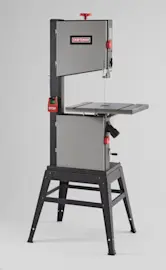
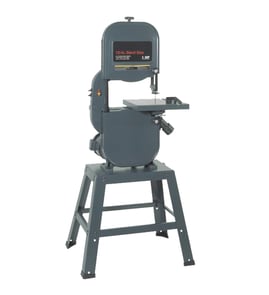
Yes, a 14-inch band saw can resaw boards, but the key limits are resaw height, motor power, and blade setup. For your Craftsman band saw model 351214061, focus on its actual cutting capacity and tune the blade, guides, and feed rate for straight, consistent results.
What “resawing” requires
Resawing means slicing a board into thinner slabs or veneers along its width. Any band saw can do it if the board fits under the guides and the saw stays stable under load.
- Adequate resaw height (maximum cut height)
- A sharp, appropriate blade (tooth count and width)
- Correct blade tension and tracking
- Properly set side guides and thrust bearing
- A slow, steady feed rate matched to the wood
Blade selection and setup (typical resaw guidance)
Use the widest blade your saw is designed to run; wider blades resist wandering during tall cuts.
| Resaw goal | Typical blade width | Typical TPI | Best for |
|---|---|---|---|
| Straight, efficient resaw | 1/2 in. to 3/4 in. | 2 to 4 | Thick stock, faster feed |
| Smoother surface | 3/8 in. to 1/2 in. | 4 to 6 | Less sanding, slower feed |
Quick resaw checklist
- Joint one face and one edge of the board so it rides the fence flat.
- Set guides close to the blade; set the thrust bearing just behind the blade.
- Use a tall fence or resaw guide; keep consistent pressure to the fence.
- If the cut drifts, correct setup first; do not force the board.
Troubleshooting help for common resaw problems
- Wandering or tapered cuts: follow band saw not cutting straight.
- Stalling, burning, or very slow feed: follow band saw cutting slowly.
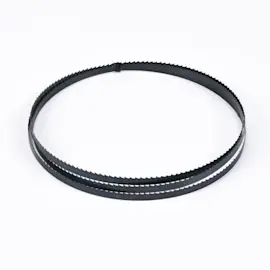
- If you need to change blades before resawing: use how to replace a band saw blade.
Why it matters
Resawing is one of the highest-load cuts on a band saw. The right blade and guide adjustments prevent drift, overheating, and uneven thickness so your stock stays usable.
Last updated: February 2026
What do the numbers mean on a bandsaw blade?
On a Craftsman band saw model 351214061, the numbers on a band saw blade usually describe the blade’s tooth pattern and size, especially TPI (teeth per inch). Higher TPI gives smoother cuts in thin material; lower TPI cuts faster in thicker stock.
Common blade numbers and what they mean
Most blade packaging uses a few standard callouts:
- TPI (teeth per inch): Tooth density; counted along 1 inch of blade length (typically gullet-to-gullet).
- Blade width (for example, 1/8 in, 1/4 in, 1/2 in): Wider blades track straighter; narrower blades turn tighter for curves.
- Blade length (in inches): Must match your saw’s required blade length.
- Tooth style (hook, skip, regular): Affects chip clearing and cut aggressiveness.
- Kerf / set (sometimes listed): How wide the cut is; helps prevent binding.
- Vari-pitch (for example, 6-10 TPI): Alternating tooth spacing to reduce vibration and improve cut quality.
Quick selection guide (typical)
| Material / goal | Typical TPI range | What you’ll notice |
|---|---|---|
| Thick wood, fast rip cuts | 2 to 4 TPI | Faster cutting, rougher finish |
| General wood cutting | 4 to 6 TPI | Balanced speed and finish |
| Thin wood, plywood, plastics | 6 to 10 TPI | Smoother cut, less tear-out |
| Non-ferrous metal (with correct blade type) | 10 to 18+ TPI | Cleaner cut, less grabbing |
Why it matters
Matching TPI and blade width to the material keeps the blade from overheating, wandering, or leaving ragged edges. It also reduces strain on the motor, tires, guides, and drive belt.
If your cuts are slow, crooked, or rough
These checks solve most blade-number confusion in real use:
- Use a lower TPI for thicker stock; use a higher TPI for thin stock.
- Keep at least 3 teeth in the cut at all times (prevents tooth snagging).
- Set blade tension and tracking correctly; adjust blade guides.
- Replace dull blades; a dull blade mimics “wrong TPI.”
For step-by-step help, use our DIY guides: band saw common questions and band saw not cutting straight.
Last updated: February 2026
What is the 3-tooth rule for bandsaw blades?
The 3-tooth rule for a band saw blade means you should choose a blade pitch (TPI) so at least 3 teeth are in the cut at all times. On a Craftsman band saw model 351214061, this helps the blade track more smoothly, reduces tooth breakage, and improves cut quality.
How to apply the 3-tooth rule (quick steps)
- Measure the material thickness where the blade enters the cut.
- Pick a blade TPI that keeps 3 to 6 teeth engaged in typical cutting (3 is the minimum).
- For thin stock, use higher TPI so teeth do not snag and strip.
- For thick stock, use lower TPI so sawdust clears and the blade does not overheat.
- If the cut chatters or grabs, increase TPI; if it burns or stalls, decrease TPI.
Practical TPI guide (typical ranges)
| Material thickness | Typical blade pitch (TPI) | What you’ll notice if it’s wrong |
|---|---|---|
| 1/8 in. or less | 18 to 24 | Too low TPI can hook and bend the work |
| 1/8 to 1/4 in. | 14 to 18 | Too low TPI causes tooth stripping |
| 1/4 to 1 in. | 6 to 10 | Too high TPI cuts slowly and heats up |
| Over 1 in. | 3 to 6 | Too high TPI packs dust and stalls |
Why it matters
Keeping at least three teeth engaged spreads the cutting load across multiple teeth. That reduces vibration, helps the blade stay on line, and prevents premature dulling, especially when you are cutting hardwood, aluminum, or plastics.
Related troubleshooting if cuts are still poor
If you are following the 3-tooth rule and performance is still off, use these symptom checks:
- Slow cutting: dull blade, wrong TPI, or too much feed pressure
- Not cutting straight: guide alignment, blade tension, or worn tires
- Ragged cuts: dull blade, incorrect TPI, or guides set too far away
For step-by-step help, see band saw common questions.
Last updated: February 2026