Owner’s manual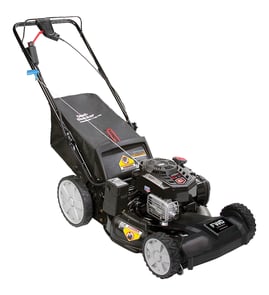

How do I find out what kind of lawn mower I have?
For your MTD walk-behind mower model 12A-238B062, the fastest way to identify exactly what you have is to read the model plate on the mower deck and record the model and serial numbers. Those numbers match you to the correct parts list, operator instructions, and service information in the 12A-238B062 operator’s manual.
Where to find the model plate on this mower
MTD explains that every walk-behind mower has a model plate; stand behind the mower in the operating position and look down at the rear of the deck between the rear wheels.
- Stand behind the mower handles (normal operating position)
- Look down at the back edge of the cutting deck
- Check between the rear wheels for a label/plate
- Write down the model number and serial number exactly as shown
- Use those numbers when ordering parts like a blade, blade adapter, or drive belt
What information to record (and why)
The model plate typically includes both a model number and a serial number. Recording both helps ensure you get the right MTD parts and the right instructions for your exact build.
| What to record | Example format | Why it matters |
|---|---|---|
| Model number | 12A-XXX-XXX | Identifies the mower design and parts breakdown |
| Serial number | Numeric string | Helps match production run details |
Quick safety step before inspecting closely
If you need to reach under the handle area or tip the mower to read the plate, follow the basic safety step from the manual first.
- Stop the engine and let moving parts fully stop
- Disconnect the spark plug wire and secure it away from the plug
- Keep hands away from the blade area
Why it matters
MTD walk-behind mowers can look similar across different model families, but parts like the blade, blade adapter, height adjuster components, and hardware can vary. Using the model plate information prevents ordering the wrong replacement part.
Last updated: January 2026
What gas do I put in my lawn mower?
For the MTD 12A-238B062 gas walk-behind mower, use fresh regular unleaded gasoline; most small 4-cycle mower engines run best on 87 AKI fuel, and E10 (up to 10% ethanol) is the practical limit for reliable starting and storage.
What to use (and what to avoid)
- Use: fresh, clean unleaded gasoline (87 AKI)
- OK: gasoline with up to 10% ethanol (E10)
- Avoid: E15/E85 fuels (higher ethanol blends can cause hard starting and fuel-system issues)
- Avoid: old gas (more than about 30 days without stabilizer)
- Do not mix oil in the gas unless your separate engine manual specifically says it is a 2-cycle engine (most walk-behind mowers are 4-cycle)
Safe fueling basics (from the manual)
The operator manual emphasizes safe fueling and setup steps. Follow these practices every time:
- Fill the tank outdoors
- Shut the engine off and let it cool at least 2 minutes before refueling
- Wipe up spills before starting
- Keep fuel away from ignition sources
- Before service or setup, disconnect and ground the spark plug wire
For the exact fuel and oil requirements for the engine installed on your mower, use the 12A-238B062 operator’s manual.
Quick guide: fuel choices
| Fuel choice | Recommended? | Why |
|---|---|---|
| Regular unleaded 87 AKI | Yes | Correct octane for most mower engines |
| Premium (91-93) | Not needed | Does not improve power for most small engines |
| E10 (10% ethanol) | Yes | Common pump fuel; generally compatible |
| E15/E85 | No | Too much ethanol for many small engines |
Why it matters
Using the right gasoline helps prevent hard starting, surging, and carburetor varnish, and it reduces the chance of fuel-system damage during seasonal storage.
Last updated: January 2026
What is the average lifespan of a gas lawn mower?
A gas walk-behind mower like the MTD 12A-238B062 typically lasts 8 to 15 years, with about 10 years being a common average for residential use when it gets routine maintenance (oil service, air filter care, and periodic blade/deck upkeep). See the 12A-238B062 owner's manual for the maintenance schedule and safety steps.
What most affects mower lifespan
A mower’s service life is mostly determined by engine care, deck condition, and how hard it’s used.
- Oil maintenance: keeping oil at the correct level and changing it on schedule
- Air filter service: cleaning or replacing it regularly (dusty mowing shortens life)
- Deck cleaning: removing grass buildup to reduce rust and corrosion
- Blade condition: keeping the blade sharp and properly secured
- Storage habits: keeping the mower dry and protected from weather
Maintenance checkpoints that extend life
The manual calls out several practices that directly protect the mower and engine.
- Disconnect the spark plug wire before adjustments or cleaning
- Clean the underside of the deck after each use to prevent buildup and corrosion
- Run the mower at full throttle for best cutting and bagging performance
- If you hit a foreign object: stop the engine, disconnect the spark plug wire, inspect, and repair before using again
- Keep fasteners tight; the manual specifies blade mounting torque for safe operation
Quick reference: typical lifespan by use
| Use pattern | Typical lifespan | What usually wears first |
|---|---|---|
| Light residential (small yard) | 10 to 15 years | Blade, wheels, cables |
| Average residential | About 10 years | Engine tune items, deck rust |
| Heavy use or poor maintenance | 5 to 8 years | Engine wear, deck corrosion |
Why it matters
Knowing the typical lifespan helps you decide whether to invest in maintenance and wear parts (blade, blade adapter, belts, wheels) or plan for replacement. Consistent deck cleaning and engine service are the biggest factors in getting the full life out of a gas mower.
Last updated: January 2026