Owner’s manual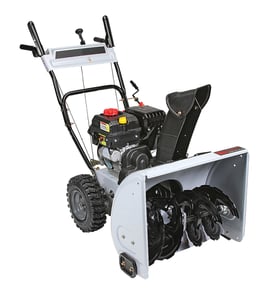


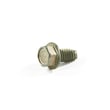
How to read Craftsman snowblower serial number?
On the Craftsman CMXGBAM1054543 gas snowthrower, we use the product identification label to identify your unit. The model number is typically an 11-character number that starts with “CM”; the serial number is on the same label and is used to track the build date and production run.
Where to find the model and serial label
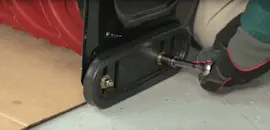
Most Craftsman snow blowers place the product identification label on the rear area of the unit, often on the metal base between the rear wheels or on the back of the frame.
- Look at the back side of the machine near the axle and rear wheels
- Wipe off snow, salt, and grime so the print is readable
- Copy the model number exactly (letters and numbers)
- Copy the serial number exactly (it may be longer than the model number)
- Use a phone photo so you can zoom in later
For diagrams and model coverage notes, use the CMXGBAM1054543 operator’s manual.
How to “read” the serial number (what it tells you)
Craftsman serial numbers are mainly used for identification and parts matching. In practice, you use it to confirm you are ordering the right parts for your exact production run.
| What you’re trying to do | What to use | Why it matters |
|---|---|---|
| Buy the correct parts | Model number (CMXGBAM1054543) | Parts lists are organized by model |
| Confirm exact build/run details | Serial number | Helps match revisions and running changes |
| Get help with service questions | Model + serial | Speeds up troubleshooting and support |
Why it matters
Snowblower parts like auger components and hardware can vary by production run. Having both the model number and serial number helps us match the correct Craftsman parts the first time.
Last updated: January 2026
How many years should a snowblower last?
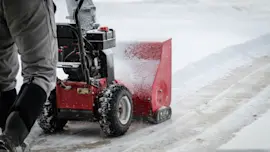
For the Craftsman CMXGBAM1054543 gas snowthrower, the operator guidance defines an average useful life of 7 years or about 60 hours of operation; with consistent maintenance and timely repairs, many snowblowers deliver reliable service beyond that benchmark. For the exact maintenance schedule and storage steps, use the CMXGBAM1054543 operator’s manual.
Typical lifespan expectations
Snowblower life is best thought of in two ways: calendar years and engine hours.
| Measure | What it means | Typical target |
|---|---|---|
| Years | Aging of belts, cables, seals, and corrosion | 7 years average useful life (model guidance) |
| Hours | Actual run time on the engine and drive system | About 60 hours average useful life (model guidance) |
What extends the life the most
We see the longest-lasting Craftsman snowblowers when these basics are done every season:
- Change engine oil on schedule and keep the correct oil level
- Drain fuel for storage longer than 30 days (run the engine until it stops)
- Lubricate the hex (gear) shaft at least once per season or every 25 hours
- Inspect fuel lines, tank, cap, and fittings for cracks or leaks
- Keep the auger control properly adjusted so the auger fully stops when released
Parts that commonly wear (and why)
These items are designed to wear or break first to protect more expensive components:
- Shear pins: they break if the auger hits ice chunks, gravel, or hidden objects
- Belts and friction drive parts: they wear faster if the machine is driven while slipping
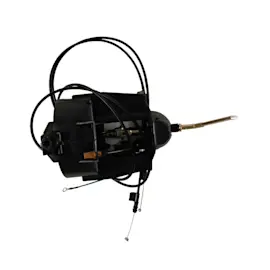
- Cables and springs: they stretch over time and can affect engagement and safety
If your auger stops suddenly after hitting something, check the Craftsman snowblower shear pin 738-04124A first.
Why it matters
That 7-year or 60-hour benchmark is a safety and reliability checkpoint. As the machine ages, annual inspection and proactive replacement of wear parts helps keep the auger, impeller, and drive system operating safely and throwing snow consistently.
Last updated: January 2026
Can you clean a snowblower carburetor without removing it?
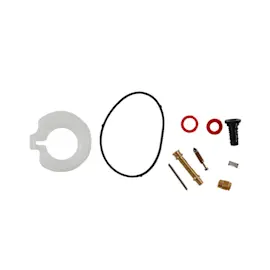
Yes. On the Craftsman CMXGBAM1054543 gas snowthrower, we can often improve rough running or surging by doing an in-place carburetor cleaning (fuel refresh, bowl drain, and carb spray through accessible ports). This works best for light varnish; heavy buildup still needs a full carb service.
Safe, effective in-place cleaning steps
- Shut the engine OFF, remove the ignition key, and let hot parts cool.
- Turn the fuel shutoff OFF (if equipped) and inspect the fuel line for cracks or leaks.
- Drain old fuel from the tank and refill with fresh gasoline (stale fuel is the most common cause of carb varnish).
- If the carb has a bowl drain screw, place a cup under it and drain the bowl; then retighten.
- Remove the air filter cover and spray carb cleaner into the carb throat while moving the throttle linkage by hand.
- Start the engine and let it run a few minutes; if it will run, vary throttle to help pull cleaner through passages.
For model-specific fuel system and maintenance guidance, follow the steps in the CMXGBAM1054543 owner’s manual.
When in-place cleaning is enough (and when it is not)
| Symptom | In-place cleaning usually helps | Full carb removal/cleaning usually needed |
|---|---|---|
| Starts, then surges | Yes | Sometimes |
| Won’t start after storage | Sometimes | Often |
| Runs only on choke | Sometimes | Often |
| Fuel leaking from carb | No | Yes |
Why it matters
The manual notes that fuel left in the system during storage can deteriorate and form gum on essential carburetor parts, which leads to hard starting and poor performance. Draining fuel for storage helps prevent repeat carb problems.
Storage tip that prevents carb problems
If you will not use the snow blower for 30 days or longer:
- Run the engine until it stops to remove fuel from the tank (do not pour fuel out of the engine).
- Store the unit in a clean, dry, well-ventilated area.
Last updated: January 2026