


What is the average cost of a 2 stage furnace?
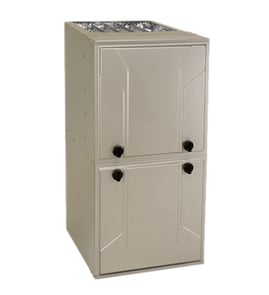
A two-stage gas furnace typically costs about $8,000 to $12,000 installed. For an Icp furnace like model NUGE105KG02, your final price depends most on furnace size (BTU), venting changes, efficiency rating, and labor in your area.
Typical installed price ranges
These are common “installed” ranges (equipment + labor), used for budgeting:
- Single-stage: $5,500 to $7,500
- Two-stage: $8,000 to $12,000
- Variable-speed: $13,000 to $14,000
| Furnace type | How it runs | Typical installed cost |
|---|---|---|
| Single-stage | On/off at one heat output | $5,500 to $7,500 |
| Two-stage | Low and high heat output | $8,000 to $12,000 |
| Variable-speed | Modulates and optimizes airflow | $13,000 to $14,000 |
What changes the price the most
When we see big swings in quotes, it is usually tied to these items:
- Efficiency level (AFUE) and whether venting must be upgraded
- BTU capacity and whether ductwork needs resizing or sealing
- Electrical and controls (thermostat upgrade, wiring, condensate drain on high-efficiency units)
- Gas line and shutoff updates to meet current requirements
- Labor and access (attic, crawlspace, tight closet installs cost more)
Why it matters
Two-stage furnaces usually feel more comfortable because they run longer on a lower heat setting, which helps even out temperatures and can reduce temperature swings compared to a single-stage unit.
Parts note for NUGE105KG02 owners
If you are pricing replacement versus repair, checking the cost of major components can help you decide. Common higher-cost items include the blower motor and airflow components such as the blower motor 45460 and furnace blower fan wheel 600586.
Last updated: February 2026
Is it worth replacing a furnace blower motor?
Yes, it’s usually worth replacing the blower motor on an Icp gas furnace like model NUGE105KG02 when the heat exchanger and controls are in good shape and the failure is limited to the air-moving system. A blower motor replacement typically restores airflow, comfort, and safe temperature rise without the cost of a full furnace replacement.
When replacing the blower motor makes sense
We recommend blower motor replacement when the furnace is otherwise operating normally and you’re solving a clear airflow problem.
- The furnace heats but airflow is weak, noisy, or intermittent
- The motor hums but the blower wheel does not spin freely
- The motor overheats and shuts off, then restarts after cooling
- You have repeated limit switch trips caused by low airflow (after filter and vents are confirmed clear)
- The motor bearings are loud or the shaft has play
A common related repair is replacing the run capacitor at the same time, since a weak capacitor can mimic a failing motor (hard starts, humming, slow ramp-up).
When a full furnace replacement is the better call
If multiple major systems are failing, replacement can be the better long-term value.
| What you’re seeing | Typical direction |
|---|---|
| Only the blower motor or capacitor is bad | Replace the failed part |
| Blower motor plus recurring control or ignition issues | Compare repair total vs replacement |
| Chronic overheating after ductwork and filter are corrected | Diagnose airflow and sizing before investing |
| Multiple expensive parts needed at once | Consider replacement |
Parts that commonly affect blower performance
For NUGE105KG02, these parts are often involved in airflow complaints:
- Blower motor 45460 (drives the circulating blower)
- Capacitor 12907 (helps the motor start and run, if your motor uses a capacitor)
- Furnace blower fan wheel 600586 (moves air; can crack, slip, or clog with dust)
Why it matters
A healthy blower motor protects comfort and equipment. Low airflow can cause overheating, nuisance shutdowns, and uneven temperatures, and it can shorten the life of other components.
Last updated: February 2026
What is the most common part to fail on a furnace?
The most common “failure point” on a gas furnace like the Icp NUGE105KG02 is usually airflow restriction from a dirty air filter, which can overheat the furnace and trip safety limits. After that, the most frequent no-heat causes are ignition-safety components and blower-related parts.
Most common furnace problems (in order)
- Dirty or clogged air filter (restricted airflow, overheating)
- Flame sensor dirty (burners light then shut off)
- Hot surface igniter or spark ignition issue (no ignition)
- Thermostat or low-voltage wiring issue (no call for heat)
- Draft/venting proving issue (pressure switch, vent motor problems)
- Blower motor or capacitor problem (poor airflow, limit trips)
Quick symptom-to-part checklist
| What you notice | Most likely area | What to check first |
|---|---|---|
| Furnace starts, then shuts off quickly | Overheat/limit due to airflow | Filter, supply/return vents, blower wheel buildup |
| Burners light for a few seconds, then go out | Flame sensing | Clean flame sensor, check grounding |
| Inducer runs but burners never light | Ignition or gas/controls | Igniter, gas valve signal, safety switches |
| Blower hums, starts slow, or won’t start | Blower drive components | Capacitor 12907, blower wheel condition |
Why these parts fail so often
Airflow and ignition safety are the two biggest “gatekeepers” in any gas furnace. A slightly dirty filter or a weak run capacitor can push the system into a safety shutdown, even when the furnace is otherwise in good shape.
Parts we commonly see involved on this model
These are examples of parts on the Icp NUGE105KG02 that can be involved when the furnace won’t heat or won’t move air:
- Capacitor 12907 (motor run capacitor)
- Blower motor 45460 (circulates air through the ductwork)
- Furnace vent air pressure switch 10002051 (proves draft before ignition)
- Furnace blower fan wheel 600586 (moves air; can clog with dust)
Safety notes before troubleshooting
- Turn off electrical power at the furnace switch or breaker before opening panels.
- If you smell gas, do not operate switches; leave the area and contact your gas supplier.
- If you are testing live voltage or gas ignition, we recommend using a qualified technician.
Last updated: February 2026
How to reset furnace ignitor?
On the Icp gas furnace model NUGE105KG02, an ignitor “reset” is usually a control-board lockout reset: we shut off power to the furnace for a few minutes, restore power, then call for heat again. If it locks out repeatedly, the issue is typically ignition sensing, airflow, or a failing ignition component.
Safe reset steps (power-cycle reset)
- Set the thermostat to OFF.
- Turn OFF power to the furnace at the service switch or circuit breaker.
- Wait 5 minutes (this clears most electronic lockouts).
- Make sure the blower door and burner compartment door are fully closed (door switch must be engaged).
- Turn power ON.
- Set the thermostat to HEAT and raise the setpoint 3 to 5 degrees.
What to check if it won’t light after the reset
These are the most common causes after a successful power cycle:
- No flame sensed (dirty flame sensor, poor ground, weak flame)
- Draft/venting problem (pressure switch not closing, blocked intake or exhaust)
- Weak inducer or blower airflow issues (restricted filter, dirty wheel)
- Ignition component failing (intermittent ignitor, cracked ignitor, loose wiring)
- Low voltage or wiring issue (loose spade connectors, damaged harness)
Quick symptom guide
| What you see | What it usually means | What we do next |
|---|---|---|
| Ignitor glows, no flame | Gas not opening or burner issue | Check gas supply, valve signal, burner condition |
| Flame lights then shuts off | Flame not being proven | Clean flame sensor, check grounding |
| Inducer runs, then stops | Pressure switch not proving draft | Check venting, condensate, switch tubing |
| Blower runs, no heat | Control not entering ignition | Check safeties, thermostat call, board status |
Parts that commonly relate to ignition and airflow
If you’re troubleshooting airflow or motor-start issues that can prevent reliable ignition, these model-listed parts are often involved:
- Capacitor 12907 (motor run capacitor)
- Blower motor 45460 (circulating air blower motor)
- Furnace vent air pressure switch 10002051 (draft proving switch)
Why it matters
Repeated resets can mask a safety lockout condition. A furnace that fails ignition multiple times can shut down to prevent unsafe operation, so fixing the underlying cause (flame sensing, draft proving, airflow, or wiring) restores reliable heat and protects components.
Last updated: February 2026