Owner’s manual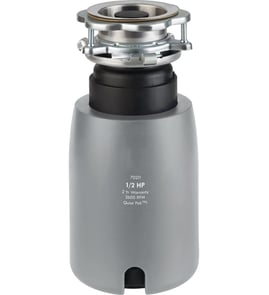


How long does a Kenmore garbage disposal last?
A Kenmore garbage disposal typically lasts 10 to 12 years with normal household use. For model 175605560, lifespan is longest when you run cold water during grinding, avoid packing the chamber, and clear jams correctly so the motor does not overheat.
What affects disposal lifespan most
These factors drive wear on the motor, grind components, and seals:
- What you grind: hard items (small bones, fruit pits) and fibrous waste increase load
- Jams and stalls: repeated stalling overheats the motor and shortens service life
- Water use: cold water helps move ground waste and reduces grease buildup
- Cleaning habits: light scouring helps reduce buildup and odors
- Electrical health: a properly grounded unit on the correct circuit reduces nuisance trips
Care steps that help you reach 10 to 12 years
We follow the operating and care guidance in the 175605560 owner's manual:
- Start a moderate to strong flow of cold water before turning the disposer on
- Keep cold water running at least 15 seconds after grinding to flush the drain line
- Feed waste in batches; do not pack the grind chamber
- Use ice occasionally to help scour the grind chamber
- Grind citrus peels in moderation to freshen odors
Quick do and don’t table
| Do | Don’t |
|---|---|
| Run cold water while grinding | Pour grease or oil into the disposer |
| Feed waste gradually | Pack the chamber full |
| Clear jams with the wrench and reset | Put your hand into the disposer |
If it jams or stops
Use the standard jam-release steps:
- Turn off power and water
- Work the bottom center hole with the self-service wrench
- Remove the obstruction with tongs
- Let the motor cool 3 to 5 minutes, then press the red reset button
Why it matters
Good habits reduce jams and overheating, which are two of the fastest ways to shorten disposal life.
For parts and model lookups, start with the model parts list, or search by model number on Sears PartsDirect.
Last updated: February 2026
How to know if a garbage disposal is compatible?
A garbage disposal is compatible when it matches your sink’s drain opening and mounting style, and it can connect to your existing drain trap and discharge plumbing without forcing parts out of alignment. For Kenmore model 175605560, confirm the mounting and discharge setup in the 175605560 owner's manual.
What to check before you buy or install
- Sink drain opening and mount: Your sink must accept the disposer’s mounting flange and locking ring style.
- Discharge alignment: The discharge tube must line up with the P-trap without pulling or bending the tube.
- Discharge tube length: If it is long, it can be cut square and clean; if it is short, an extension can be added.
- Vertical clearance: The disposer needs enough space under the sink to hang vertically (helps prevent vibration).
- Single vs double sink plumbing: Double sinks typically need separate drain traps for each side.
Quick compatibility checklist (plumbing and fit)
| Item to verify | What “compatible” looks like | What to fix if it’s not |
|---|---|---|
| Discharge tube to P-trap | Lines up naturally, no stress on joints | Reposition trap, shorten tube, or add extension |
| Mounting ring engagement | Lower mounting ring locks securely over flange ridges | Reseat and lock ring; recheck flange position |
| Under-sink space | Unit stays vertical with room for connections | Adjust plumbing layout; confirm cabinet clearance |
| Leak check | No drips after running water and operating | Tighten connections; recheck gasket and flange |
Why it matters
A disposer that does not match the sink mount or forces the discharge into the drain trap is more likely to leak, vibrate, and loosen connections over time. A correct fit keeps the drain line sealed and the unit stable.
After installation: confirm it’s truly compatible
- Use the stopper to fill the sink with water.
- Remove the stopper, turn the disposer on, and check under the sink for leaks.
- Re-tighten slip nuts and recheck the discharge gasket and flange if you see moisture.
For parts and model-based lookup, start with the model parts list, or search by model number on Sears PartsDirect.
Last updated: February 2026
Is it cheaper to repair or replace a garbage disposal?
For a Kenmore 175605560 garbage disposal, it’s cheaper to repair when the problem is minor (a jam, a trip to the reset, or a simple clog). Replacement is the better value when the unit is older (typically 10+ years) or has major issues like persistent leaks or a failing motor.
Quick decision guide (repair vs. replace)
- Repair when the disposal:
- Hums but won’t grind (likely a jam)
- Stopped suddenly and the reset restores operation
- Drains slowly due to a minor blockage (not a cracked housing)
- Has no visible leaks from the body or seals
- Replace when the disposal:
- Leaks from the housing or seams (not just a loose drain connection)
- Trips the breaker repeatedly after clearing jams
- Smells burnt, won’t restart, or has intermittent power (motor failing)
- Needs frequent fixes and downtime is becoming a problem
What we recommend for this model
Use the safety and operating steps in the 175605560 owner's manual to rule out the common, low-cost fixes first. The manual specifically calls out turning power off before clearing jams, using the self-service wrenchette or a wooden handle to free the grind plate, and running cold water during operation.
Low-cost checks that often avoid replacement
- Turn power off at the switch (and breaker if needed) before touching anything
- Press the reset button after a jam or overload
- Free a jam using the wrenchette (or a wooden spoon handle), not your hands
- Run a strong flow of cold water, then run water 15 seconds after grinding to flush the drain line
- Avoid problem items like grease, fibrous husks, and hard non-food debris
Cost comparison (typical)
| Scenario | Typical outcome | Best choice |
|---|---|---|
| Jam, overload, minor clog | Quick DIY fix | Repair |
| Repeated leaks from body/seams | Structural failure | Replace |
| Frequent breaker trips, burnt smell | Motor/electrical failure | Replace |
| Repair estimate is over ~50% of a new unit | Poor value | Replace |
Why it matters
A disposal that’s leaking or has a failing motor can turn into repeated clogs, water damage under the sink, and nuisance breaker trips. Fixing the simple issues first saves money, but replacing at the right time prevents ongoing problems.
For parts and model-based lookup, start with the parts list for Kenmore 175605560, or search by model on Sears PartsDirect.
Last updated: February 2026
Why don't plumbers like garbage disposals?
Plumbers often dislike garbage disposals because they are a common source of drain clogs and service calls when they are used like a trash can. Even if a Kenmore 175605560 disposal grinds food, grease, fibrous scraps, and other non-food items can still build up in the trap and drain line.
What usually causes the problems
Most “garbage disposal” issues plumbers see are really drain-line issues caused by what goes into the disposer and how it is operated.
- Grease, fat, and oily foods coat the inside of pipes and trap solids
- Fibrous foods (corn husks, artichokes) can tangle and restrict flow
- Large batches of peels can pack the grind chamber and slow draining
- Hard non-food items (metal, glass, plastic) can jam the unit and damage components
- Not flushing with enough cold water leaves ground waste sitting in the drain
What we recommend for fewer clogs (best practices)
These habits match the care and use guidance for this disposer.
- Run a moderate-to-strong flow of cold water before switching the disposer on
- Feed scraps gradually; do not dump a full bowl in at once
- Keep water running for about 15 seconds after grinding to flush the drain line
- Put grease in the trash, not the disposer or any drain
- Avoid extremely fibrous materials (corn husks, artichokes) to prevent blockage
Quick “OK vs. don’t” guide
| Item or habit | Better choice | Why it matters |
|---|---|---|
| Grease/fat | Trash container | Prevents pipe buildup and blockages |
| Fibrous scraps | Trash/compost | Reduces tangles and slow drains |
| Cold-water flushing | Yes | Moves ground waste through the trap and line |
| Hot water while grinding | No | Can soften fats and encourage buildup |
Why it matters
A garbage disposal is designed for normal household food waste, but it cannot prevent downstream plumbing problems. Using the right inputs and plenty of cold water protects the grind chamber, the sink trap, and the branch drain line, which reduces clogs and repair costs.
Parts and documentation
- Use the 175605560 owner's manual for safety rules, do and don’t lists, and operating steps.
- If you need to look up replacement parts by model number, search on Sears PartsDirect.
Last updated: February 2026