Owner’s manual
 Error Codes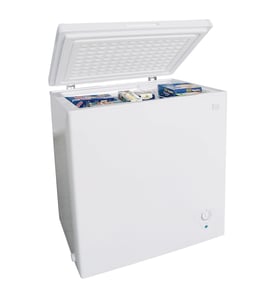



What is the average life of a chest freezer?
Most chest freezers last 10 to 20 years, and a well-maintained unit often reaches around 16 years. For your Whirlpool WZC5116LW, good placement, proper lid sealing, and routine defrosting and cleaning (as outlined in the WZC5116LW owner's manual) help you get the longest service life.
Typical lifespan and what affects it
A chest freezer’s life depends most on heat load, airflow, and how hard the sealed system has to work.
- Room temperature: Keep the freezer where ambient temps stay within the recommended range.
- Ventilation/clearance: Maintain side and rear clearance so heat can dissipate.
- Lid seal quality: A poor seal forces longer run times and shortens compressor life.
- Defrosting and cleaning: Heavy frost buildup reduces efficiency and stresses components.
- Usage habits: Frequent lid openings and overfilling can increase run time.
Quick maintenance checklist (best ROI)
We recommend these habits to extend life and reduce energy use:
- Keep at least 2.75 in. clearance on both sides and behind the cabinet.
- Level the freezer so the lid seals evenly.
- Defrost when frost becomes noticeable; wipe out moisture after cleaning.
- Avoid covering the freezer with blankets or tablecloths (it restricts airflow).
- Keep the temperature control steady; avoid frequent large adjustments.
What “end of life” usually looks like
Most failures fall into a few buckets; this helps you decide whether to repair.
| Symptom | Common cause | Typical fix path |
|---|---|---|
| Runs constantly, warm temps | Air leak at lid, poor ventilation | Check gasket and clearance; re-level |
| Clicking, won’t start | Start components or control issue | Diagnose controls; test sealed system |
| Loud or overheating operation | Restricted airflow, dirty condenser area | Improve ventilation; clean around unit |
| Not cooling at all | Sealed system/compressor issue | Professional sealed-system service |
Why it matters
A chest freezer holds cold air better than an upright, so it often runs less and lasts longer. Keeping the cabinet level and allowing proper airflow reduces compressor stress, which is the biggest driver of long-term reliability.
Last updated: February 2026
What are the common chest freezer problems?
Common problems on a Whirlpool chest freezer like model WZC5116LW include the freezer running too warm, excessive frost or condensation, constant running, unusual noises, and lid sealing issues. Most of these trace back to airflow and clearance, control settings, or a worn lid gasket; see the WZC5116LW owner's manual for operating and care basics.
Most common symptoms and what they usually mean
- Freezer too warm: lid not sealing, warm room location, overloaded cabinet, or a temperature control issue.
- Freezer too cold or freezing unevenly: control set too cold, poor loading (blocked circulation), or control problems.
- Heavy frost buildup: frequent lid openings, humid air entering, or a leaking lid gasket.
- Runs constantly: warm ambient conditions, poor clearance around the cabinet, lid not sealing, or heavy loading.
- Clicking, buzzing, or rattling: cabinet not level, items vibrating, or normal compressor cycling.
Quick checks we recommend first (no tools)
- Confirm clearance and ventilation: allow about 2.75 in. on both sides and 2.75 in. behind the freezer for airflow.
- Check room temperature: chest freezers run best when the area stays roughly 32°F to 110°F.
- Inspect the lid seal: look for gaps, tears, or areas that do not grip paper when the lid is closed.
- Defrost and clean when frost builds up: frost reduces usable space and can affect cooling performance.
- Avoid covering the cabinet: blankets or tablecloths reduce air circulation.
Parts that commonly solve “warm” or “frost” complaints
| Problem you see | Part to consider for WZC5116LW | What it affects |
|---|---|---|
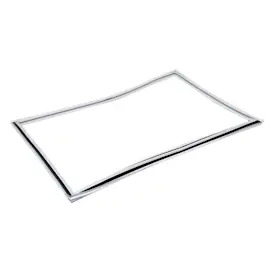
| Lid not sealing, frost around rim | Gasket, door W11597677 | Prevents warm, humid air leaks |
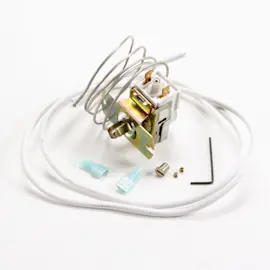
| Temperature swings or won’t regulate | Maytag freezer temperature control thermostat W11685637 | Cycles cooling on and off |
Why it matters
Temperature and airflow problems can lead to food softening, freezer burn, and higher energy use. Proper clearance, correct loading, and a tight lid seal are the fastest ways to stabilize temperatures.
Last updated: February 2026
Is Whirlpool a good chest freezer brand?
Whirlpool is a strong, reliable chest freezer brand, and the Whirlpool WZC5116LW is built for practical home storage with simple controls, manual defrost maintenance, and optional organization features like baskets. For model-specific use, care, and safety details, follow the WZC5116LW owner's manual.
What you can expect from a Whirlpool chest freezer
Most Whirlpool chest freezers are designed around steady temperature holding, straightforward operation, and long-term food storage.
- Consistent freezing performance when the lid seal is tight and airflow around the cabinet is adequate
- Quiet, steady operation (you may still hear normal compressor cycling)
- Manual defrost upkeep (periodic defrosting and cleaning)
- Simple temperature control you can adjust for your load and room conditions
- Storage flexibility using baskets and dividers (varies by model)
Quick checklist: how we judge “good” for a chest freezer
| What matters | What to look for | What to do if it’s not meeting expectations |
|---|---|---|
| Temperature stability | Food stays solidly frozen | Verify control setting, reduce lid openings, allow 24 hours after changes |
| Lid seal | No gaps, no heavy frost at the rim | Inspect and replace the gasket, door W11597677 if it’s torn or warped |
| Organization | Food is easy to find | Use baskets and group items by type and date |
| Maintenance | Defrosting is manageable | Follow the manual’s defrost and cleaning steps |
Why it matters
A “good” chest freezer is one that holds safe temperatures with minimal fuss. When temperature control, lid sealing, and basic maintenance are handled correctly, you get better food quality, less freezer burn, and lower energy waste.
Tips to get the best performance from your WZC5116LW
- Keep the freezer reasonably full for better temperature stability
- Leave space around the cabinet for ventilation
- Avoid propping the lid open; warm, humid air drives frost buildup
- Defrost and clean before switching modes (if your unit is convertible)
- Store foods in labeled bags/containers and rotate older items forward
Last updated: February 2026
Does Whirlpool make chest freezers?
Yes. Whirlpool makes chest freezers, and the Whirlpool WZC5116LW is one of them. If you already own this model, our WZC5116LW owner's manual covers setup, operation, maintenance, and care so you can use the freezer safely and efficiently.
How to confirm you have a Whirlpool chest freezer
Check these quick identifiers on your appliance:
- The model tag shows WZC5116LW (often near the lid opening or on the cabinet)
- The brand label says Whirlpool
- The unit is a horizontal, top-opening chest-style freezer
- The control is a freezer temperature control (thermostat-style)
- Some versions include a key lock (key-eject style)
What this model’s manual covers (and why it helps)
The owner’s manual for Whirlpool chest freezers like WZC5116LW includes key topics such as:
- Location and electrical requirements
- Using the control to set temperature
- Defrosting and cleaning
- Power interruption guidance
- Basket setup and positioning (on some models)
| Topic | What you get | Why it matters |
|---|---|---|
| Installation basics | Placement and power requirements | Helps prevent nuisance trips and poor cooling |
| Operation | Control use and temperature guidance | Helps protect food quality |
| Maintenance | Defrosting and cleaning steps | Helps maintain efficiency and storage space |
| Safety features | Key lock guidance (on some models) | Helps reduce entrapment risk |
Related parts you might see on Whirlpool chest freezers
If you are maintaining or repairing a Whirlpool chest freezer, these are common part types (availability varies by symptom):
- Temperature control components such as a thermostat and knob
- Door sealing parts such as a lid gasket
- Cabinet hardware such as hinges and handles
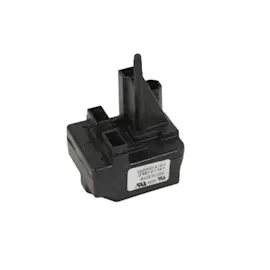
- Cooling-system components such as a compressor or drier
Why it matters
Choosing parts and troubleshooting steps by exact model number prevents ordering the wrong component and helps you follow the correct operating and safety instructions for your Whirlpool chest freezer.
Last updated: February 2026
How to fix whirlpool freezer not freezing?
If your Whirlpool WZC5116LW chest freezer is running but not freezing, we focus first on power, control settings, airflow, and lid sealing; then we check the temperature control and the sealed-system components. Use the WZC5116LW owner's manual to confirm the correct control position and basic operating indicators.
Quick checks that fix many “not freezing” complaints
- Make sure the freezer is plugged into a dedicated 115 V, 60 Hz grounded outlet (no extension cord).
- Confirm the temperature control is not set to 0/off (0 turns cooling off).
- Wait a few minutes before reopening the lid after closing; the seal can hold the lid shut briefly.
- Look for heavy frost buildup; defrost when frost reaches about 1/4 in. thickness.
- Verify the lid closes evenly and the gasket is clean and making full contact.
Defrost and restart (recommended when frost is heavy)
Manual defrosting is a practical first repair step on a chest freezer because heavy frost can reduce cooling performance.
Basic process (summary): unplug, remove food, open the drain, melt frost with pans of hot water (no electrical devices inside), scrape with plastic only, dry, reinstall drain cap/cover, then restart.
| What you see | What it usually means | What we do next |
|---|---|---|
| Frost thicker than 1/4 in. | Airflow and heat transfer are restricted | Fully defrost and clean, then recheck temps |
| Little to no frost, still warm | Cooling system or control issue | Move to thermostat and sealed-system checks |
Parts that commonly cause “not freezing”
If the freezer will not maintain 0°F (-18°C) after a full defrost and proper settings, these model-listed parts are common suspects:
- Temperature control thermostat: if it does not cycle the compressor correctly, cooling can be weak or stop. Consider the maytag freezer temperature control thermostat W11685637.
- Compressor/inverter (sealed-system drive): if the compressor is not running correctly or the inverter is failing, temperatures will rise. Consider the inverter W11598145 and compressor W11599968.
- Door gasket: air leaks add moisture and heat load, leading to poor freezing and frequent running. Consider the gasket, door W11597677.
Why it matters
A chest freezer is factory set for optimum operation at 0°F (-18°C). When it cannot reach or hold that temperature, food safety and energy use are affected; correcting settings, frost buildup, and lid sealing often restores normal freezing quickly.
Last updated: February 2026
What to put in the bottom of a chest freezer?
For the Whirlpool WZC5116LW chest freezer, we recommend keeping the bottom clear and using it as a clean, dry storage surface. If you want extra protection, use removable organizers (bins or baskets) rather than permanent liners so moisture and condensation cannot get trapped underneath.
Best options for the bottom (safe and practical)
- Nothing at all: easiest to keep dry, clean, and odor-free.
- Removable plastic bins: contain leaks and make food rotation easier.
- Wire or plastic freezer baskets: keep small items from getting buried.
- Cardboard-free organization: use freezer-safe totes instead of boxes that can absorb moisture.
- Labeling system: zones for meat, vegetables, prepared meals, and “use first.”
What to avoid putting on the bottom
- Foam sheets or thick mats that can trap moisture and lead to odors.
- Fabric, towels, or paper that can freeze to the liner and hold water.
- Abrasive liners that can scratch the interior.
- Anything permanent (glued-down mats, taped insulation) that makes cleaning harder.
Moisture and cleaning guidance (what the manual supports)
Condensation on the walls or bottom can happen in humid conditions and is considered normal. When you defrost or clean, use mild detergent in warm water or a baking soda solution, rinse, and wipe dry; avoid harsh or abrasive cleaners. For the exact cleaning and defrost steps for this model, follow the WZC5116LW owner’s manual.
Quick comparison
| Option | Helps organization | Traps moisture risk | Easy to remove/clean |
|---|---|---|---|
| Bare bottom | Low | Lowest | Highest |
| Plastic bins | High | Low | High |
| Foam/rubber mat | Medium | Higher | Medium |
Why it matters
Anything that traps water on the bottom can create odors, make cleanup harder after a spill, and increase frost or condensation issues. A clear bottom or removable bins keeps airflow and cleaning simple while protecting stored food.
Last updated: February 2026