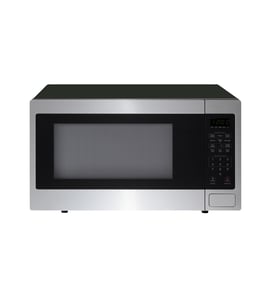

Is a countertop microwave the same as a built-in microwave?
No. A countertop microwave (like Kenmore model 56589981590) is designed to sit on a counter and plug into a standard outlet, while a built-in microwave is designed to be installed into cabinetry (often with a trim kit) for a finished, integrated look.
Key differences that matter
- Installation: Countertop units are freestanding; built-ins require a cabinet cutout and proper ventilation clearances.
- Airflow and cooling: Built-ins are engineered for enclosed spaces; countertop units need open space around the cabinet for airflow.
- Electrical needs: Both commonly use a standard 120V outlet, but built-ins may require a dedicated circuit depending on wattage and local code.
- Fit and finish: Built-ins are sized to match cabinetry; countertop models are sized for counter space.
- Service access: Built-ins can take longer to remove for repair because they are mounted or framed in.
Can I install a countertop microwave as a built-in?
We do not recommend installing a countertop microwave into a cabinet opening unless the unit is specifically rated for built-in installation. Doing so can restrict ventilation and lead to overheating, nuisance shutoffs, or premature failure.
Quick check before you decide
| Question | Countertop microwave | Built-in microwave |
|---|---|---|
| Sits on counter with open airflow? | Yes | Not required |
| Designed for cabinet enclosure? | No | Yes |
| Uses trim kit for finished look? | Rare | Common |
| Easy to move/replace? | Yes | Usually no |
Why it matters
Microwaves rely on correct airflow to protect components like the magnetron, high-voltage diode, and thermal cutoffs. Choosing the right installation type helps prevent overheating and avoids repeat repairs.
Related DIY guidance
If your microwave runs but does not heat, follow our troubleshooting steps in why is my microwave not heating.
Last updated: February 2026
Why would a Kenmore microwave stop working?
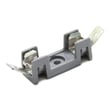
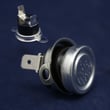
A Kenmore countertop microwave like model 56589981590 can stop working because it is not getting power, a safety device opened (fuse or thermal cutout), a door-switch circuit failed, or a high-voltage component problem prevents heating. Start with power and door checks before any internal testing.
Quick checks we recommend first
- Confirm the outlet works by plugging in a lamp or small appliance.
- Reset the kitchen circuit breaker; then try the microwave again.
- If the display is blank, try a different outlet (avoid extension cords).
- Make sure the door closes firmly; a misaligned latch can stop operation.
- If it runs but does not heat, stop using it and move to heating-specific checks.
Most common causes (and what you typically see)
| Symptom | Likely cause | What to do next |
|---|---|---|
| Dead, no display | Blown line fuse, open thermal cutout, no power | Verify outlet and breaker; then check fuse and thermal devices |
| Runs but does not heat | High-voltage diode, magnetron, capacitor, transformer, or HV fuse | Use heating troubleshooting steps; consider pro service for HV system |
| Starts then stops | Door switch issue, overheating, loose connection | Inspect door latches/switches; check for blocked vents |
| Trips breaker when starting | Shorted HV component or wiring | Unplug and have it serviced before further use |
Safe troubleshooting notes (important)
Microwaves contain a high-voltage capacitor that can hold a dangerous charge even when unplugged. For internal electrical checks (fuse, door switches, thermal cutout), we recommend using a meter only if you are trained; otherwise, use a qualified technician.
If you are comfortable doing basic electrical diagnosis, these resources walk through the common failure points:
Why it matters
A microwave may look “dead” from a simple power interruption, but it can also be protecting you by shutting down when a fuse blows, a thermal protector opens, or a door interlock fails. Identifying the symptom first helps you avoid replacing the wrong part and prevents unsafe operation.
Last updated: February 2026
Where to find model number on Kenmore microwave?
On a Kenmore countertop microwave like model 56589981590, the model number is printed on a rating label. We most often see it on the door frame area when you open the door, or on the back of the cabinet.
Most common places to check
- Open the door and look along the front frame (door jamb) around the opening
- Check the edge of the door itself (side of the door)
- Look on the side wall inside the cooking cavity (usually near the opening)
- Check the back panel of the microwave
- Look near the control panel side trim (less common)
What the label looks like (and what to copy)
The rating label usually includes several identifiers. For parts lookup, copy the model number exactly as shown.
| Label item | What it’s used for | Example you might see |
|---|---|---|
| Model number | Identifies the exact microwave version for parts | 56589981590 |
| Serial number | Production code, helpful for service history | Varies |
| Electrical rating | Confirms power requirements | 120V, Hz, watts |
Tips if the label is hard to read
- Wipe the label gently with a damp cloth and dry it; grease can hide characters.
- Use your phone camera and zoom in; angled light helps reveal faded print.
- Write down the full model number, including any dashes or extra digits if shown.
Why it matters
Kenmore microwaves can look identical across multiple model numbers, but internal parts (door switches, fuse, turntable motor, control board) can differ. Using the exact model number helps us match the correct parts list and diagrams.
For more help with model number basics, use how to find your appliance model number (and what it means for parts).
Last updated: February 2026
How to replace Kenmore microwave filter?
On Kenmore model 56589981590, the “microwave filter” most often means the grease filter (a metal mesh filter on the bottom). Replacing it is usually a tool-free slide-and-drop install: seat the rear edge first, lift into the tabs, then pull forward until it rests securely.
Before you start (safety and fit)
- Unplug the microwave (or switch off the outlet) before handling any filter area.
- Let the unit cool if it was recently used.
- Confirm which filter you have:
- Grease filter: metal mesh, typically on the underside.
- Charcoal filter: used on recirculating setups; typically behind the top vent grille.
- If your filter is bent, heavily clogged, or won’t sit flat, replace it rather than forcing it.
Grease filter replacement steps (most common)
- Support the filter with one hand.
- Angle the filter so the back edge goes into the rear slot/channel first.
- Drop the front edge down slightly.
- Lift the filter up against the mounting tabs.
- Pull the filter forward so it locks into its resting position.
If you meant the charcoal filter
Charcoal filters are usually accessed by removing the top vent grille, then sliding the filter out of its track. If your microwave is vented to the outside, it may not use a charcoal filter.
| Filter type | What it does | Typical location | When to replace |
|---|---|---|---|
| Grease filter | Traps cooking grease | Bottom/underside | When damaged or won’t clean well |
| Charcoal filter | Reduces odors (recirculating) | Behind vent grille | When odors linger after cleaning |
Why it matters
A properly seated filter helps airflow, reduces grease buildup on internal surfaces, and can prevent overheating issues during cooking.
For related troubleshooting if the microwave seems weak or not cooking properly, use our guide: why is my microwave not heating.
Last updated: February 2026


