
How do I find my lawn mower model number?
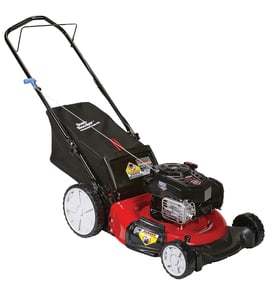
For your Craftsman self-propelled rotary lawn mower, the model number is the ID you should match when ordering non-engine parts for model 13197618. It’s typically printed on a product label (not on the engine), and it may be near the rear wheels, deck, or handle mounting area.
Check these common label locations on Craftsman walk-behind mowers:
- On top of the mower deck, near the rear discharge flap
- On the back of the deck, between the rear wheels
- On the side of the deck near a wheel height adjuster
- On the handle bracket or handle mounting plate
- Under the deck lip (wipe grass buildup off first)
Most mower ID labels include a few different numbers. Use this quick guide:
| Label item | What it’s for | Example for this mower |
|---|---|---|
| Model number | Identifies the mower for parts lookup | 13197618 |
| Serial number | Production identifier | Varies |
| Engine model/type/code | Identifies the engine only | Varies |
Use these checks before ordering parts:
- Write the model number exactly as printed (include all digits)
- Take a clear photo of the label for reference
- If the label is worn, clean it gently and use a flashlight at an angle
- Match the mower model number for deck, wheels, and drive parts; use engine numbers only for engine-specific parts
The mower model number narrows parts to the correct deck and self-propelled drive configuration. That prevents ordering a similar-looking washer, bolt, or bracket that does not fit your Craftsman mower.
If you’re replacing a fastener or spacer and want to confirm fit, compare the part listing details for items like the washer 532121749 used on this model.
Last updated: January 2026
How long does a walk behind a lawn mower last?
Most walk-behind lawn mowers, including the Craftsman 13197618 self-propelled rotary lawn mower, typically last 8 to 10 years with normal residential use and basic maintenance. With consistent upkeep and timely part replacement, many owners get 10 to 15 years of service.
- Light use (small yard, weekly mowing): about 10 to 15 years
- Average use (typical suburban lawn): about 8 to 12 years
- Heavy use (large yard, rough terrain, frequent mowing): about 5 to 8 years
| What drives lifespan most | What it looks like | What to do |
|---|---|---|
| Engine maintenance | Hard starting, surging, power loss | Fresh fuel, clean air filter, tune-up items as needed |
| Deck and blade impacts | Excess vibration, bent blade, cracked deck | Inspect after strikes; replace damaged hardware |
| Drive system wear (self-propel) | Slipping, weak pull, inconsistent speed | Check belt/cable adjustments; replace worn parts |
| Fasteners and spacers | Loose handle, wobble, misalignment | Replace missing or worn washers and hardware |
- Starts reliably but has a specific issue (drive slipping, vibration, loose handle): repair usually makes sense
- Needs repeated major work each season (engine problems plus drive problems): replacement often costs less long-term
- Deck is severely rusted or cracked: replacement is usually the safer, more durable choice
Small hardware can prevent bigger wear issues when you tighten up handles, wheels, and linkages. For this model, examples include the washer 532121749 and washer 596040101.
A mower that is near end-of-life often costs more in downtime and repeated fixes than it is worth. Knowing the typical lifespan helps you decide whether to invest in maintenance, replace a few parts, or plan for a new mower.
Last updated: January 2026
What replacement parts are most commonly needed for the 13197618?
For the Craftsman 13197618 self-propelled rotary lawn mower, the most commonly needed replacement parts are the wear items that see vibration, friction, and frequent removal during routine service. On this model’s parts list, the most common replacements shown are washers such as the washer 532121749 and washer 596040101.
Even when a specific part is not listed here, these are the items we see replaced most often on Craftsman walk-behind mowers during seasonal maintenance:
- Blade and blade bolt or hardware (damage from rocks and roots)
- Air filter and spark plug (starting and performance issues)
- Drive belt (self-propel speed loss)
- Wheels and wheel height adjusters (wear, wobble, uneven cut)
- Cables (blade control or drive control not engaging)
- Washers, nuts, and fasteners (lost during service, loosen from vibration)
Washers are small but important; they help keep assemblies tight and aligned, and they reduce wear on mounting points.
| Part on this model | What it typically does | Common symptom when missing/worn |
|---|---|---|
| Washer 532121749 | Spreads load under a bolt or nut | Loosening, rattling, misalignment |
| Washer 596040101 | Helps maintain spacing and smooth movement | Excess play, squeaks, uneven tension |
Use the mower’s diagrams and match the location where the washer installs.
- Confirm the exact mounting location (deck, handle, wheel, or drive system)
- Compare the old washer’s inside diameter and outside diameter
- Replace any paired hardware (nut/bolt) that is stripped or rounded
- Tighten fasteners securely; recheck after the first mow
On a self-propelled mower like the Craftsman 13197618, small hardware (including washers) prevents vibration-related loosening that can lead to poor cut quality, drive issues, and premature wear of larger components.
Last updated: March 2026