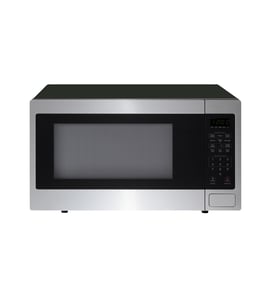

Are Sharp microwaves good quality?
Yes. Sharp microwaves, including the Sharp R-530BS countertop microwave, are known for solid everyday reliability and good cooking performance for the price. Quality is typically strongest in core functions (heating, turntable operation, simple controls); cosmetic wear and noise level vary by model and usage.
What “good quality” means for a countertop microwave
When customers ask about quality, we usually break it into a few practical categories:
- Heating performance: consistent warming and reheating for common foods
- Controls and usability: readable display, responsive keypad, sensible presets
- Durability: door latches, turntable drive, and interior finish holding up over time
- Noise and vibration: fan noise, turntable rumble, and cabinet vibration
- Serviceability: common wear parts (like a fuse or door switches) being replaceable
Common strengths and tradeoffs we see
Sharp countertop microwaves are generally a strong value, but it helps to know what’s typical.
| Area | What’s typical | What to watch for |
|---|---|---|
| Reliability | Good for daily reheating and cooking | Power surges can damage electrical components |
| Ease of use | Straightforward controls on many models | Some keypads can wear with heavy use |
| Cooking results | Good overall heating | Like most non-inverter units, very low-power heating can be less even |
| Fit and finish | Durable cabinet and door | Stainless-style finishes can show fingerprints |
How to keep a Sharp microwave running well longer
A few habits make a big difference in lifespan and performance:
- Use microwave-safe cookware and avoid metal or foil contact with the cavity walls.
- Keep the waveguide cover area clean and free of splatter to reduce arcing.
- Don’t run the microwave empty; it stresses the magnetron.
- Plug into a properly grounded outlet; avoid loose adapters and overloaded power strips.
- If you see sparks or burn marks, stop using it and follow a safe repair path.
For safety and damage prevention tips, use our guide: never do these things with a microwave.
Why it matters
“Good quality” is really about fewer breakdowns and more consistent cooking. With microwaves, most complaints come from preventable issues (arcing from food splatter, power problems, or running empty) rather than the brand itself.
Last updated: February 2026
What is the standard size of a countertop microwave?
There is no single “standard” countertop microwave size, but most countertop units (including Sharp models like R-530BS) fall into a common range: about 21 to 25 inches wide, 12 to 15 inches tall, and 16 to 20 inches deep, with 1.0 to 2.2 cu. ft. capacity.
Typical countertop microwave size ranges
Most shoppers and installers use these ranges to confirm fit on a counter, cart, or shelf:
- Width: 21 to 25 inches
- Height: 12 to 15 inches
- Depth: 16 to 20 inches (often deeper with the handle)
- Capacity: 1.0 to 2.2 cubic feet
- Weight: commonly 30 to 50 lb (varies by power and build)
Quick sizing table (what to expect)
| Size class | Typical capacity | Typical width | Best for |
|---|---|---|---|
| Compact | 0.7 to 1.0 cu. ft. | 17 to 20 in. | Dorms, small kitchens |
| Mid-size | 1.1 to 1.6 cu. ft. | 20 to 24 in. | Most households |
| Large | 1.7 to 2.2 cu. ft. | 24 to 25+ in. | Large plates, batch cooking |
How we recommend measuring your space
Use a tape measure and plan for airflow and door swing:
- Measure the countertop width and depth where the microwave will sit.
- Leave at least 2 inches of clearance on the sides and top for ventilation.
- Confirm the door swing will not hit a wall, backsplash, or cabinet pull.
- Check that the outlet is reachable without stretching or pinching the cord.
Why it matters
Microwave dimensions affect more than “will it fit.” Proper clearance helps prevent overheating, and the right capacity makes everyday items (dinner plates, casserole dishes, microwave-safe containers) easier to use.
For safety and common-use tips that also help prevent damage, follow our guide: never do these things with a microwave.
Last updated: February 2026
Can you use an over the range microwave as a countertop?
No. An over-the-range microwave is built to be mounted to a cabinet and wall above a range, not to sit on a countertop. Using one as a countertop unit can block required airflow, create stability issues, and increase the risk of overheating.
Why over-the-range and countertop microwaves are not interchangeable
Over-the-range (OTR) microwaves are designed around a fixed installation: they rely on specific clearances, mounting hardware, and ventilation paths. A countertop microwave (like the Sharp R-530BS) is designed to sit on a flat surface with open space around it.
Common differences
- Ventilation: OTR units vent through the top/front and are engineered for cabinet installation; countertop units need open clearance around the case.
- Stability: OTR units are meant to be supported by a wall bracket and upper bolts, not rubber feet.
- Clearances: OTR clearances assume “above-range” placement; countertop clearances assume open-air placement.
- Power cord routing: OTR cord length and routing are intended for an upper cabinet outlet.
- Weight and handling: OTR units are heavier and awkward to place safely on a counter.
What to do instead (safe options)
If you need a microwave on the counter, we recommend sticking with a true countertop model such as the Sharp R-530BS.
- Use a countertop microwave with the recommended clearance on all sides.
- If you already own an OTR microwave, install it as intended (cabinet and wall mounting).
- If space is tight, consider a microwave cart or shelf that still allows airflow.
- Keep the microwave away from heat sources (range burners, toaster ovens) to reduce heat stress.
Quick comparison
| Feature | Over-the-range microwave | Countertop microwave (Sharp R-530BS) |
|---|---|---|
| Intended placement | Above range, mounted | On countertop, freestanding |
| Primary support | Bracket + upper bolts | Feet on flat surface |
| Venting design | Integrated venting path | Cabinet airflow clearance |
| Best use case | Saves counter space | Flexible placement |
Why it matters
Microwaves generate heat internally and need predictable airflow to protect components like the magnetron, thermal cutouts, and control board. Using the wrong installation style can shorten component life and create nuisance shutdowns.
For more safe-use tips that help prevent damage, see never do these things with a microwave.
Last updated: February 2026
What is R being used for?
On the Sharp R-530BS countertop microwave parts page, “R” refers to the model prefix in the model number R-530BS, which we use to identify the exact Sharp microwave so you can match the correct diagrams, parts, and troubleshooting information.
What “R” means on a Sharp microwave model number
For Sharp countertop microwaves, the leading R is part of Sharp’s model-number naming convention. It helps distinguish the product line and keeps your parts lookup accurate when similar models share the same series numbers.
Where you’ll see it used
- On the rating label (often inside the door opening or on the back)
- In parts diagrams and parts lists for the microwave
- When searching for replacement parts by model
- When comparing similar Sharp models (small suffix changes can mean different parts)
Why it matters for parts and troubleshooting
Using the full model number R-530BS prevents ordering the wrong component (for example, a door switch, turntable motor, or control board that looks similar but mounts differently).
| What you enter | What can happen | Best practice |
|---|---|---|
| “530BS” only | You may pull up the wrong series | Use the full R-530BS |
| “R-530” only | Too broad; multiple variants exist | Include the full suffix BS |
| “R-530BS” | Correct match for diagrams and parts | This is the right format |
Quick checks before you shop for parts
- Confirm the model number is exactly R-530BS (letters and dashes matter)
- Match symptoms to the right system (heating, door, power, noise)
- If the microwave runs but does not heat, focus on heating-circuit troubleshooting first
For common heating failures and what they typically point to, use our guide: why is my microwave not heating.
Why it matters
Microwave parts are highly model-specific; the “R” is part of the identifier that keeps your Sharp R-530BS repair accurate and safe.
Last updated: February 2026
How many watts is the old Sharp R-530BS microwave?
The Sharp R-530BS countertop microwave is a 900-watt microwave (cooking output). That 900W rating is the number that matters for cook times and heating performance; the electrical input wattage from the outlet is higher.
What wattage number to use
When people ask “how many watts,” they usually mean cooking power (output), not the power it draws.
- Cooking output (what you cook by): 900W for the Sharp R-530BS
- Input power (what it draws): higher than output; varies by design
- Why it matters: packaged-food instructions and recipe conversions use output watts
Cook-time conversion cheat sheet (900W baseline)
Use this to adjust instructions written for a different wattage.
| Instructions written for | Time change on a 900W microwave | Example (5:00 listed time) |
|---|---|---|
| 700W | Reduce about 20% to 25% | ~3:45 to 4:00 |
| 800W | Reduce about 10% to 15% | ~4:15 to 4:30 |
| 1000W | Increase about 10% to 15% | ~5:30 to 5:45 |
Why it matters
Using the correct 900W rating helps prevent underheating (food still cold in the center) or overheating (dry edges, boiling over), especially with frozen meals and reheating leftovers.
If your R-530BS seems weak or not heating
If cook times suddenly get much longer, use our troubleshooting steps in why is my microwave not heating.
Last updated: February 2026