Owner’s manual
 Error Codes




How do I read my water heater model number?
For your Kenmore gas water heater model 153339473, the model number is printed on the rating plate (a sticker or metal label) attached to the tank. Match that model number exactly when ordering parts or using troubleshooting steps in the 153339473 owner's manual.
On this Kenmore water heater, the rating plate is typically on the outside of the tank. Once you locate it, you will see the model number and serial number together.
Check these common spots:
- Upper side of the tank near the vent/draft hood area
- Mid-section of the tank on the outer jacket
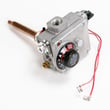
- Near the gas control valve/thermostat area
- Near the access doors (inner/outer door area)
When you are reading the rating plate, focus on the identifiers that help us match parts and documentation.
Write down:
- Model number (example: 153339473)
- Serial number (helps confirm production details)
- Gas type (natural gas vs. LP/propane)
You can usually ignore for parts lookup:
- BTU input and other performance ratings
- Standards listings and certification text
- Installation warnings and general safety text
Using the correct model number prevents mismatched components like pilot parts and safety controls.
- Match every digit of 153339473 exactly
- Confirm gas type before buying burner or pilot components
- Use the parts list in the manual to cross-check part descriptions
- If the pilot will not stay lit, compare the thermocouple and pilot parts for your model
| Label item | Why it matters | Example for this unit |
|---|---|---|
| Model number | Matches the correct parts list | 153339473 |
| Serial number | Helps confirm exact build series | Varies |
| Gas type | Ensures correct combustion parts | Natural or LP |
Kenmore model numbers in the 153.339xxx family can look similar (different gallon sizes and fuel setups). Using the exact 153339473 model number keeps you aligned with the correct manual, parts list, and troubleshooting steps.
Last updated: January 2026
What is the average lifespan of a 50 gallon hot water heater?
A 50-gallon gas water heater typically lasts 8 to 12 years. For Kenmore model 153339473, lifespan depends heavily on water quality, usage, temperature setting, and installation environment; routine maintenance (especially anode rod checks) helps you reach the upper end of that range. See the 153339473 owner's manual for the maintenance schedule.
Most 50-gallon tank-style water heaters wear out from internal tank corrosion and sediment buildup. These factors have the biggest impact:
- Water quality and conductivity (more conductivity can accelerate anode wear)
- Hot water usage (more cycles equals more wear)
- Temperature setting (higher temps increase stress and scale)
- Installation environment (dust and lint can affect combustion air components)
- Maintenance frequency (anode inspection, flushing, filter cleaning)
The Kenmore 153339473 manual calls out maintenance items that directly support longer life.
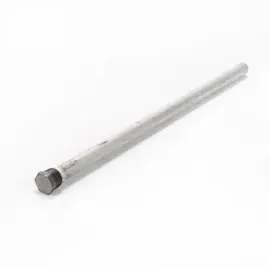
- Inspect and replace the anode rod as needed; a depleted anode shortens tank life (see water heater anode rod 100109434)
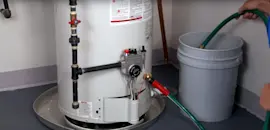
- Drain and flush the tank periodically to reduce sediment
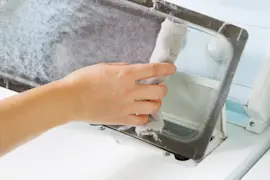
- Visually inspect and clean the base-ring filter and flame arrester if lint accumulates
- Manually operate the temperature and pressure relief valve at least annually (replace if it won’t operate correctly; see water heater temperature and pressure relief valve 100108279)
- Keep combustion air pathways clear; clean the air intake screen if restricted (see water heater air intake screen 100111332)
| If your water heater is... | Usually makes sense to... |
|---|---|
| Under ~8 years old with a minor ignition issue | Repair (pilot/thermocouple/igniter are common) |
| 8 to 12 years old with recurring problems | Compare repair cost vs replacement |
| Leaking from the tank body | Replace (tank failure) |
| Making popping/rumbling from sediment | Flush first; replace if performance doesn’t recover |
Planning around the 8 to 12 year lifespan helps you avoid surprise no-hot-water events and reduces the risk of property damage from age-related leaks. The manual also notes that water heater life varies with water quality, usage, temperature, and environment.
Last updated: January 2026
What is the most common problem with a gas hot water heater?
The most common gas water heater problem is the burner not staying lit, which usually traces back to the pilot system (pilot outage, dirty pilot, or a failed thermocouple). On Kenmore model 153339473, the manual also notes that excessive condensation can put out the pilot, especially with very cold incoming water.
- Pilot won’t stay lit: burner never starts or shuts down quickly
- Bad thermocouple: pilot lights but drops out when you release the control
- Condensation dripping onto the burner: “sizzling/frying” sounds; pilot may go out during warm-up
- Dirty air intake or restricted combustion air: lazy yellow flame, soot, or repeated shutdowns
- Gas supply issues: no ignition, weak flame, or intermittent operation
- Confirm gas supply is on and other gas appliances work.
- Look for signs of condensation right after a cold tank refill; give the tank 1 to 2 hours to warm up before assuming a leak.
- Check combustion air: the heater should not be starved for fresh air (especially in a confined space).
- Inspect the pilot flame behavior: steady blue is normal; yellow and lazy points to airflow or venting issues.
- Use the troubleshooting chart and lighting instructions in the 153339473 owner’s manual.
| Symptom | Most likely part area | Example part for this model |
|---|---|---|
| Pilot lights, then goes out | Flame-sensing safety | Thermocouple 100108267 |
| Pilot is weak or won’t light reliably | Pilot burner/assembly | Water heater pilot assembly 100111380 |
| Yellow, lazy flame or repeated shutdowns | Air intake and combustion air | Water heater air intake screen 100111332 |
A stable pilot and proper combustion air keep the gas control system operating safely and consistently. When the pilot drops out, the thermocouple safety shuts off gas flow, which prevents heating and can look like a “no hot water” failure.
Last updated: January 2026
How long should a thermocouple last on a water heater?
On the Kenmore 153339473 gas water heater, a thermocouple typically lasts 5 to 10 years under normal conditions, but it can fail sooner if the pilot flame is unstable, combustion air is restricted, or the burner area gets dirty. When it weakens, the heater shuts off gas if it does not sense a pilot flame.
The thermocouple is a safety sensor; it confirms the pilot flame is present and helps shut off gas to the pilot and main burner if the flame goes out. Conditions that commonly shorten thermocouple life include:
- Dust or lint buildup around the base-ring filter or flame arrester (can cause poor combustion and nuisance shutdowns)
- A weak or dirty pilot flame
- Loose thermocouple connection at the gas control valve/thermostat
- Cold drafts blowing out the pilot
- Clogged pilot line or orifice
For model-specific maintenance and safety details, follow the 153339473 owner's manual.
A failing thermocouple usually shows up as a pilot that will not stay lit.
- Pilot lights but goes out when you release the button
- Pilot stays lit sometimes, then drops out randomly
- Burner will not ignite because the pilot will not remain lit
- You have already cleaned the air intake area and confirmed gas supply
The manual procedure for this style of heater uses a multimeter; after lighting the pilot and waiting about 45 seconds, the thermocouple should produce 12 mV DC or more. If it does not, replacement is the fix.
| Result | What it usually means | Next step |
|---|---|---|
| 12 mV DC or higher | Thermocouple is likely OK | Check pilot flame, drafts, air supply, or gas control issues |
| Below 12 mV DC | Thermocouple is weak | Replace the thermocouple |
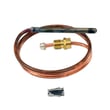
If you need the correct replacement, use the thermocouple 100108267.
A weak thermocouple can cause repeated shutdowns and no hot water; replacing it restores reliable pilot operation and keeps the gas safety shutoff working as designed.
Last updated: January 2026