Installation guide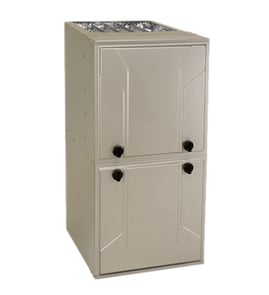



How many sq ft will a 120000 BTU furnace heat?
A 120,000 BTU furnace like the Carrier 58MVB120F10120 typically heats about 2,800 to 3,500 sq ft, but the real coverage depends on your climate, insulation, air leakage, duct design, and whether the furnace is properly set up for your altitude. For setup and sizing details, use the installation guide.
A BTU rating is only the heat output potential; your home’s heat loss determines how far that heat goes.
- Climate zone and design temperature (cold climates need more BTUs per sq ft)
- Insulation and window quality (attic, walls, and glazing make a big difference)
- Air infiltration (drafts, leaky returns, and unsealed penetrations)
- Ceiling height (taller ceilings increase the heated volume)
- Duct losses and airflow (leaky ducts in attics or crawlspaces reduce delivered heat)
- Altitude derate (higher elevation reduces effective input unless adjusted)
Most homes fall into these rough ranges for heating load:
| Home efficiency and climate | Typical BTU per sq ft | 120,000 BTU rough coverage |
|---|---|---|
| Mild climate, tight/efficient home | 25 to 35 | ~3,400 to 4,800 sq ft |
| Mixed climate, average insulation | 35 to 45 | ~2,700 to 3,400 sq ft |
| Cold climate, older/leakier home | 45 to 60 | ~2,000 to 2,700 sq ft |
Your installation guide includes an altitude derate multiplier table. For example, at around 4,000 to 5,000 ft, the multiplier is about 0.91, so a 120,000 BTU input setting effectively behaves closer to ~109,000 BTU unless the system is correctly configured for altitude.
Oversizing can cause short cycling, noisy airflow, and uneven temperatures; undersizing can mean long run times and cold rooms. Matching the furnace capacity to the home’s heat loss improves comfort and efficiency.
Last updated: February 2026
What is the average lifespan of a Carrier furnace?
A Carrier gas furnace typically lasts 15 to 30 years. For your Carrier 58MVB120F10120, lifespan depends most on annual maintenance, correct venting and gas setup, and keeping airflow within spec so the heat exchanger and blower are not overstressed (see the installation guide).
- 15 to 20 years: Common when maintenance is irregular or airflow is restricted
- 20 to 30 years: Common with yearly service, clean combustion air, and correct setup
- Major components: Heat exchanger and blower system often determine end-of-life cost
| Item | Typical impact on lifespan | What you can do |
|---|---|---|
| Airflow and filter condition | Overheating can shorten heat exchanger and control life | Replace/clean filters on schedule; keep returns and supply vents open |
| Return-air temperature | Out-of-range return air can affect reliability | Keep return air roughly 55°F to 80°F during operation |
| Installation quality (venting, gas input) | Incorrect setup increases stress and nuisance shutdowns | Have a qualified tech verify venting and gas input/temperature rise |
| Dust and construction debris | Can foul burners and plug components | Keep the area clean; avoid running during heavy construction dust |
- Frequent limit or rollout trips (often tied to overheating or combustion issues)
- Longer run times, uneven heat, or rising utility costs
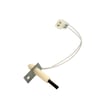
- Repeated ignition problems or burner issues (a common replacement is the icp furnace burner igniter LH33ZG001)
- Blower noise, vibration, or weak airflow (the blower wheel can be involved, such as icp blower wheel LA22ZA127)
- Multiple expensive repairs in the same season
A furnace can still run past 15 years, but once major components (heat exchanger, inducer/blower, control board) start failing, repair costs can rise quickly. Keeping airflow correct and operating temperatures in range is one of the most effective ways to protect the heat exchanger and controls.
Last updated: February 2026
How much does it cost to install a 100,000 BTU furnace?
Installing a 100,000 BTU furnace typically costs about $2,500 to $7,500 total (equipment plus labor), with higher pricing when venting, gas piping, condensate drainage, or electrical upgrades are needed. For a Carrier 58MVB120F10120, installation details like combustion air and vent clearances can also affect labor time; use the installation guide to plan requirements.
These items change the quote the most:
- Furnace efficiency and type: high-efficiency condensing furnaces usually require PVC venting and a condensate drain.
- Venting and termination work: new intake/exhaust routing, roof or sidewall termination, and required clearances.
- Combustion air needs: tight mechanical rooms may require outdoor combustion air openings.
- Gas line and shutoff changes: resizing piping, adding sediment trap, pressure adjustments.
- Electrical and controls: new disconnect, wiring corrections, thermostat upgrades.
- Ductwork modifications: transitions, plenums, returns, or airflow balancing.
The 58MVB120F10120 installation requirements commonly affecting time on site include:
- Combustion air sizing: spaces under 50 cubic feet per 1,000 Btuh typically need an outdoor combustion air method.
- Negative pressure risks: exhaust fans, dryers, and fireplaces can pull air from the furnace area; make-up air may be required.
- Vent terminal clearances: installers must follow minimum distances to air inlets, other appliance vents, and public walkways.
| Furnace input | Minimum room volume for indoor combustion air method | What it means |
|---|---|---|
| 100,000 Btuh | 5,000 cubic feet | Smaller spaces often need outdoor combustion air openings |
| Scenario | Typical total installed cost |
|---|---|
| Straight swap (minimal venting and duct changes) | $2,500 to $4,500 |
| Moderate complexity (some venting, drain, electrical, minor ductwork) | $4,500 to $6,500 |
| High complexity (new vent routes, significant ductwork, gas/electrical upgrades) | $6,500 to $7,500+ |
A 100,000 Btuh furnace is powerful enough that combustion air, venting, and clearance rules directly impact safety and performance, and they are also the biggest drivers of installation labor and materials.
Last updated: February 2026
Should a 25 year old furnace be replaced?
Yes. A 25-year-old Carrier furnace is past the typical furnace lifespan (about 15 to 20 years), so replacement is the practical choice for reliability, comfort, and efficiency. At this age, the risk of major failures (like heat exchanger or control problems) rises sharply.
We recommend planning a replacement if you notice any of these common end-of-life signs:
- Frequent repairs or repeated no-heat calls
- Uneven heating, short cycling, or trouble maintaining set temperature
- Rising heating bills compared with prior winters
- Excessive blower noise, vibration, or airflow problems
- Burner or ignition issues (delayed ignition, failed starts)
- Limit or rollout safety trips (the installation guide stresses verifying rollout switch continuity and proper door installation)
If your Carrier 58MVB120F10120 is still running but acting up, these checks help you decide whether to repair or replace:
- Confirm the return-air temperature is in a normal operating range; the installation guide calls out 55°F to 80°F return air during certain operating conditions.
- Make sure access doors are properly installed; many furnaces will not run correctly with doors off or mis-seated.
- Inspect and replace the air filter; restricted airflow can cause limit cycling and overheating.
- Look for condensate drain or trap issues on condensing furnaces; drainage problems can create nuisance shutdowns.
- If you are troubleshooting electrical components, use safe test practices (power off before reconnecting harnesses).
For model-specific installation and safety notes, use the installation guide.
| Situation | Best next step | Why |
|---|---|---|
| Minor, one-time issue (dirty filter, loose wire, drain restriction) | Repair/maintenance | Low cost, restores normal operation |
| Repeated safety trips (limit or rollout) | Service evaluation, then likely replace | Indicates overheating, venting, or combustion risk |
| Major component failure (control board, inducer, ECM module, heat exchanger) | Usually replace | High parts and labor cost on an older furnace |
| Multiple repairs in the last 1 to 2 seasons | Replace | Reliability drops; costs add up |
A furnace that is beyond its expected service life is more likely to break down during peak heating demand and can develop airflow, venting, or combustion-related problems. The installation guide also highlights conditions that can lead to flame rollout or drawing combustion products into the structure if return air and venting are not correct.
Last updated: February 2026
Is it hard to get Carrier parts?
For the Carrier 58MVB120F10120 furnace, getting the right replacement part is usually straightforward when you match the exact model and part number; the challenge is that many HVAC components are model-specific and some are best installed by a qualified service technician. Use the installation guide to confirm configuration details before ordering.
- Model-specific designs: Parts like control boards, igniters, and limit switches often vary by series and revision.
- Safety-critical components: Gas and combustion-related parts (burners, heat exchanger, rollout limits) require correct selection and setup.
- Multiple furnace configurations: This furnace can be installed as 1-pipe (non-direct vent) or 2-pipe (direct vent), which affects venting and condensate routing.
- Condensate and tubing details matter: Incorrect tubing or trap setup can cause leaks or shutdowns.
- Availability swings: Some parts are in stock while others may show “check availability,” so planning ahead helps.
If you are troubleshooting a no-heat, short-cycling, or overheating issue, these are common suspects for the 58MVB120F10120:
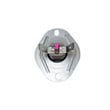
- Limit switch HH12ZB170 (overheat protection)
- Icp furnace burner roll-out limit switch HH18HA452 (flame rollout safety)
- Icp furnace burner igniter LH33ZG001 (ignition failures)
- Control board (diagnostics, ignition sequence, blower control)
- Blower wheel (airflow problems, noise, vibration)
- Confirm the model number: 58MVB120F10120 from the rating plate.
- Match the part number from the old part label when possible.
- Compare wire connectors and mounting (especially for switches and boards).
- Verify your furnace setup (upflow, downflow, horizontal) because tubing and trap routing can differ.
- If the issue involves gas, venting, or combustion, use a qualified technician for diagnosis and installation.
On a condensing gas furnace like the Carrier 58MVB120F10120, the wrong part or an incorrect installation can cause nuisance lockouts, poor heating performance, or unsafe operation. Correct part matching protects the control sequence, airflow, and safety limits.
| Symptom | Often related to | What to check first |
|---|---|---|
| No ignition / no flame | Ignition system | Igniter condition, wiring, control board codes |
| Starts then shuts off | Safety limits | Limit switch, rollout switch, airflow restrictions |
| Water around furnace | Condensate system | Trap priming, drain slope, tubing connections |
Last updated: February 2026