Owner’s manual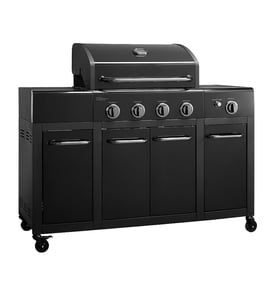



How do I find my Kenmore Grill model number?
Your Kenmore gas grill model number is printed on the grill’s rating label; on model 14610017510, it’s typically on the back of the grill base or inside the cabinet area. Write the full model number down exactly as shown so we can match the correct parts and manual.
Where to look on Kenmore model 14610017510
Check these common label locations first:
- Back panel of the grill base (rear of the cabinet)
- Inside the cabinet on a side wall or back wall
- Under the control panel area (inside the front frame)
- Near the propane tank area (inside the lower cabinet)
- On the cart frame near the wheels or side panel
For diagrams and label callouts, use the 14610017510 owner's manual.
What to write down (and why)
Record the information exactly as it appears on the label.
- Model number (example format: 146.10017510 or 14610017510)
- Serial number (helps identify production run details)
- Fuel type (LP propane vs. natural gas, if listed)
Why it matters
The model number is how we match the right Kenmore parts list for your grill. Even small differences can change which lid, panel, rail, or hardware fits.
Quick check: model number vs. part number
| Item | What it identifies | Example from this grill |
|---|---|---|
| Model number | The complete grill | 14610017510 |
| Part number / part ID | A specific replacement part | 40800118 |
If the label is missing or unreadable
Use these practical options to narrow it down:
- Compare your grill’s cabinet and lid style to the exploded views in the 14610017510 owner's manual
- Look for distinctive hardware and match it to parts listings (for example, a hinge pin like gas grill side burner lid hinge pin 40800118)
- Check for any duplicate stickers inside the cabinet or on the rear frame
Last updated: February 2026
What is the average lifespan of a gas grill?
Most gas grills last 5 to 15 years; a Kenmore 14610017510 grill typically lands in that range when it’s cleaned regularly, kept covered, and worn components are replaced as needed. The biggest lifespan drivers are corrosion control, burner health, and safe fuel delivery (LP tank, regulator, and hoses).
Typical lifespan ranges (what to expect)
- 5 to 7 years: lighter-duty grills, frequent exposure to rain/salt air, minimal cleaning
- 8 to 12 years: average use with routine cleaning and basic part replacement
- 12 to 15 years: consistent maintenance, protected storage, timely repairs
| What wears out first | Common symptom | What to do |
|---|---|---|
| Burners and carryover ports | Uneven heat, weak flames | Clean ports; replace if rusted through |
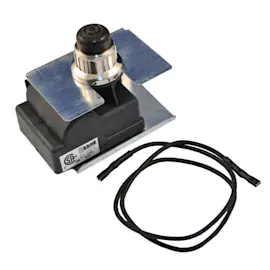
| Ignition parts | Clicking but no spark, or no click | Check battery/wires; replace ignition parts |
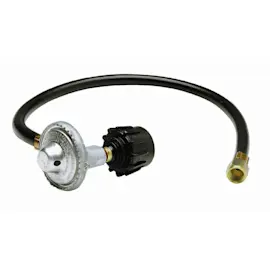
| Regulator/hose | Low flame, surging, gas smell | Leak test; replace if damaged |
| Firebox/heat shields | Flare-ups, hot spots | Clean grease; replace shields if warped |
How we recommend extending grill life
Use these habits to get the longest service life from your Kenmore gas grill:
- Clean grease and drippings after cooking to reduce flare-ups and corrosion.
- Brush burners and clear ports so gas flow stays even across the cook box.
- Keep it covered and dry; water intrusion is the fastest path to rust.
- Do a quick leak test on connections when you change tanks or move the grill.
- Replace damaged cabinet or support parts so the grill stays stable and aligned.
For model-specific care and cleaning steps, follow the 14610017510 owner’s manual.
Why it matters
A grill usually gets replaced because it becomes unsafe or unreliable, not because it “stops working” all at once. Preventing rust-through, controlling grease buildup, and keeping the fuel system tight helps you avoid flare-ups, weak heat, and ignition failures.
If you’re rebuilding the cabinet or cart, matching the original hardware and supports helps everything line up correctly; examples include the rail 41600045 and permasteel gas grill tank holder 40800130.
Last updated: February 2026
Who makes Kenmore gas grills?
For the Kenmore gas grill model 14610017510, the manufacturer is Permasteel. This matters when you are matching replacement parts (like cabinet panels, lid hardware, or a tank holder) and when you are using the correct assembly and maintenance instructions in the 14610017510 owner's manual.
How to confirm you have the right manufacturer and model
Use these quick checks before ordering parts or troubleshooting:
- Match the model number on the rating label to 14610017510
- Compare your grill’s cabinet and lid style to the parts diagrams in the manual
- Use the exact part ID when ordering (letters and numbers must match)
- Verify whether the issue is cosmetic (panel/handle) or functional (fuel/ignition)
- Keep your fuel type consistent (LP vs. natural gas) when servicing the grill
Common Permasteel-made parts you might replace on this model
These are examples of model-listed parts that often come up during repairs or rebuilds:
| Part name (example) | Part ID | What it affects |
|---|---|---|
| Permasteel gas grill tank holder | 40800130 | Secures the LP tank in the cabinet |
| Gas grill door handle | 40900076 | Door operation and alignment |
| Lid | 40700004A | Heat retention and lid fit |
| Gas grill side burner lid hinge pin | 40800118 | Side burner lid movement |
If you are replacing the LP tank support hardware, use the exact permasteel gas grill tank holder 40800130 to ensure proper fit and safe tank positioning.
Why it matters
Knowing Permasteel is the maker helps us match the correct parts list and hardware standards for the Kenmore 14610017510 gas grill, so you avoid ordering a similar-looking component that mounts differently or uses different fasteners.
Last updated: February 2026
How to light a Kenmore gas grill?
To light your Kenmore gas grill model 14610017510, we recommend opening the lid first, turning on the gas, then lighting the burner using the igniter (or a match-light method if needed). This sequence helps prevent gas buildup and makes ignition more reliable; see the 14610017510 owner's manual for the exact lighting steps for your grill.
Standard lighting steps (igniter)
- Open the grill lid.
- Confirm the control knobs are OFF.
- Open the propane tank valve slowly (counterclockwise).
- Push in and turn the first burner knob to HIGH/IGNITE.
- Press the igniter button until the burner lights.
- After the first burner is lit, turn on the remaining burners as needed.
If it will not light (match-light method)
Use this only if your grill is designed for match lighting.
- Keep the lid open.
- Turn the burner knob to OFF and wait 1 to 2 minutes if you smell gas.
- Place a lit long match or grill lighter at the match-light hole or near the burner ports.
- Turn the burner knob to HIGH to ignite.
Quick checks when ignition is weak
- Propane tank valve opened too fast (reset by turning everything OFF, then open the tank slowly).
- Empty or low LP tank.
- Burner ports clogged with grease or debris.
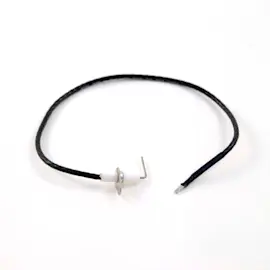
- Igniter electrode dirty, misaligned, or wire disconnected.
| Symptom | Most common cause | What we do next |
|---|---|---|
| Clicking but no flame | No gas flow | Check tank level and open valve slowly |
| Flame at match but not igniter | Ignition issue | Clean/align electrode, check wire |
| Lights but heats unevenly | Burner/ports blocked | Clean burners and heat area |
Why it matters
Lighting with the lid open and turning gas on in the right order reduces flare-ups and helps prevent unburned gas from collecting in the firebox.
Related help: gas grill wont ignite or light video
Last updated: February 2026
Is it worth fixing a gas grill?
Yes, fixing a Kenmore gas grill model 14610017510 is worth it when the firebox and lid are solid, the frame is stable, and the problem is a replaceable part or basic maintenance; it is usually not worth it when the cookbox is badly rusted through or the structure is warped.
Quick decision checklist
- Repair it if the grill lights reliably after cleaning, and heat is mostly even across the grates.
- Repair it if the issue is cosmetic or structural on the cabinet (doors, panels, shelves) rather than the firebox.
- Replace it if the firebox bottom or lid is rusted through, or the base is bent so doors and panels no longer align.
- Replace it if you smell gas during operation or see persistent flare-ups you cannot control with cleaning.
- Repair it if the cost of parts is clearly less than replacing the grill (a common rule is under 40% to 50% of a comparable new grill).
What to inspect first (10-minute evaluation)
- Firebox and lid: look for holes, heavy scaling rust, or warping.
- Burner performance: confirm steady flames (not lazy yellow flames) and consistent heat.
- Grease management: check for heavy grease buildup that causes flare-ups.
- Cabinet/frame stability: wobble, cracked welds, or stripped fasteners can make repairs pointless.
Common “worth it” repairs for this model
These are typical fixes that keep a grill going when the core body is still good:
| Problem | Usually means | Typical fix |
|---|---|---|
| Uneven heating | Blocked ports, dirty internals | Deep clean, then burner service/replacement |
| Won’t ignite | Ignition issue | Clean/replace ignition components |
| Loose or misaligned cabinet | Hardware or cabinet parts | Replace damaged cabinet parts |
If your cabinet hardware is damaged but the cookbox is fine, replacing a structural part like the rail 41600045 can be a practical, low-cost way to restore stability.
Why it matters
A grill with a sound firebox and safe gas flow can often be restored with cleaning and a few parts, which saves money and keeps cooking performance consistent. A rusted-through cookbox or unstable frame can create uncontrolled heat and flare-ups, so replacement is the better path.
For model-specific safety, lighting, and maintenance steps, follow the 14610017510 owner's manual.
Last updated: February 2026
Is Kenmore a good brand for grills?
Kenmore grills are a solid choice for everyday backyard cooking; they typically deliver good heat output, practical features, and a wide range of replacement parts support. For the Kenmore 14610017510 gas grill, long-term satisfaction usually comes down to regular cleaning, correct fuel setup, and keeping ignition and hardware maintained per the 14610017510 owner's manual.
What “good” means for a gas grill
A grill is a good fit when it matches how you cook and how much upkeep you want to do.
- Heats consistently across the cooking surface (after proper preheat)
- Ignites reliably (burners light quickly and repeatably)
- Holds up outdoors with routine cleaning and cover use
- Has parts availability for wear items and hardware
- Fits your space and cooking capacity needs
Common pros and cons we see with grills like this
Even good grills can have a few predictable pain points over time.
| Area | What’s typically good | What typically needs attention |
|---|---|---|
| Cooking performance | Fast preheat, strong sear potential | Uneven heat if burners/ports are dirty |
| Ignition | Convenient push-button lighting | Electrodes, wires, or modules can fail |
| Hardware and cabinet | Useful storage and structure | Wheels, panels, and fasteners can loosen or corrode |
How to keep a Kenmore grill performing well
These steps prevent most “bad grill” complaints (weak flame, flare-ups, hard lighting).
- Preheat 10 to 15 minutes with the lid closed before cooking
- Brush grates after preheat; deep-clean grease paths regularly
- Keep burner ports clear; spider webs and debris cause low flame
- Check LP tank level and regulator connection if flames are small
- Tighten cabinet hardware if you notice wobble; replace bent supports when needed
Parts that can help when the grill feels “worn out”
If the cabinet or lid hardware is damaged, replacing the right structural part can restore stability and fit.
- Lid 40700004A (lid fit, heat retention, and alignment)
- Gas grill door handle 40900076 (door operation and safe handling)
- Permasteel gas grill tank holder 40800130 (LP tank support and positioning)
Why it matters
A grill that lights reliably and heats evenly is safer and cooks better. Most performance issues come from airflow restrictions, grease buildup, or worn ignition and hardware, not from the brand name.
Last updated: February 2026