Installation guide
 Owner’s manual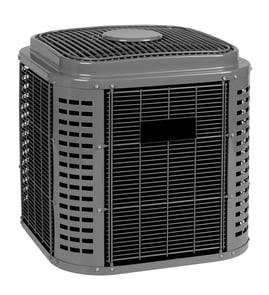

How many square feet will a 36000 BTU air conditioner cool?
A 36,000 BTU (3-ton) central air conditioner like the Carrier 38TKB036 typically cools about 1,500 to 2,500 sq ft. The right size depends most on insulation, sun exposure, ceiling height, windows, and local climate; confirm final sizing in the installation guide.
Typical coverage ranges (what to expect)
Use these as practical planning numbers for a 36,000 BTU system:
- Mild climates, good insulation: ~2,000 to 2,500 sq ft
- Mixed climates, average insulation: ~1,700 to 2,100 sq ft
- Hot climates, lots of sun or older insulation: ~1,500 to 1,900 sq ft
- High ceilings or many large windows: plan toward the lower end
- Open floor plans: often need more capacity than the square footage suggests
Quick sizing check (rule-of-thumb table)
These are common BTU-per-square-foot guidelines used for rough estimates.
| Home conditions | Rule of thumb | 36,000 BTU estimate |
|---|---|---|
| Efficient, shaded, tight envelope | 15 BTU/sq ft | ~2,400 sq ft |
| Typical construction | 18 BTU/sq ft | ~2,000 sq ft |
| Hot/sunny, leaky, older insulation | 22 BTU/sq ft | ~1,635 sq ft |
Why the “right” square footage varies
Even with the same 36,000 BTU rating, real cooling performance changes with the home’s heat load:
- Insulation and air leaks (attic, rim joists, duct leakage)
- Window area and orientation (west-facing glass adds major load)
- Ceiling height (more air volume to cool)
- Occupancy and appliances (people, cooking, laundry add heat)
- Ductwork condition (restricted airflow reduces delivered cooling)
When the size is off (symptoms)
If your system is not matched to the load, you often see these patterns:
- Too small: runs constantly, struggles on hot afternoons
- Too large: short cycles, uneven temperatures, higher humidity
- Airflow issues: weak vents, icing, noisy return, poor comfort even when running
For model-specific installation clearances and operating limits for the Carrier 38TKB series, follow the installation guide.
Last updated: February 2026
Is it hard to get Carrier parts?
For the Carrier 38TKB036 condensing unit, getting the right replacement part is usually straightforward when you match the exact model number and the exact part number on the old part; the real challenge is avoiding “close enough” substitutions. Use the wiring and start-up details in the installation guide to keep repairs accurate.
What makes Carrier parts seem “hard to get”
- Model and series differences: small design changes can require a different capacitor, motor, or contactor.
- Older equipment: some OEM parts become less common over time.
- Electrical parts must match ratings: voltage, microfarads (µF), and amp ratings must align.
- Similar-looking universal parts: they can fit physically but fail electrically.
- Lead times vary: common service parts are typically easier to source than specialty items.
Parts we commonly see replaced on this model
If the outdoor unit will not start, the fan will not run, or it short-cycles, these are common checks:
- Motor HC39GE233 (condenser fan motor; part number HC33GE233)
- Capactr dual CAP050350440RSP (dual run capacitor; part number P291-3554RS)
- Contactor (part number HN51KB024)
- Grommet KA56GR140 (mount isolator for vibration/noise)
Quick symptom-to-part guide
| Symptom | Common cause | What to check first |
|---|---|---|
| Outdoor unit will not start | Failed contactor or low-voltage control issue | Contactor (HN51KB024) |
| Hums, then trips breaker | Weak/failed capacitor | Dual run capacitor |
| Fan not spinning, compressor runs | Failed fan motor or capacitor | Fan motor, then capacitor |
| Loud vibration/rattle | Worn isolators or fan issues | Grommets and fan hardware |
How we confirm you are ordering the correct part
- Verify the outdoor unit model number is 38TKB036.
- Match the part number printed on the old part to the replacement listing.
- For capacitors: match µF exactly; match voltage rating or go higher.
- For motors: match voltage, RPM, and mounting style; move wire-for-wire.
Why it matters
Central air conditioner electrical parts (contactor, capacitor, condenser fan motor) must match the system design. Correct matching prevents hard starts, nuisance breaker trips, overheating, and repeat failures.
Last updated: February 2026
What is the average price for a 3.5 ton AC unit?
A typical installed price for a 3.5-ton central AC system is about $5,000 to $9,000, with many homeowners landing near the middle of that range. Your Carrier 38TKB036 is a 036-size outdoor condensing unit (commonly 3 tons); total cost depends heavily on the matched indoor coil, efficiency rating, and installation work.
What drives the installed price most
- Efficiency (SEER/SEER2): higher efficiency equipment costs more up front.
- Ductwork condition: repairs, sealing, or replacement can add significant labor.
- Refrigerant line set work: long runs, resizing, or replacement increases cost.
- Electrical and pad work: disconnect, whip, breaker sizing, and a new pad can add cost.
- Permits and commissioning: required in many areas and affects labor time.
Quick cost breakdown (typical ranges)
| Cost item | Typical share of total | What it includes |
|---|---|---|
| Equipment | 35% to 55% | Outdoor unit, indoor coil/air handler, thermostat (varies) |
| Labor | 30% to 45% | Removal, set, braze, evacuate, charge, start-up |
| Materials and extras | 10% to 25% | Line set, pad, electrical whip, drain items, fasteners |
Model-specific details that affect install planning
Your installation instructions call out items that commonly influence job scope, such as maintaining clearances for service access and using correct refrigerant connection sizing for the unit size. For the exact requirements used for Carrier 38TKB units, use the installation guide.
Why it matters
Sizing and installation quality affect comfort, humidity control, energy use, and compressor life. A lower bid can become expensive if it skips proper evacuation, correct charge, or needed airflow and electrical checks.
Last updated: February 2026
What is the tonnage of Carrier 38TKB036?
The Carrier 38TKB036 is a 3-ton central air conditioner condensing unit (the “036” size is 36,000 BTU/hr; 36,000 ÷ 12,000 = 3 tons). For installation details that match this unit size, use the installation guide.
Quick tonnage math (why “036” matters)
Most Carrier model numbers use the two or three digits like 018/024/030/036 to indicate nominal capacity in thousands of BTU/hr.
- 036 = about 36,000 BTU/hr
- 1 ton = 12,000 BTU/hr
- 36,000 ÷ 12,000 = 3 tons
- This is the outdoor unit’s nominal cooling capacity; actual delivered capacity depends on the matched indoor coil/air handler and refrigerant charge.
Size reference table
| Model size code | Approx. BTU/hr | Approx. tons |
|---|---|---|
| 024 | 24,000 | 2.0 |
| 030 | 30,000 | 2.5 |
| 036 | 36,000 | 3.0 |
| 042 | 42,000 | 3.5 |
Why the correct tonnage matters
Correct tonnage affects refrigerant line sizing, airflow, and overall system performance. The installation instructions for the 38TKB series group recommendations by unit size (including 030/036), so matching the right capacity helps avoid noise, vibration, and charging issues.
Related install details to double-check
From the 38TKB installation guidance, we recommend confirming these items during install or service:
- Use refrigerant tube diameters appropriate to the unit capacity (the guide lists sizes by unit size group).
- Keep the lineset as direct as possible; avoid unnecessary bends.
- Leave slack between the structure and the unit to absorb vibration.
- Seal wall penetrations with pliable silicone-based caulk.
- Maintain service and airflow clearances around the outdoor unit.
Last updated: February 2026