Owner’s manual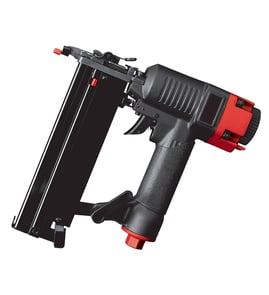

Does Craftsman make a framing nailer?
Yes. Craftsman makes framing nailers, including the Craftsman angle framing nailer model 351184200. This air-driven tool is designed for framing-type work and drives 2-inch to 3-1/2-inch nails, with operating pressure in the 70 to 110 PSI range (never exceed 110 PSI).
The Craftsman 351184200 is an angle framing nailer built for common construction fastening tasks.
- Framing and truss making
- Sheathing and sub-flooring
- Decking
- Toenailing in tighter spots (angled magazine)
- Driving straight, screw, and ring shank nails
Use the nail sizes and air settings that match the tool’s specifications.
| Spec | Craftsman 351184200 typical requirement |
|---|---|
| Nail length | 2 in. to 3-1/2 in. |
| Nail diameter | 0.113 in. to 0.131 in. |
| Operating pressure | 70 to 110 PSI |
| Magazine capacity | 72 to 100 nails |
| Air inlet | 1/4 in. NPT |
These steps reduce misfires, jams, and injury risk during loading and use.
- Wear ANSI Z87.1-rated safety goggles when loading and operating
- Keep the nose pointed away from yourself and others while loading
- Never depress the trigger while loading
- Never carry the tool with the trigger depressed
- Use clean, regulated compressed air; do not use oxygen or combustible gases
Framing nailers are powerful fastening tools; matching nail size, air pressure, and safe handling to the Craftsman 351184200 specs helps prevent jams, inconsistent depth, and accidental discharge. For operating modes (sequential vs. rapid-fire) and depth adjustment details, use the 351184200 owner's manual.
Last updated: February 2026
Which is better, a 21-degree or 30 degree framing nailer?
For most framing work, neither 21 degrees nor 30 degrees is automatically “better”; the best choice depends on access, nail type, and what your local code allows. Your Craftsman 351184200 is an angle framing nailer with a 28° magazine, which is a common middle ground for tight spots like toenailing (see the owner's manual).
| Angle | Common nail collation | Typical head style | Best for |
|---|---|---|---|
| 21° | Plastic collated | Full round head | Maximum holding power, broad nail availability in some areas |
| 30° (often 28° to 34°) | Paper collated | Clipped or offset round head (varies) | Tighter spaces, better access between studs and joists |
| 28° (your 351184200) | Stick nails (varies by brand) | Varies by nail spec | Good access in tight framing angles while still using stick nails |
- Check nail head requirements for your job: some jurisdictions and inspections require full round head nails for certain structural framing.
- Decide based on access: steeper angles (around 28° to 30°) usually fit better in corners, between studs, and for toenailing.
- Match the nail specs your nailer is designed for: the 351184200 is designed to drive nails 2 to 3-1/2 inches long and .113 to .131 inch diameter.
- Consider collation cleanup: plastic collated strips can leave debris; paper collated strips typically leave less mess.
- Think about nail availability and cost: the “best” angle is often the one with nails you can reliably source in the sizes you use most.
Using the wrong angle or nail type can cause feed problems, jams, or failed inspections. Matching nail length, diameter, and head style to the framing task helps you get consistent depth, strong holding, and safer operation.
Last updated: February 2026
Why is my Craftsman nail gun not shooting nails?
If your Craftsman 351184200 angle framing nailer isn’t shooting, the most common causes are low air pressure, the contact trip safety not being fully pressed, an empty or misloaded magazine, or a jammed fastener. Set regulated air pressure in the 70 to 110 PSI range and reload the magazine using the steps in the owner's manual.
- Confirm the compressor regulator is set between 70 and 110 PSI (never exceed 110 PSI).
- Make sure the contact trip is firmly pressed against the workpiece; the tool will not fire unless it is.
- Verify the magazine is not near-empty; this model has an automatic stop pin that helps prevent firing when the magazine is almost empty.
- Reload correctly: slide the pusher to the rear until it locks, insert nails at the rear of the magazine, then release the latch and let the pusher move forward gently.
- Use the correct nail range for this nailer: .113 to .131 inch diameter, 2 to 3-1/2 inch length.
- Do not dry-fire (operating without fasteners can damage the tool).
| What to check | What “good” looks like | What happens if it’s off |
|---|---|---|
| Air pressure | 70 to 110 PSI | Won’t drive nails, weak drive, inconsistent firing |
| Nail size | .113 to .131 inch diameter; 2 to 3-1/2 inch length | Jams, misfeeds, no-fire conditions |
| Loading | Pusher locked back; nails inserted at rear; pusher released gently | Nails don’t advance to the driver, frequent jams |
| Contact trip | Fully depressed on work | Tool will not fire |
- Jam in the nose/driver area: clear the jam with the air hose disconnected.
- Driver blade not returning smoothly: check for pitch buildup and apply light air-tool oil (avoid over-lubricating).
- Worn seals or O-rings: symptoms include air leaks and weak driving; a seal kit repair is typical on older pneumatic nailers.
- Trigger/sequential mode issue: confirm you are using the intended firing mode (single-fire vs rapid-fire) per the manual.
A framing nailer that won’t fire is usually protecting you from an unsafe condition (contact trip not engaged) or signaling a feed/air problem. Correct PSI, correct nails, and correct loading prevent jams and reduce wear on the driver and magazine.
Last updated: February 2026
Is a 3 gallon air compressor enough for a nail gun?
Yes, a 3-gallon air compressor is enough for many nail guns, but it depends on the nailer type and how fast you’re firing. For the Craftsman 351184200 angle framing nailer, you must supply clean, regulated air in the tool’s 70 to 110 PSI operating range; rapid, continuous nailing may require more air delivery than a small tank can sustain. See the owner's manual for the specified pressure range and safe air hookup details.
A compressor’s tank size affects how long you can nail before the motor has to recover, but air delivery (CFM at 90 PSI) determines whether the tool can keep up during repeated shots.
- 3-gallon tank: fine for short bursts, punch-list work, and intermittent nailing
- Higher CFM: helps prevent pressure drop during fast framing cycles
- Regulator quality: keeps pressure stable at the nailer
- Hose and fittings: restrictions can mimic “low compressor” symptoms
- Moisture control: reduces internal corrosion and sticking
Use these settings and habits to get reliable driving power and reduce jams.
| Item | Practical target | Why it helps |
|---|---|---|
| Regulated pressure at tool | 70 to 110 PSI (never above 110) | Matches the nailer’s operating range |
| Hose size | 3/8-inch ID (typical) | Reduces pressure drop on fast cycles |
| Coupler style | Male nipple on tool side | Helps depressurize when disconnected |
| Lubrication | 5 to 6 drops air tool oil daily (if no oiler) | Protects seals and piston/ram |
- Nails start proud (not fully driven) after several quick shots
- Compressor runs constantly and pressure keeps sagging
- Depth becomes inconsistent even after adjusting pressure
- More frequent misfires when bump-firing or rapid-firing
If pressure drops below the nailer’s needs, the piston/ram may not complete a full stroke. That leads to under-driven nails, inconsistent depth, and more wear on internal parts.
Last updated: February 2026