Owner’s manual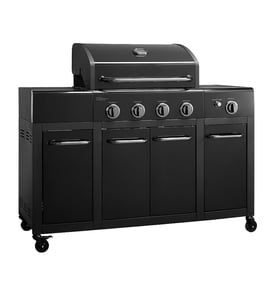

What happens if you run natural gas through a propane grill?
Running natural gas through a propane (LP) grill such as Kenmore Elite model 141166901 causes improper fuel delivery because natural gas operates at lower pressure than LP. The result is weak or unstable flames, poor heating, and a higher risk of gas buildup and fire if the grill is not designed or properly converted.
What you will notice right away
- Burners may not light consistently
- Flames look small, lazy, or blow out easily
- Grill struggles to preheat or maintain temperature
- You may smell gas if ignition is delayed
- Sooting or uneven heating can occur
Why it happens (LP vs. natural gas)
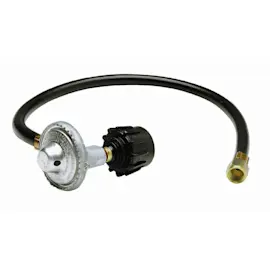
LP and natural gas use different supply pressures and different valve orifice sizing. Your grill’s regulator, hose, and burner orifices are matched to the fuel type.
| Fuel type | Typical supply pressure at the appliance | What the grill needs |
|---|---|---|
| Propane (LP) | 11" water column (W.C.) | LP regulator and LP-sized orifices |
| Natural gas (NG) | 7" water column (W.C.) | NG regulator setup and NG-sized orifices |
For this Kenmore manual family, the LP grill is specified for 11" W.C., while the natural gas version is designed for 7" W.C. at the residential meter. See the owner's manual.
Safe, correct options
- Use the grill only with the fuel it is built for (LP tank for an LP grill).
- If you want to connect to a home natural gas line, use a grill designed for natural gas.
- If a conversion is being considered, use only a model-approved conversion method and follow the exact instructions and parts list in the owner's manual.
Why it matters
Incorrect fuel type can create delayed ignition and gas accumulation inside the firebox. That combination is what turns a simple lighting issue into a serious fire hazard.
Last updated: February 2026
Is it worth converting a grill to natural gas?
For the Kenmore Elite 141166901 gas grill, converting from LP (propane) to natural gas is not worth it because it is not allowed. The owner's manual states this LP gas grill cannot be converted; attempting conversion is extremely hazardous and voids the warranty.
What we recommend instead
If you want natural gas convenience, the safe path is to use a grill designed and approved for natural gas service.
- Keep this model on a standard 20 lb LP tank (the fuel system is built for LP pressure and components).
- If you need longer run time, keep a second filled LP tank on hand.
- If your goal is fewer tank swaps, choose a dedicated natural gas grill and have the gas supply set up correctly.
- If you smell gas: shut off gas, extinguish flames, open the lid, and address the leak before using the grill.
- Use the lighting and shutdown steps in the manual so the regulator and valves operate correctly.
Why conversion is unsafe on this model
LP and natural gas systems use different pressures and metering. A mismatch can cause over-fueling, flare-ups, or delayed ignition.
Common differences include:
- Regulator type and outlet pressure
- Valve orifice sizing
- Hose and quick-disconnect fittings
- CSA safety approval tied to the original fuel configuration
Quick comparison: LP vs natural gas (what changes)
| Item | LP (propane) grill | Natural gas grill |
|---|---|---|
| Fuel supply | 20 lb portable tank | Home gas line with shutoff valve |
| Typical operating pressure | Higher than natural gas (regulated at the tank) | About 7" water column (W.C.) at the meter (typical) |
| Conversion on model 141166901 | Not permitted | Not applicable |
Why it matters
Your grill’s burner tubes, valve orifices, and regulator are engineered as a matched set. Keeping the correct fuel type helps the burners light smoothly, heat evenly, and operate safely.
Last updated: February 2026
How do I know if my grill can be converted to natural gas?
For Kenmore Elite gas grill model 141166901, you do not convert it to natural gas. The Owner's manual states that an LP Kenmore grill cannot be converted to natural gas, and a Kenmore natural gas grill cannot be converted to LP; conversion kits are not available for safety reasons.
How to identify what fuel your grill is built for
Use these checks to confirm whether your grill is an LP (propane) model or a natural gas model:
- Check the rating plate/nameplate for the listed gas type (LP or natural gas).
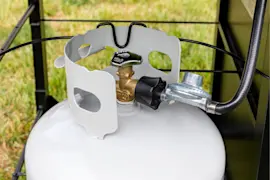
- Look for an LP tank regulator and cylinder connection (LP grills connect to a 20 lb propane tank).
- Look for a long natural gas supply hose and quick-disconnect (common on natural gas models).
- Confirm the model number 141166901 matches your documentation.
- Review the fuel and safety sections in the Owner's manual before connecting any gas supply.
What to do if you want natural gas cooking
The safe solution is to use a grill that is manufactured and certified for natural gas.
- Keep model 141166901 on LP gas with the correct regulator and tank setup.
- If you already have an outdoor natural gas stub, use a natural gas grill designed for that supply.
- If you smell gas: shut off the gas, extinguish flames, open the lid, and follow the safety steps in the manual.
LP vs natural gas: what changes
| Item | LP (propane) grill | Natural gas grill |
|---|---|---|
| Fuel source | 20 lb tank | Home gas line |
| Typical supply pressure | Regulated at the tank | Commonly 7 in. water column (W.C.) at the meter/regulator |
| Conversion approach | Not used on this model | Not intended to be converted |
Why it matters
Fuel type determines orifice sizing, regulator design, and safe combustion. Using the wrong gas type can create unsafe flames, poor burner performance, or gas leaks, so we follow the grill’s certified configuration.
Last updated: February 2026