Owner’s manual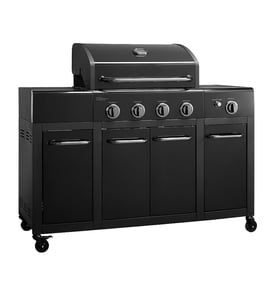

Can you use ceramic briquettes in a gas grill?
Yes. You can use ceramic briquettes in a gas grill like the Kenmore Elite 12216654901 as long as they sit securely in the firebox (typically in a briquette tray or on the heat shield area) and do not block burner ports or airflow. Always operate the grill outdoors with proper clearance and ventilation as described in the owner's manual.
When ceramic briquettes are a good idea
Ceramic briquettes can help even out heat and reduce flare-ups by vaporizing drippings more gradually than open flame.
- You want more consistent heat across the cooking grate
- You are replacing worn heat tents or flavorizer-style bars (if your grill uses them)
- You cook foods that drip a lot of fat (burgers, chicken thighs)
- You are willing to clean or replace briquettes periodically
Fit and placement tips (avoid performance and safety issues)
Briquettes work best when they are installed so the burners can still breathe and ignite reliably.
- Keep briquettes in a single, even layer; do not pile them up
- Leave space around burner tubes so flames are not smothered
- Do not let briquettes touch the burner ports or gas valve/orifice area
- After installation, do a quick ignition test with the lid open
- If you smell gas, shut off the gas supply, open the lid, and step away before troubleshooting
Quick comparison: briquettes vs heat shields
| Feature | Ceramic briquettes | Heat shields (heat tents) |
|---|---|---|
| Heat distribution | Very even once preheated | Even, usually faster to heat up |
| Flare-up control | Good when clean and properly spaced | Good, depends on design |
| Maintenance | Needs periodic cleaning or replacement | Needs scraping and replacement when rusted |
| Grease handling | Can clog if heavily soiled | Can channel grease away, varies by model |
Why it matters
On an LP gas grill, anything that restricts combustion air or interferes with burner ignition can lead to poor heating, delayed ignition, or unsafe gas buildup. The manual’s guidance on outdoor-only use, clearances, and lighting practices helps keep operation safe and consistent.
Last updated: February 2026
What is the average lifespan of a gas grill?
A gas grill typically lasts 10 years with normal use and basic care; many grills run 5 to 15 years depending on build quality, climate exposure, and maintenance. For the Kenmore Elite 12216654901, regular cleaning and burner inspections are the biggest factors in reaching the high end of that range.
What shortens a grill’s life fastest
- Leaving it uncovered in rain, snow, or salty coastal air
- Grease buildup in the firebox or grease tray (corrosion and flare-ups)
- Clogged burner tubes (often from insects or debris)
- Running with consistently poor flame (yellow/orange) or low heat
- Skipping annual deep cleaning and hardware checks
Maintenance that adds years (based on your model’s manual)
The owner's manual for model 12216654901 calls out several habits that directly extend lifespan:
- Burn off after cooking to reduce residue inside the grill
- Empty and wipe the grease tray periodically; don’t let grease overflow
- Wash parts with mild detergent and warm water; avoid abrasives on exterior finishes
- Do an annual interior cleaning (remove diffusers, cooking grids, and burners; wash and dry thoroughly)
- Inspect burners at least twice a year; spiders and insects can nest in burner tubes and disrupt gas flow
Quick “repair vs replace” checklist
| If you see this… | Usually worth repairing | Usually time to replace |
|---|---|---|
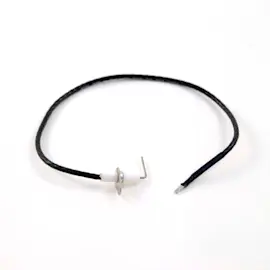
| Weak ignition, dirty electrode/wire | Yes | No |
| Yellow/orange flame with gas odor | Yes (clean/inspect burners) | No |
| Rusted-through burners | Yes (common wear item) | No |
| Firebox/body panels rusted through | No | Yes |
| Multiple major issues at once | Sometimes | Often |
Why it matters
A well-maintained grill heats more evenly, lights more reliably, and reduces flare-ups. On the 12216654901, keeping the grease system clean and the burner tubes clear also helps prevent unsafe combustion and premature corrosion.
Last updated: February 2026
How do I find the model number on my 12216654901?
The model number for your Kenmore Elite gas grill is printed on the grill’s rating label; for this unit it appears as 122.16654901 (often written without the dot as 12216654901). Use that exact number when looking up parts and diagrams in the [12216654901 owner's manual].
Where to look on the grill
Check these common label locations on Kenmore outdoor grills:
- Inside the cart cabinet, on a side panel
- On the back panel of the firebox
- On the inside of a door (left or right)
- Near the propane tank area or tank bracket
- Under a side shelf or on the frame rail
What to write down (so parts match)
Record the identifiers exactly as shown on the label.
| What you see | What it means | Example for this grill |
|---|---|---|
| Model No. | Main identifier used for parts lookup | 122.16654901 |
| MFG No. | Manufacturer build number used in manuals/parts lists | 810-0010 |
| Version No. | Revision/version of the manual or build | 19000232A1 |
Tips if the label is hard to read
- Wipe the label gently with a damp cloth; avoid harsh cleaners that can remove printing.
- Use a flashlight and take a close-up photo, then zoom in.
- If the label is missing, match the grill by comparing burner layout, control panel, and cart style to the diagrams in the [12216654901 owner's manual].
Why it matters
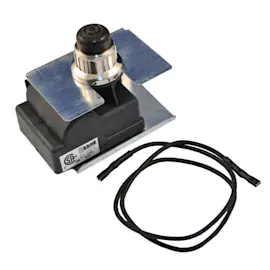
Using the exact model number (and sometimes the MFG No.) prevents ordering the wrong burners, igniter parts, heat plates, or hardware that look similar but fit differently.
Last updated: March 2026