
How many watts does a 2 ton central AC use?
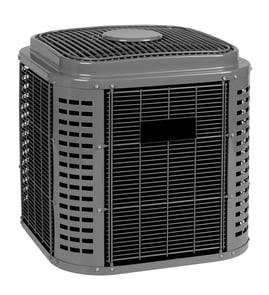
A 2-ton central AC (about 24,000 BTU/hr) typically draws around 2,000 to 3,500 watts while running, depending on efficiency (SEER/EER), outdoor temperature, and duct/static pressure. For a York condensing unit like H2DH036S06A, the exact watt draw depends on the matched indoor coil and blower setup.
Most 2-ton split-system central air conditioners fall into these real-world ranges:
- Running watts: ~2,000 to 3,500 W
- Starting surge (brief): often 2 to 5 times the running draw (compressor start)
- Daily energy use: depends on runtime; longer cycles in hot weather mean higher kWh
| What you’re measuring | Typical for a 2-ton central AC | What changes it most |
|---|---|---|
| Running power | 2.0 to 3.5 kW | SEER/EER, outdoor temp, airflow |
| Starting surge | 4 to 15 kW (momentary) | Compressor type, hard-start kit |
| Energy per hour of runtime | 2.0 to 3.5 kWh | Same as above |
If you can access the outdoor unit’s data plate, you can estimate running watts using the rated current.
- Find RLA (rated load amps) or FLA and the voltage (usually 208/230V)
- Estimate: Watts ≈ Volts × Amps (for a quick field estimate)
- For a more accurate estimate, measure with a clamp meter and use a power factor capable meter
A good skill-builder for electrical testing is our how to use a multimeter to test electrical parts video.
Knowing wattage helps you size a generator or inverter correctly, estimate operating cost (kWh), and diagnose issues. A 2-ton unit that suddenly draws much higher amps than normal can point to airflow problems, a failing capacitor, or compressor stress.
Last updated: February 2026
What are the 5 main components of AC?
The 5 main components that make a central AC system work (including a York H2DH036S06A condensing unit) are the compressor, condenser coil, expansion device, evaporator coil, and refrigerant lines. Together, they move heat from inside your home to the outdoors.
- Compressor (outdoor unit): Pumps refrigerant through the system and raises its pressure and temperature.
- Condenser coil (outdoor unit): Releases heat to outdoor air as the refrigerant condenses from a hot gas to a liquid.
- Expansion device (metering device): Drops refrigerant pressure so it can absorb heat effectively (often a TXV or fixed orifice).
- Evaporator coil (indoor unit): Absorbs heat from indoor air as refrigerant boils into a vapor.
- Refrigerant lines (line set): Copper tubing that carries refrigerant between the indoor coil and outdoor condensing unit.
| Component | Typical location | Common symptoms when failing |
|---|---|---|
| Compressor | Outdoor condensing unit | Hums but won’t start, trips breaker, poor cooling |
| Condenser coil | Outdoor condensing unit | High head pressure, weak cooling, unit runs long |
| Expansion device | Near indoor coil | Icing, uneven cooling, low suction pressure |
| Evaporator coil | Indoor air handler/furnace plenum | Icing, water leaks, reduced airflow |
| Refrigerant lines | Between indoor and outdoor units | Oil stains, hissing, low cooling capacity |
When you know which component does what, troubleshooting gets faster. For example, icing often points to airflow or metering issues, while repeated breaker trips often point to compressor or electrical problems.
- Turn off power at the disconnect and breaker before inspecting wiring or components.
- Check the air filter and indoor airflow first (many “AC problems” start with restricted airflow).
- Look for obvious signs: ice on lines, burnt wire terminals, or a swollen capacitor.
- If you need electrical testing, use a meter correctly and safely.
For electrical checks and basic diagnostics, we recommend: how to use a multimeter to test electrical parts video.
Last updated: February 2026
What size AC unit do you need for a 1000 square foot house?
For a typical 1,000 sq ft home, we size central air conditioning at about 18,000 to 24,000 BTU/hr (1.5 to 2 tons), then confirm using your climate, insulation, windows, and ductwork. York condensing units like model H2DH036S06A are commonly 3 tons (36,000 BTU/hr), which is usually larger than needed for 1,000 sq ft.
Use this as a fast estimate before a full load calculation:
- Mild climates / good insulation: ~18 BTU per sq ft (about 18,000 BTU, 1.5 tons)
- Average conditions: ~20 BTU per sq ft (about 20,000 BTU, 1.5 to 2 tons)
- Hot climates / lots of sun exposure: ~24 BTU per sq ft (about 24,000 BTU, 2 tons)
An oversized central AC can cool the air quickly but still leave comfort problems:
- Short cycling (more starts and stops)
- Higher humidity indoors (clammy feel)
- Uneven temperatures from room to room
- More wear on the compressor and contactor
- Higher operating cost in many homes
| Home conditions | Estimated capacity | Nominal tonnage |
|---|---|---|
| Tight, shaded, efficient | 18,000 BTU/hr | 1.5 ton |
| Average insulation and windows | 20,000 to 22,000 BTU/hr | ~2 ton |
| Hot climate, leaky, high sun | 24,000 BTU/hr | 2 ton |
These factors change the “right” tonnage more than square footage alone:
- Your climate zone and how much afternoon sun the house gets
- Attic insulation level and air sealing
- Window size, age, and shading
- Ceiling height (8 ft vs. vaulted ceilings)
- Duct sizing and duct leakage
- Whether you are also replacing the indoor coil/air handler
If your York H2DH036S06A is a 3-ton class condenser, it typically fits homes larger than 1,000 sq ft unless the home is very hot, very leaky, or has unusually high heat gain. Matching the outdoor condenser, indoor coil, and blower is what keeps refrigerant pressures, airflow, and efficiency where they should be.
For electrical troubleshooting steps that often come up during AC diagnosis (fuses, contactors, wiring), use our how to use a multimeter to test electrical parts video.
Last updated: February 2026