Error Codes




What is the average lifespan of a 50 gallon hot water heater?
A typical 50-gallon gas water heater, including Kenmore model 153334450, lasts 8 to 12 years. Water quality, maintenance (especially flushing sediment), and correct temperature settings have the biggest impact on whether it reaches the high end of that range.
Typical lifespan and what affects it
Most tanks fail from internal corrosion or heavy sediment buildup that overheats the bottom of the tank.
- Water hardness and sediment: hard water shortens life if the tank is not flushed
- Temperature setting: higher temps increase scale and stress components
- Usage level: heavy daily demand increases burner run time
- Maintenance: periodic draining and inspection extends service life
- Early warning leaks: small seepage often becomes a full tank leak
Signs your water heater is near end of life
If you see multiple symptoms at once, replacement planning usually makes sense.
| Symptom | What it often means | What to check first |
|---|---|---|
| Rusty or discolored hot water | Tank corrosion or failing dip tube | Inspect/replace the dip tube 100108608 |
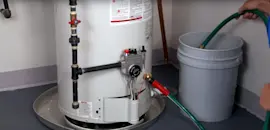
| Popping or rumbling | Sediment layer on tank bottom | Drain and flush tank; check drain valve operation |
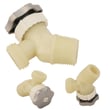
| Water on the floor near heater | Fitting leak or tank leak | Inspect connections; test the water heater drain valve 100108361 |
| Dripping from discharge pipe | Overpressure or overheating | Test the water heater temperature and pressure relief valve 100108279 |
Why it matters
Once a tank starts leaking internally, it typically cannot be repaired. Catching issues like a sticking drain valve, a weak T&P relief valve, or a failing dip tube early can prevent water damage and help your Kenmore gas water heater run safely and efficiently.
Last updated: February 2026
What is the average labor cost to install a 50 gallon gas water heater?
For a 50-gallon gas water heater like Kenmore model 153334450, average labor to install typically runs $400 to $1,000 for a straightforward replacement; costs go higher when venting, gas piping, permits, or code upgrades are needed.
What changes the labor price most
Labor varies mainly by how much work is required beyond swapping the tank.
- Venting changes (new vent pipe, chimney liner, power vent conversion)
- Gas line work (new shutoff, sediment trap, resizing, leak testing)
- Water piping updates (new shutoffs, dielectric unions, expansion tank)
- Permit and inspection requirements in your area
- Access and removal (tight closets, attic installs, stairs, haul-away)
- Safety/code items (drain pan, seismic straps, stand, combustion air)
Typical labor ranges (what you can expect)
These are common labor-only ranges for a 50-gallon gas water heater install.
| Install scenario | Typical labor range | What it usually includes |
|---|---|---|
| Like-for-like replacement | $400 to $1,000 | Disconnect, remove, set new heater, reconnect water and gas, basic startup checks |
| Moderate modifications | $900 to $1,600 | Some piping changes, minor venting updates, added code items |
| Complex install | $1,600 to $2,500+ | Significant venting or gas work, relocation, difficult access, multiple upgrades |
Why it matters
Gas water heater installation is a safety-critical job. The labor cost often reflects the time needed to meet local code, verify safe venting and combustion, and confirm gas and water connections are leak-free.
Parts that are commonly replaced during an install
If your installer recommends replacing worn safety or service parts, these are common on gas water heaters:
- Water heater temperature and pressure relief valve 100108279 (safety valve; often replaced if old or leaking)
- Water heater drain valve 100108361 (helpful if the original is clogged or seeping)
- Pilot 100109070 or water heater pilot tube assembly 100108370 (only if ignition issues exist)
Last updated: February 2026
How old is my water heater by the serial number?
To estimate the age of your Kenmore 153334450 gas water heater, read the serial number on the rating label and decode it using the manufacturer’s date format (often year plus week or month). If the label is worn or hard to read, replacing the label is not required; you just need the serial clearly copied.
Where to find the serial number
On most Kenmore gas water heaters, the serial number is printed on the rating plate on the tank’s exterior.
Check these common spots:
- Upper side of the tank near the draft hood or flue
- Mid-tank area near warning labels
- Near the gas control valve area
- On a large rectangular label that also lists capacity and gas type
How serial number dating usually works
Kenmore-branded water heaters are commonly built by major manufacturers, and the serial format depends on who made the tank.
Typical patterns you may see:
- YYWW at the start (year, then week of year)
- MMYY at the start (month, then year)
- A letter code for month and/or year (letters repeat on a cycle)
- A longer serial where the first 2 to 4 characters carry the date
Quick pattern guide (what to look for)
| What the serial starts with | Most likely meaning | Example of what it tells you |
|---|---|---|
| 4 digits like 0120 | Month/Year | January 2020 build |
| 4 digits like 2315 | Year/Week | 2023, week 15 |
| Letters then numbers | Letter-coded date | Month/year encoded by letters |
Why it matters
Knowing the build date helps you plan maintenance and replacement. Most tank-style gas water heaters typically last 8 to 12 years, and age is a key factor when you’re troubleshooting issues like pilot outages, lukewarm water, or leaking.
If you’re troubleshooting at the same time
Age plus symptoms can point to the most likely repair path. These parts are commonly involved in “no hot water” or “pilot won’t stay lit” problems:
- Pilot 100109070
- Water heater pilot tube assembly 100108370
- Thermocouple (listed in the parts list for this model)
If you’re seeing dripping at the discharge pipe or pressure buildup concerns, also check:
Last updated: February 2026
How long should a thermocouple last on a water heater?
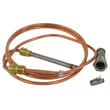
On a Kenmore 153334450 gas water heater, a thermocouple typically lasts 5 to 10 years. If your pilot won’t stay lit or the burner shuts off shortly after lighting, replacing the thermocouple is usually the most reliable fix.
Typical lifespan and what affects it
A thermocouple’s life depends on heat exposure and how clean the pilot flame burns.
- 5 to 10 years is typical for many gas water heaters
- Heavy use (frequent burner cycles) can shorten life
- Dust, lint, or soot around the burner can cause weak pilot flame and faster wear
- A misaligned pilot flame that does not fully heat the thermocouple can mimic a “bad” thermocouple
- Corrosion at the connection to the gas control valve can cause intermittent shutdowns
Quick checks before you replace it
Use these checks to confirm the symptom points to the thermocouple and not the pilot system.
- Verify the pilot flame is steady and blue (not lazy, yellow, or lifting)
- Make sure the pilot flame engulfs the thermocouple tip
- Inspect the thermocouple lead for kinks, burns, or looseness
- Tighten the thermocouple nut snugly at the gas control (do not overtighten)
- If the pilot will not stay lit, also inspect the pilot 100109070 and water heater pilot tube assembly 100108370
Common symptoms and likely causes
| Symptom | Most common cause | What to do |
|---|---|---|
| Pilot lights but goes out when you release the button | Weak thermocouple signal | Replace thermocouple |
| Pilot will not stay lit and flame looks weak | Pilot restriction or air in line | Check pilot assembly and tubing |
| Burner shuts off randomly | Loose connection or failing thermocouple | Reseat connection; replace if recurring |
| Water is too hot or pressure builds | Control or safety issue | Check the water heater temperature and pressure relief valve 100108279 and have the system inspected |
Why it matters
The thermocouple is a key safety device; it proves the pilot flame is present so gas can flow safely. When it weakens, the gas control shuts the pilot off, which stops hot water production and can cause repeated relighting.
Last updated: February 2026
What is the most common problem with gas water heaters?
The most common gas water heater problem is ignition related: the pilot will not stay lit or the burner will not fire, so you get little or no hot water. On Kenmore model 153334450, the usual causes are a dirty or failing pilot assembly, a restricted pilot tube, or a gas control issue.
Most common symptoms (and what they usually point to)
- Pilot lights but goes out when you release the knob: pilot assembly issue or gas control not holding
- Pilot will not light or flame is weak/yellow: dirty pilot or restricted pilot tube
- Water is warm, not hot: thermostat setting, burner not staying on, or sediment
- Rumbling or popping sounds: sediment buildup in the tank
- Water dripping from a pipe on the side/top: temperature and pressure relief valve opening
Quick checks we recommend first
- Confirm the gas shutoff valve is fully open.
- Ventilate the area; if you smell gas, stop and have the gas supply checked.
- Watch the pilot flame; it should be steady and strong at the burner.
- If the pilot is weak or won’t stay lit, service the pilot components.
- If you hear rumbling, flush the tank to reduce sediment.
Common problems and the parts that often fix them
| Problem you see | Most likely area | Parts on this model page that often apply |
|---|---|---|
| Pilot will not light or is weak | Pilot assembly | Pilot 100109070 |
| Pilot flame is unstable | Pilot tubing | Water heater pilot tube assembly 100108370 |
| Water discharges from relief line | Safety relief | Water heater temperature and pressure relief valve 100108279 |
| Slow leak at drain outlet | Drain fitting | Water heater drain valve 100108361 |
Why it matters
Pilot and ignition problems are the most common because they stop heating immediately and can look like a bigger failure. Fixing the pilot system first restores hot water fastest and helps prevent repeated shutdowns.
Last updated: February 2026