 Owner’s manual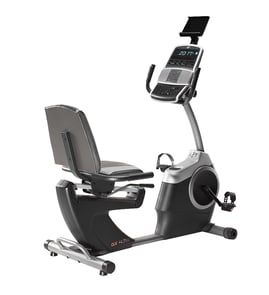

How long should you exercise on a recumbent bike?
For the Horizon RC-40 recumbent exercise cycle, we recommend 24 to 60 minutes per session for aerobic benefits; if you are new or returning after time off, start as low as 5 minutes and build up gradually. For weight loss goals, 48 minutes or more at a lower intensity is a strong target.
Recommended workout durations (practical targets)
Use these time ranges as a simple progression plan:
- Beginner or sedentary: 5 to 15 minutes
- General cardio fitness: 24 to 60 minutes
- Weight loss focus: 48 minutes or more (lower intensity, steady pace)
- Warm-up and cool-down: plan for a few minutes at the start and end (many programs include both)
How often to ride (so the time pays off)
Duration works best when it matches a consistent schedule.
- Aim for 3 to 4 days per week to maintain cardiovascular fitness
- Increase frequency (up to 6 days per week) if weight or fat loss is your main goal
- Pick a consistent time of day so workouts become a habit
| Goal | Session length | Weekly frequency |
|---|---|---|
| Ease back into exercise | 5 to 15 min | 3 to 4 days |
| Improve cardio fitness | 24 to 60 min | 3 to 4 days |
| Weight loss | 48+ min | 4 to 6 days |
Safety and setup reminders
We recommend following the key safety guidance in the RC-40 owner’s manual.
- Stop exercising immediately for chest pain, nausea, dizziness, or shortness of breath
- Maintain a comfortable pace and increase time gradually
- Keep a grip on the handlebars when mounting, dismounting, or riding
- Unplug the bike before moving or cleaning; wipe with soap and a slightly damp cloth (no solvents)
- Stay within the RC-40 user weight limit listed in the manual
Why it matters
The right session length helps you get results without overdoing it. Starting short and building toward 24 to 60 minutes improves consistency, reduces soreness, and makes it easier to use resistance programs and intervals safely over time.
Last updated: January 2026
Is exercising on a recumbent bike as good as walking?
Yes; for many people, exercising on a recumbent bike like the Horizon RC-40 is as good as walking for improving fitness because it delivers steady cardio with less joint impact. The best choice is the one you can do consistently at a comfortable pace.
How they compare (recumbent bike vs walking)
Both activities support weight loss, heart health, and daily energy when you do them regularly. The biggest difference is impact and muscle emphasis.
| Factor | Recumbent bike (Horizon RC-40) | Walking |
|---|---|---|
| Joint impact | Low impact, seated support | Low to moderate impact, weight-bearing |
| Balance needs | Lower; you can keep a grip on handlebars | Higher; uneven surfaces can add risk |
| Intensity control | Easy to adjust resistance and pace | Controlled by speed, hills, and terrain |
| Best for | Joint comfort, steady indoor workouts | Bone health, outdoor movement |
When the RC-40 is the better choice
- You have knee, hip, ankle, or back discomfort and want low-impact cardio
- You want consistent indoor workouts (weather and darkness do not interfere)
- You prefer seated support and a stable platform
- You want simple intensity changes using resistance programs
- You need a routine that is easier to stick with day to day
How to get “walking-like” benefits on a recumbent bike
- Warm up and cool down for about 4 minutes each
- Maintain a comfortable pace; increase resistance gradually
- Use the handlebars for balance when mounting and dismounting
- Stop immediately if you feel chest pain, nausea, dizziness, or shortness of breath
- Wipe perspiration off after each use and clean with soap and water only (no solvents)
Why it matters
The “best” exercise is the one you can do safely and consistently. The RC-40 makes it easier to build a habit because it is low impact and designed for in-home use, which helps you keep workouts regular.
For safety limits, setup, and workout guidance specific to your bike, use the RC-40 owner’s manual.
Last updated: January 2026
What are the disadvantages of a recumbent exercise bike?
A recumbent exercise bike like the Horizon RC-40 is built for comfort and low-impact cardio, but the tradeoffs are a larger footprint, less upper-body involvement, and fewer “out of the saddle” intensity options. For model-specific setup and safety limits, use the RC-40 owner's manual.
Common disadvantages (what most riders notice)
- Takes more space: Recumbent frames and seats typically need more floor space than upright bikes.
- Less upper-body engagement: Your arms and core stabilize less compared to many upright workouts.
- Harder to simulate climbing: You cannot stand up on the pedals, so hill-style efforts feel different.
- Less workout variety: Sprinting, standing intervals, and some technique drills are limited.
- Heavier and less portable: Many recumbents are bulkier to move around a home.
RC-40-SPECIFIC considerations from the manual
The RC-40 user guide highlights a few practical limitations that affect ownership and placement.
- Weight limit: The RC-40 is rated for up to 300 lb.
- Power requirement: It uses an AC adaptor connection for the console.
- Indoor-only placement: It is intended for in-home use and should not be placed in a garage, covered patio, near water, or outdoors.
- Moving the bike: It includes front transport wheels, but you still need clear space to roll it.
Quick comparison: recumbent vs upright
| Feature | Recumbent bike | Upright bike |
|---|---|---|
| Comfort for back/hips | Higher | Medium |
| Space needed | Higher | Lower |
| Upper-body/core demand | Lower | Higher |
| Hill simulation (standing) | Limited | Better |
Why it matters
If your goal is steady, joint-friendly cardio, a recumbent bike is a strong fit. If your goal is maximum intensity variety, climbing simulation, or a smaller footprint, the “disadvantages” can be deal-breakers.
Last updated: January 2026
