Owner’s manual
 Error Codes



What is the average cost of a 50 gallon gas water heater?
A typical 50-gallon gas water heater averages about $600 to $1,300 for the tank itself, with installed costs commonly landing around $1,000 to $3,100+ depending on venting type, efficiency, local labor rates, and whether plumbing or gas-line updates are needed. For your Kenmore 153336262 family, confirm capacity and configuration in the owner's manual.
What changes the price the most
- Venting style: atmospheric vent units usually cost less than power-vent or direct-vent models.
- Efficiency level: higher efficiency typically costs more up front.
- Warranty length: longer warranty models often cost more.
- Gas and water piping condition: shutoff valves, connectors, or sediment issues can add labor.
- Code-related upgrades: expansion tank, drain pan, seismic strapping (where required).
Typical cost ranges (what to expect)
| Cost item | Common range | Notes |
|---|---|---|
| Water heater unit (50-gallon gas) | $600 to $1,300+ | Features and venting drive the spread |
| Installation labor and materials | $400 to $1,800+ | Higher if venting or piping changes are needed |
| Total installed | $1,000 to $3,100+ | Can exceed this with major upgrades |
Model-specific notes for Kenmore 153336262
Your manual covers multiple tank sizes in the same series (including 50-gallon). Use it to match your exact capacity and fuel type (natural gas vs. propane), because that affects both the heater selection and the install scope.
If your replacement includes safety or performance updates, common add-ons include:
- Thermal expansion tank (often needed with a pressure-reducing valve or closed system)
- Drain pan (especially when installed above finished spaces)
- New T&P relief valve or discharge piping if worn or not compliant
Why it matters
Choosing the right venting type and sizing the tank correctly prevents nuisance shutdowns, inconsistent hot water, and avoidable rework during installation. It also helps you budget realistically for parts and labor.
Last updated: February 2026
How do I read my water heater model number?
On Kenmore gas water heater model 153336262, the model number is printed on the rating plate (model rating plate) on the front of the tank. Use that exact model number, along with the serial number, anytime you look up parts, troubleshooting info, or service details in the owner's manual.
Where to find the model number (rating plate)
Look on the front of the water heater for a sticker or metal plate labeled MODEL NO. and SERIAL NO.. On this Kenmore series, the rating plate is the key identifier.
- Check the front of the tank, not the burner door
- Look for MODEL NO. and SERIAL NO. on the same plate
- Write the model number exactly as shown (for example, 153.336262)
- Keep the serial number too; it helps match the correct parts list
- Note whether the unit is natural gas or propane (LP) if listed
What the numbers mean (what to use and what to ignore)
For parts and repair help, we use the model number and serial number first. Other data on the plate is useful, but it is not what identifies your exact parts breakdown.
| Rating plate item | Use it for | Example of when it matters |
|---|---|---|
| Model number | Correct parts list and diagrams | Ordering a pilot assembly or burner parts |
| Serial number | Production details and part matching | Confirming the right revision of a part |
| Gas type (natural/LP) | Correct burner and orifice setup | Replacing an orifice or burner assembly |
| BTU and other specs | Performance reference | Comparing recovery rate, not ordering parts |
Why it matters
Kenmore water heaters often share similar-looking components, but parts like the pilot assembly, igniter, burner, and gaskets can vary by model and gas type. Using the exact model number helps you avoid ordering the wrong part.
Last updated: February 2026
What is the life expectancy of a Kenmore water heater?
A Kenmore gas water heater like model 153336262 typically lasts 8 to 12 years. You can push lifespan longer with routine tank draining to reduce sediment and by inspecting and replacing the anode rod as it wears (maintenance details are in the owner's manual).
Typical lifespan and what changes it
Most failures come from tank corrosion, sediment buildup, or combustion and venting issues. These factors have the biggest impact:
- Water quality and conductivity: high conductivity can consume the anode rod faster
- Anode rod condition: replacing a depleted anode can extend tank life
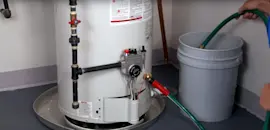
- Sediment level: periodic draining helps reduce rumbling, overheating, and efficiency loss
- Installation quality: correct venting and combustion air supply prevent unsafe operation and premature failure
- Usage patterns: heavy daily demand increases wear on gas control and burner components
Maintenance schedule we recommend
Use this as a practical baseline for a Kenmore gas tank water heater:
| Task | When to do it | Why it matters |
|---|---|---|
| Check anode rod | Annually after the warranty period | Protects the tank from corrosion |
| Drain a few gallons (or flush) | Periodically (more often with hard water) | Reduces sediment and noise |
| Visual safety check (burner area, venting, leaks) | Monthly | Catches problems early |
| Test the T&P relief valve | Periodically per manual | Prevents dangerous overpressure |
Parts that commonly extend service life
If you are maintaining the heater to maximize lifespan, these model-related parts are often involved:
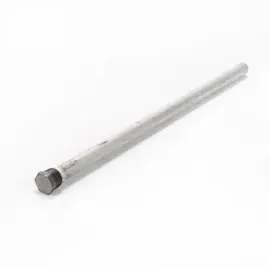
- Anode rod 100109594 (sacrificial corrosion protection)
- Water heater temperature and pressure relief valve 100108279 (safety valve; replace if leaking or not operating correctly)
- Water heater pilot assembly 100109261 (helps address pilot and ignition reliability issues)
Why it matters
Once a tank begins to corrode internally, leaks can develop quickly and replacement becomes the practical fix. Keeping sediment down and the anode rod in good shape is the most effective way to get the full 8 to 12 years (and often more) from a gas water heater.
Last updated: February 2026
Can you replace parts on a hot water heater?
Yes. On the Kenmore 153336262 gas water heater, we can replace many service parts (like the pilot/igniter, burner components, gaskets, and the T&P relief valve) to restore safe operation and extend the heater’s life; follow the safety steps and procedures in the owner's manual.
Parts you can commonly replace on this model
These are typical replaceable items for the Kenmore 153336262, and several are available for this model:
- Pilot and ignition components (no-lighting or pilot-won’t-stay-lit issues)
- Burner components (poor combustion, sooting, weak flame)
- Door and manifold gaskets (air leaks that affect combustion)
- T&P relief valve (leaking or weeping valve)
- Anode rod (tank protection and odor reduction)
Examples from the parts list for this model
| Symptom | Part that often applies | Example part on this model |
|---|---|---|
| Pilot won’t light or won’t stay lit | Pilot assembly, igniter | Water heater pilot assembly 100109261, water heater igniter 100109221 |
| Sooting or poor flame | Burner, orifice, burner tube, gaskets | Water heater burner assembly 100109256, orifice 100109257 |
| Valve dripping from discharge pipe | T&P relief valve | Water heater temperature and pressure relief valve 100108279 |
Safety and “stop now” situations
Gas water heater repairs can be straightforward, but safety comes first.
- Turn OFF the gas supply before servicing.
- If you see sooting, turn gas OFF and keep it off until the cause is corrected.
- Keep combustion and ventilation airflow clear; check venting for obstructions.
- If the high temperature shut-off trips, the gas control valve must be replaced (it is non-resettable).
- If the heater has been flooded, replace the unit; do not attempt to repair it.
How we decide whether to repair or replace a part
Use this quick checklist before ordering parts:
- Confirm the symptom (no hot water, pilot outage, leaks, rumbling, sooting).
- Do a visual inspection of the burner and pilot at least yearly.
- Check for leaks at common checkpoints before restarting.
- Match the part to your exact model number 153336262.
Why it matters
Replacing the right part restores safe combustion, prevents carbon monoxide risks from improper venting or sooting, and helps avoid water damage from leaks. Correct diagnosis also prevents replacing good parts unnecessarily.
Last updated: February 2026
What is the most common problem with gas water heaters?
For the Kenmore 153336262 gas water heater, the most common problems are pilot or ignition trouble (no heat) and water that looks like a leak but is actually condensation during startup or heavy hot-water use. Noise from condensation or sediment and minor T&P valve dripping are also common. Use the owner's manual for the model’s safety checks and leakage checkpoints.
Most common symptoms and likely causes
- Pilot goes out or will not stay lit: ignition system or pilot components.
- “Leaking” with sizzling or frying noise: condensation dripping onto hot surfaces.
- Rumbling or popping: sediment buildup in the tank.
- Small discharge from the T&P valve: thermal expansion or high water pressure.
- Rotten egg odor: anode rod reaction with certain water conditions.
Quick checks we recommend first
- Wait 1 to 2 hours after first startup; condensation often stops once the tank warms.
- Verify the tank is full before operating; hot water must flow from a faucet before turning gas on.
- Trace the water source: draft hood area, pipe joints, anode fitting, or the T&P discharge tube.
- If the pilot drops out during heavy use, check for excessive condensation running down the flue.
“Water on the floor” guide
| What you see | Common cause | Next step |
|---|---|---|
| Water after first fill or heavy use | Condensation | Let tank warm; re-check |
| Drips at fittings | Connection leak | Tighten or repair; re-check |
| Water from discharge tube | Expansion or high pressure | Check pressure or expansion setup |
| Seepage at valve threads | Valve leak at tank fitting | Replace valve |
Parts that commonly fix real failures
- Persistent leaking or a valve that will not reseat: water heater temperature and pressure relief valve 100108279
- Pilot will not stay lit after correct lighting steps: water heater pilot assembly 100109261
Why it matters
Condensation is frequently mistaken for a tank leak; pilot outages stop hot water immediately. Using the manual’s checkpoints helps you diagnose correctly before replacing parts.
Last updated: February 2026