Error Codes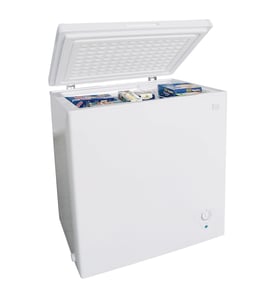





Can chest freezers be repaired?
Yes. A Hotpoint chest freezer like model HCM5QWBWW can often be repaired when the issue is a wearable component, a control problem, or a maintenance-related restriction (like poor airflow or a blocked drain). Sealed-system failures can be repairable too, but they are typically the most expensive and technician-only.
Common repairable problems on chest freezers include:
- Temperature control issues (freezer runs too warm or too cold)
- Lid not sealing well (frost buildup, long run times)
- Drain and defrost-water issues (water in bottom, ice around drain)
- Electrical issues (no power, intermittent operation)
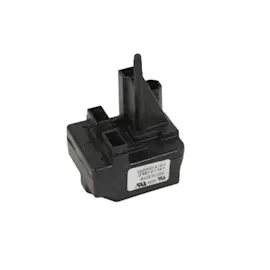
- Fan or compressor start problems (humming, clicking, not starting)
Before replacing anything, we recommend these basic checks:
- Confirm the outlet has power and the cord is firmly seated
- Verify the temperature control is set correctly and not loose
- Allow clearance around the cabinet for ventilation
- Clean dust from the condenser area if accessible
- Check for heavy frost that can reduce cooling performance
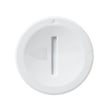
If the temperature knob is cracked or slipping, replacing the knob can restore proper control feel and settings; see the thermostat knob WR01X29594.
| Situation | Typical path | Why |
|---|---|---|
| Drain plug missing or leaking | Replace small part | Low cost, fast fix |
| Control/knob problem | Replace control interface part | Restores adjustability |
| Repeated heavy frost | Diagnose seal/usage/defrost habits | Prevents repeat issues |
| Sealed-system issue (refrigerant/compressor) | Technician diagnosis | Specialized tools and cost |
A repairable issue (like a drain plug or control knob) can cause symptoms that look like “the freezer is failing.” Fixing the root cause helps your HCM5QWBWW hold temperature, reduce run time, and protect stored food.
Last updated: January 2026
How much meat will a 5.0 cubic foot freezer hold?
A 5.0 cubic foot chest freezer like the Hotpoint HCM5QWBWW typically holds about 150 to 200 pounds of meat when it’s packed efficiently. The exact amount varies with how the meat is cut, packaged (bulk vs. boxed), and how much space you leave for airflow and baskets.
- 150 to 200 lb: mixed cuts in typical freezer paper or vacuum-sealed packs
- 120 to 160 lb: lots of bulky retail boxes or irregular packages
- 160 to 220 lb: tightly packed, mostly uniform vacuum-sealed packages
- Plan to keep 10% to 20% of space open for easier access and better organization
- Packaging type: vacuum-sealed packs stack tighter than foam trays or boxes
- Cut size: roasts and whole birds waste more space than flat packs
- Organization: using a basket helps prevent “dead space” near the top
- Airflow and access: overpacking makes it harder to find items and rotate stock
If you want better organization in this model, adding or replacing the basket WR71X43466 can help you use the top space more efficiently.
| Freezer size | Typical meat capacity | Best use case |
|---|---|---|
| 5.0 cu ft | 150 to 200 lb | Small family, half hog share, seasonal bulk buys |
| 7.0 cu ft | 210 to 280 lb | Larger bulk buys, more long-term storage |
| 10.0 cu ft | 300 to 400 lb | Big-game processing, large family stocking |
Estimating capacity helps prevent overbuying and overpacking, which can reduce organization and make it harder to keep food at safe temperatures during frequent lid openings.
Last updated: January 2026
How to find Hotpoint freezer model number?
To find the model number on your Hotpoint chest freezer, look for the appliance ID tag (rating plate) on the cabinet, most often near the lid opening or on an exterior side/back panel. For this parts list, the model number is HCM5QWBWW.
Check these common locations first:
- Along the upper rim of the cabinet, just inside the lid opening
- On the left or right exterior side panel
- On the back panel near the power cord entry
- Near the bottom front edge of the cabinet (less common)
- On a paper label inside the cabinet wall (occasionally)
We recommend recording the full ID information exactly as shown:
- Model number (example for this unit: HCM5QWBWW)
- Serial number (helps confirm production run)
- Any revision or suffix characters after the model
- Brand name (Hotpoint)
| Item | What it’s used for | Example format |
|---|---|---|
| Model number | Identifies the design and compatible parts | HCM5QWBWW |
| Serial number | Identifies the specific unit built | Letters and numbers |
Hotpoint model numbers can look similar across different freezer sizes and revisions. Using the exact model number helps ensure parts like a basket, thermostat knob, or drain plug match the correct cabinet and control layout.
Once you confirm the model number, match the part by name and ID. For example, if you need an interior storage bin, use the basket WR71X43466 listed for HCM5QWBWW.
Last updated: January 2026
What are the common chest freezer problems?
Common problems we see on the Hotpoint HCM5QWBWW chest freezer include weak or no freezing, heavy frost buildup, temperature swings, unusual buzzing or clicking, and water leaks during defrost. Most issues trace back to airflow restrictions, lid seal problems, or temperature control and drainage components.
- Not freezing or warm temps: incorrect control setting, poor airflow around the cabinet, dirty condenser area, or a failing temperature control system
- Excessive frost: lid not sealing, frequent lid openings, humid room air entering the freezer
- Temperature inconsistency: overpacked freezer blocking air circulation, unstable room temperature, control issues
- Noises (buzzing, clicking, humming): normal compressor cycling, cabinet vibration, or a struggling compressor/start components
- Water on the floor: drain opening not sealed after defrost, missing or damaged drain plug
- Confirm the freezer is plugged in firmly and the outlet has power.
- Set the temperature colder and wait 12 to 24 hours for stabilization.
- Make sure the lid closes fully and nothing is pinched in the seal.
- Leave a few inches of space around the freezer for ventilation.
- If you recently defrosted, verify the drain is closed with the correct plug.
| Problem | What to inspect | Example compatible part for HCM5QWBWW |
|---|---|---|
| Water leak after defrost | Drain opening and plug fit | Freezer drain plug WR01X36306 |
| Temperature hard to adjust | Control knob condition | Thermostat knob WR01X29594 |
Catching weak cooling, frost buildup, or drainage leaks early helps protect food, reduces energy use, and can prevent compressor overwork, which is the most expensive type of failure on a chest freezer.
Last updated: January 2026
What are the parts of a chest freezer?
A Hotpoint chest freezer like model HCM5QWBWW is built around a sealed refrigeration system (compressor, condenser, evaporator, and refrigerant tubing) plus user and cabinet parts such as the lid, gasket, thermostat control, and storage basket. Some model-specific items vary by configuration.
- Compressor: pumps refrigerant through the sealed system to create cooling.
- Condenser: releases heat from the refrigerant (often through coils or tubing in/around the cabinet).
- Evaporator: absorbs heat inside the freezer so the interior gets cold.
- Capillary tube (metering device): controls refrigerant flow into the evaporator.
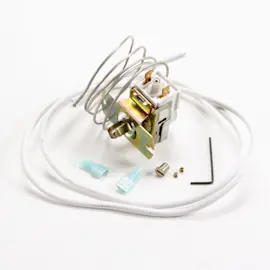
- Thermostat/control: senses temperature and cycles the compressor on and off.
- Cabinet and insulation: keeps heat out and cold in.
These are the kinds of parts customers most often handle, clean, or replace:
- Basket WR71X43466 for organizing food
- Thermostat knob WR01X29594 for adjusting temperature
- Drain components used during manual defrost, such as a freezer drain plug WR01X36306
| Area | Typical parts | What you notice when it fails |
|---|---|---|
| Sealed system | compressor, condenser, evaporator, capillary tube | warm temps, long run times, little or no frost pattern |
| Controls | thermostat, knob, wiring | won’t start, won’t stop, temperature swings |
| Cabinet | lid, gasket, hinges, basket, drain plug | frost buildup, leaks during defrost, poor sealing |
Knowing which part group you are dealing with helps you troubleshoot faster. For example, a missing drain plug can cause water leaks during defrost, while temperature control issues point more toward the thermostat/knob area than the sealed system.
Last updated: January 2026
Why is my Hotpoint freezer not freezing properly?
If your Hotpoint HCM5QWBWW chest freezer is running but not freezing properly, the most common causes are poor airflow (overpacked cabinet), a warm lid gasket or lid not sealing, heavy frost from moisture intrusion, or a cooling-system issue such as a weak compressor or refrigerant problem.
- Confirm the temperature control is set colder and the knob is not loose or slipping on the shaft; inspect the thermostat knob WR01X29594.
- Make sure the lid closes fully and nothing is pinched between the lid and cabinet.
- Verify the freezer has clearance around it for heat to dissipate (especially at the back and sides).
- Check for heavy frost or ice buildup on interior walls that could indicate excess moisture entry.
- Listen for the compressor: steady running with little cooling can point to a sealed-system problem.
| What you notice | Likely cause | What we suggest |
|---|---|---|
| Food is soft only near the top | Warm air entering, lid not sealing | Clean the lid sealing surface; reduce openings |
| Frost buildup and poor cooling | Moisture intrusion, frequent openings | Defrost fully; confirm lid closes squarely |
| Runs constantly, still warm | Heat can’t escape or sealed-system issue | Improve ventilation; if unchanged, service call |
| Water/ice around drain area | Drain plug missing or leaking | Check the freezer drain plug WR01X36306 for fit and damage |
A chest freezer that cannot hold temperature can lead to food spoilage and can overwork the compressor. Fixing airflow, sealing, and frost issues early often restores normal freezing and helps prevent more expensive repairs.
- The freezer is warm and the compressor is very hot to the touch.
- You hear clicking repeatedly (start attempts) or the unit runs nonstop with minimal cooling.
- After a full manual defrost and 24 hours of run time, temperatures still do not recover.
Last updated: January 2026