Installation guide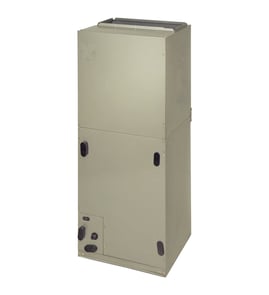




How big is a 4 ton air handler?
A “4 ton” air handler refers to cooling capacity (about 48,000 BTU/hr), not a single standard cabinet size. For a Carrier FX4BNF030000 fan coil, the exact dimensions depend on the specific cabinet configuration and installation orientation shown in the installation guide.
Typical size range for a 4 ton air handler
Most 4 ton fan coil or air handler cabinets fall into a common footprint range, but height and depth vary by series and coil style.
- Width: often about 21 to 24 inches
- Depth: often about 21 to 24 inches
- Height: often about 45 to 55 inches (vertical installs)
- Service clearance: plan extra space for panel removal, wiring access, and condensate drain routing
| What you are sizing for | What to measure | Why it changes |
|---|---|---|
| Closet or mechanical room fit | Cabinet width, depth, height | Coil style (A-coil vs slope), cabinet series |
| Horizontal install space | Length and depth in the chosen orientation | Left vs right conversion steps differ |
| Duct connection | Supply and return opening sizes | Duct layout and adapter kits |
How to size your space correctly (what we recommend)
Use these steps to avoid ordering the wrong platform, pan, or duct transitions:
- Read the cabinet orientation and conversion steps (vertical, horizontal right, downflow) in the installation guide.
- Measure the actual cabinet (not the ductwork) at the widest points.
- Confirm you have room to remove blower and coil access panels for service.
- Plan condensate drain routing and trap space; traps should be installed close to the coil and pitched properly.
- If you are converting to downflow, allow space for the required gasket and drain procedure details.
Why it matters
Air handlers are often installed in tight closets, attics, or crawlspaces. If the cabinet is even 1 to 2 inches larger than your opening, you can end up reworking framing, duct transitions, and condensate drain lines.
Last updated: February 2026
How much to replace an air handler unit?
Replacing a Carrier FX4BNF030000 air handler (fan coil) typically costs about $1,800 to $3,500 installed, with many replacements landing near $2,800. Your final price depends on capacity, installation configuration (upflow, horizontal, downflow), electrical work, and any accessory heater package.
What drives the total replacement cost
- Unit size and efficiency match to your outdoor condenser or heat pump
- Installation orientation (upflow vs. horizontal vs. downflow conversion work)
- Electric heat package (if added or replaced)
- Refrigerant system work (brazing, evacuation, filter drier replacement)
- Condensate drain and pan setup (leak prevention, secondary drain routing)
- Electrical parts and controls that need replacement during the job
Typical cost breakdown (installed)
| Cost item | Typical range | Notes |
|---|---|---|
| Air handler equipment | $900 to $2,200 | Varies by capacity and features |
| Labor and installation | $700 to $1,800 | Access, duct/plenum changes, startup |
| Electrical and controls | $150 to $600 | Transformer, wiring, safety checks |
| Refrigerant line work | $200 to $900 | Brazing, nitrogen purge, evacuation |
Model-specific installation details that can add labor
For the FX4B-series fan coil design, installation details that commonly affect labor include:
- Converting for horizontal right applications (coil and pan changes)
- Ensuring grommets and panels seal correctly to prevent air leaks and cabinet sweating
- Confirming the condensate pan and drain connections are set up carefully
- Following safe service practices (power off at all disconnects; accessory heater power off)
These steps are outlined in the installation guide.
Why it matters
A properly matched and correctly installed air handler improves airflow, humidity control, and overall HVAC efficiency. It also helps prevent common problems like water leaks at the drain pan, air leakage, and nuisance electrical issues.
Last updated: February 2026
How to tell how old a Carrier air handler is?
For a Carrier air handler like model FX4BNF030000, the most reliable way to tell its age is to read the serial number on the unit’s rating plate and decode the manufacture week and year (commonly embedded in the first four digits on many Carrier-family units). Use the FX4BNF030000 installation guide to help locate access areas safely.
Where to find the age information
Look for the rating plate (data label) on the air handler cabinet. Common locations include:
- Inside the blower compartment door
- On the inside of the coil access panel
- On an exterior side panel near the electrical compartment
- Near the wiring diagram label
How the serial number date code typically works
Many Carrier, Bryant, and Payne air handlers use a serial format where the first 4 digits represent:
- Digits 1 to 2: week of the year (01 to 52)
- Digits 3 to 4: year (two-digit)
Example decoding:
| Serial starts with | Interprets as | Approx. build date |
|---|---|---|
| 0199 | Week 01, 1999 | Early January 1999 |
| 2516 | Week 25, 2016 | Mid June 2016 |
Quick checks to avoid a wrong read
Before you decide the unit’s age, confirm these details:
- You are reading the serial number, not the model number (FX4BNF030000 is the model).
- The first two digits are a valid week (01 to 52).
- The two-digit year makes sense for the equipment (for example, “99” is 1999, “16” is 2016).
- If the label is worn, take a clear photo and rewrite the serial carefully.
Why it matters
Knowing the manufacture date helps us match the correct Carrier fan coil parts (like a control board, transformer, or blower motor) and it also helps when comparing expected service life and planning repairs.
Last updated: February 2026