Error Codes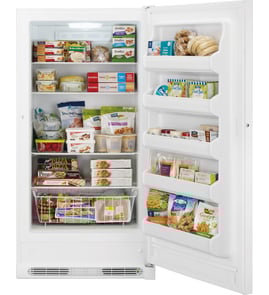




What size freezer for 400 lbs of meat?
For about 400 lbs of meat, we recommend planning on roughly 14 to 16 cubic feet of freezer capacity for comfortable storage and airflow. A tightly packed load can fit in less, but extra space helps keep temperatures stable and makes organizing easier.
A common rule of thumb is 30 to 35 lbs of packaged meat per cubic foot (varies by cut size and packaging).
- Boneless, tightly wrapped cuts pack more efficiently
- Bone-in cuts take more space
- Odd shapes (roasts, whole birds) waste space between packages
- Airflow space helps prevent warm spots and frost issues
- Baskets and shelves reduce usable volume but improve organization
| Meat load | Typical capacity range | Best “no-stress” target |
|---|---|---|
| 300 lbs | 10 to 12 cu ft | 12 to 14 cu ft |
| 400 lbs | 12 to 15 cu ft | 14 to 16 cu ft |
| 500 lbs | 15 to 18 cu ft | 17 to 20 cu ft |
Upright freezers (like Whirlpool WZF34X20DW06) are easier to organize with shelves, but you usually need a bit more cubic feet than a chest freezer to store the same weight.
- Upright freezer: easier access, more “lost” space to shelves and bins
- Chest freezer: packs denser, better for bulk, harder to organize
- If you want categories (steaks, ground, roasts), upright space fills faster
Choosing a freezer that is slightly larger than the minimum helps the meat freeze and stay frozen evenly, reduces temperature swings when you open the door, and leaves room for ice packs or future purchases.
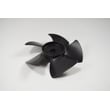
If your freezer is full and temperatures seem uneven, strong air circulation matters. The evaporator fan system is a key player in moving cold air through the cabinet; see the refrigerator evaporator fan blade WP2169142 if you are troubleshooting airflow issues.
Last updated: January 2026
How to reset a Whirlpool upright freezer?
To reset your Whirlpool upright freezer model WZF34X20DW06, we recommend doing a full power reset: disconnect power, set the temperature control to Off (or 0), wait a few minutes, then restore power and reselect your temperature. This clears many control and cooling glitches.
- Unplug the freezer from the wall outlet (or switch the breaker Off).
- Set the temperature control to Off or 0 (if your control allows it).
- Wait 5 minutes.
- Plug the freezer back in (or switch the breaker On).
- Set the control back to your normal setting.
- Allow 24 hours for temperatures to fully stabilize.
A reset will not fix a failed cooling or airflow part. These checks help narrow it down:
- Listen for the evaporator fan inside the cabinet; no fan noise can point to a fan issue.
- Check for heavy frost on the back interior panel; that often indicates a defrost problem.
- Make sure the door closes tightly and the gasket seals all the way around.
- Confirm the freezer has airflow space around it and the condenser area is not blocked.
| Symptom | What it often points to | Example part for WZF34X20DW06 |
|---|---|---|
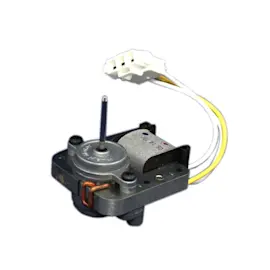
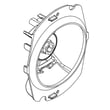
| Warm temps but compressor runs | Poor airflow in cabinet | Motor-evap f W11499658 |
| Fan runs but weak airflow | Damaged fan blade | Refrigerator evaporator fan blade WP2169142 |
| Heavy frost buildup | Defrost system issue | Defrost heat W11562215 |
A proper reset restores normal control operation after a power interruption or control hiccup. If temperatures do not improve within a few hours (and fully within 24 hours), the issue is usually airflow, defrost, or sealed-system related rather than a control setting.
Last updated: January 2026
What is the average lifespan of an upright freezer?
Most upright freezers, including the Whirlpool WZF34X20DW06, typically last 12 to 15 years; a realistic overall range is 10 to 20 years with normal household use. Keeping airflow clear, maintaining good door sealing, and preventing frost buildup are the biggest factors that extend service life.
| Upright freezer condition | What we typically see | What it usually means |
|---|---|---|
| Well maintained, stable room temp | 15 to 20 years | Fewer compressor and defrost issues |
| Average use, basic upkeep | 12 to 15 years | Most common outcome |
| Hot garage, dusty area, poor sealing | 8 to 12 years | Higher run time and wear |
- Dirty condenser area: raises operating temperature and run time
- Door gasket leaks: causes moisture intrusion, frost, and longer cycles
- Heavy frost/ice: restricts airflow and stresses the sealed system
- Overloading or blocking vents: reduces circulation and cooling performance
- Frequent door openings: adds heat and humidity load
- Unstable power: can damage controls and the compressor start components
- Keep the freezer level so the door closes consistently.
- Leave space around the cabinet for ventilation.
- Keep food packages from pressing against interior air passages.
- Defrost and dry the interior if you see recurring heavy frost.
- Inspect the door seal; if it is torn, hardened, or won’t grip paper, replace it.
A freezer that runs longer to hold temperature wears out key components faster, especially the sealed system. Fixing airflow and sealing issues early can prevent expensive repairs like a compressor replacement.
If you are troubleshooting warm temps, loud operation, or heavy frost, these model-specific parts are often involved:
Last updated: January 2026