Installation guide
 Owner’s manual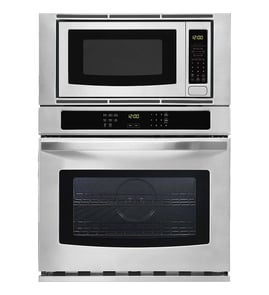



Can you replace just the microwave in a GE microwave oven combo?
For the GE PK7800SK1SS wall oven/microwave combo, you typically do not replace only the microwave section as a standalone swap; the upper microwave is built into the combo’s cabinet cutout, mounting, and electrical routing. In most cases, you either repair the microwave portion or replace the full combo unit.
What you can do instead
If the microwave portion is failing, these are the practical paths that keep fit, safety, and performance intact:
- Diagnose and repair the microwave section using model-correct components
- Replace failed door safety parts (interlock switches) if the unit will not run
- Replace heating components if the microwave runs but does not heat
- Address turntable issues if it runs but does not rotate
- Replace the full combo unit if the microwave cavity or major structure is damaged
A good starting point is the wiring, mounting, and service access guidance in the installation guide.
Common microwave-side parts that are often repairable
These are examples of microwave-related parts available for this model that commonly solve “won’t start” or “no heat” complaints:
- Microwave primary interlock switch WB24X10047 (door safety switch)
- Microwave door interlock switch WB24X25397 (door safety switch)
- Microwave magnetron WB26X32629 (heating component)
- Microwave turntable motor WB26X10193 (tray rotation)
Quick decision guide
| Symptom | Most likely area | Typical next step |
|---|---|---|
| No start, dead when door closes | Door interlock circuit | Test/replace interlock switch(es) |
| Runs but does not heat | High-voltage system | Check magnetron/transformer/capacitor |
| Tray does not rotate | Turntable drive | Check turntable motor and coupler |
| Overheating or fan issues | Cooling/airflow | Inspect cooling fan and airflow paths |
Why it matters
This combo is designed to be secured into a cabinet cutout and connected through a junction box with specific conduit routing and mounting steps. Keeping repairs model-correct helps prevent fit problems, door alignment issues, and electrical hazards.
Last updated: February 2026
What's the average lifespan of a GE microwave?
Most GE microwaves average about 7 to 10 years of service life with normal household use. In a GE PK7800SK1SS wall oven/microwave combo, heavy daily use, poor airflow, and door-switch wear can shorten lifespan; consistent cleaning and correct operation help it reach the full range.
What affects microwave lifespan the most
- Daily run time (multiple long heat cycles per day wears components faster)
- Ventilation and heat (built-in units need proper clearances and airflow)
- Door use and slamming (stresses interlock switches and latch parts)
- Keeping it clean (grease and food splatter can cause overheating and arcing)
- Power quality (frequent brownouts or surges can stress control boards)
Common “end-of-life” symptoms (and what they usually point to)
| Symptom | What it often means | What to check first |
|---|---|---|
| Runs but does not heat | High-voltage component issue | Stop using and have it serviced (high voltage hazard) |
| Starts then stops when door moves | Door interlock problem | Door alignment and switch operation |
| Loud hum or burning smell | Magnetron or transformer stress | Stop using immediately |
| Turntable not rotating | Motor or coupler issue | Turntable motor and tray seating |
For this model, door-interlock issues are commonly tied to the switch system; the parts list includes the microwave door interlock switch WB24X25397 and "switch, p" WB24X10047 if you are diagnosing a door-switch problem.
Maintenance that helps you get the full 7 to 10 years
- Wipe the cavity after spills; do not let grease bake on
- Never run the microwave empty
- Use microwave-safe containers only; no metal or foil contact
- Keep the door closing smoothly; avoid slamming
- Confirm the unit is installed with the correct clearances and electrical connection per the installation guide
Why it matters
A microwave that is overheating, intermittently shutting off, or failing to heat can indicate high-stress electrical components. Catching door-switch and airflow problems early helps prevent repeat failures and protects the rest of the combo unit.
Last updated: February 2026
How do I find the model number on my PK7800SK1SS?
The model number for your GE wall oven and microwave combo is printed on the appliance rating plate. For model PK7800SK1SS, the rating plate is located on the oven side trim (on the oven frame area), so you can confirm the exact model and electrical rating before ordering parts.
Where to look on PK7800SK1SS
Check these common spots in this order:
- Open the oven door and look along the left and right side trim (vertical trim pieces on the oven frame).
- Look for a label that lists the model number, serial number, and electrical ratings.
- Use a flashlight; the print can be small and the label can be partially hidden by the trim.
- If the unit is installed in a tight cabinet cutout, view the side trim from an angle with the door open.
For diagrams and label references, use the PK7800SK1SS installation guide.
What the rating plate label tells you
The rating plate typically includes:
- Model number (PK7800SK1SS)
- Serial number (used for manufacturing date and version details)
- Voltage and frequency (often 240V/208V, 60 Hz)
- Kilowatt rating (used to size the dedicated circuit)
| Label item | Why it matters when repairing or ordering parts |
|---|---|
| Model number | Ensures parts match your exact GE configuration |
| Serial number | Helps identify production changes and compatible revisions |
| Electrical rating | Confirms correct circuit protection and wiring requirements |
Why it matters
GE wall oven and microwave combo parts can vary by revision, even within the same model family. Using the rating plate model number helps you select the correct control board, door components, sensors, and other replacement parts the first time.
Last updated: March 2026