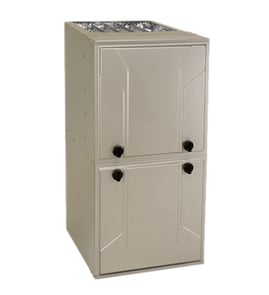

Should a 25 year old furnace be replaced?
Yes. A 25-year-old York furnace (including model P1XUB12N07501) is past the typical furnace lifespan of 15 to 20 years, so replacement is the practical choice for reliability, efficiency, and safer operation versus putting money into repeated repairs.
What “25 years old” usually means for a furnace
At this age, the biggest issues are wear-related failures and declining performance.
- Efficiency is typically much lower than modern high-efficiency furnaces, so heating costs trend higher.
- Breakdowns become more frequent (ignition, blower, control board, inducer, and limit switch issues are common).
- Comfort often gets worse (uneven heat, longer run times, more noise).
- Repair costs add up quickly, especially if multiple parts fail in the same season.
- Safety checks become more important (especially for gas furnaces).
Replace vs. repair: a simple decision guide
Use this as a quick way to decide what makes sense for your home.
| Situation | Repair makes sense | Replacement makes sense |
|---|---|---|
| Furnace age | Under ~15 years | 20+ years |
| Repair cost | Small, one-time fix | Repeated repairs or a major repair |
| Performance | Heats evenly, normal bills | Rising bills, uneven heat, long run times |
| Reliability | Few issues historically | Frequent service calls, hard starts, lockouts |
Red flags that push replacement to the top
If you see any of these, we treat replacement as the best next step.
- Frequent cycling on and off, or the furnace struggles to stay running
- Unusual noises (rattling, booming, squealing) that keep returning
- Visible rust, corrosion, or water around the furnace cabinet
- Sooty residue near the burner area or venting
- Your home is consistently colder in certain rooms
Why it matters
A furnace is a high-use, safety-critical appliance. Replacing an end-of-life unit reduces mid-winter breakdown risk, improves comfort, and typically lowers operating costs compared to keeping a 25-year-old system running.
For help confirming the exact model number before you shop or schedule service, use how to find your appliance model number (and what it means for parts).
Last updated: February 2026
What does code 12 mean on a furnace?
On a York furnace like model P1XUB12N07501, code 12 is commonly tied to an ignition or flame-sensing problem (the furnace tried to light but did not prove flame reliably). The exact meaning can vary by control board, so we treat it as a “no flame proven” style fault and troubleshoot the ignition sequence.
What to check first (safe, high-value steps)
- Set the thermostat to OFF, then back to HEAT, and wait for a full call-for-heat cycle.
- Replace or clean the furnace filter; restricted airflow can cause nuisance shutdowns.
- Confirm the gas shutoff valve is fully open (handle parallel to the pipe).
- Verify the furnace door panel is seated; many furnaces will not run if the door switch is open.
- Check the intake/exhaust PVC vents (if equipped) for snow, leaves, or blockage.
- Watch the ignition sequence through the sight glass: inducer starts, igniter glows, burners light, then flame stays on.
Common causes behind a “code 12” ignition or flame fault
| Likely cause | What you may notice | Typical fix |
|---|---|---|
| Dirty flame sensor | Burners light, then shut off in a few seconds | Clean flame sensor rod; verify grounding |
| Weak hot surface igniter | No burner ignition, repeated tries | Replace igniter |
| Gas supply issue | No flame, or delayed ignition | Open valve, verify supply pressure (tech task) |
| Draft/pressure switch issue | Inducer runs, then stops or won’t proceed | Clear venting, check tubing and switch |
| Control board/low voltage problem | Random lockouts, inconsistent behavior | Electrical testing with meter |
Why it matters
Ignition and flame-proving faults can stop heat and cause repeated retries that stress parts like the igniter and control board. Fixing the root cause improves reliability and helps prevent lockouts.
When to use a meter (and when to stop)
If you are comfortable with electrical testing, use a multimeter to check for steady 24 VAC control power and safe continuity checks with power off. For step-by-step technique, use our guide: how to use a multimeter to test electrical parts video. If you smell gas, shut the system off and contact a qualified technician.
Last updated: February 2026
What is the average lifespan of a propane furnace?
A propane furnace typically lasts 15 to 20 years. For a York furnace like model P1XUB12N07501, you should plan on closer to the low end if maintenance is skipped, and closer to the high end when the burner, ignition, and airflow system are kept clean and properly adjusted.
Typical lifespan and what changes it
Most propane (LP) forced-air furnaces fall into a predictable range, but real-world life depends on heat exchanger stress, run time, and how clean the combustion and airflow paths stay.
- 15 to 20 years is the normal service life for propane furnaces
- Heavy use (long winters, undersized furnace) shortens life
- Dirty filters and restricted ducts overheat the furnace and wear parts faster
- Poor combustion setup (wrong gas pressure or air mix) accelerates damage
- Water exposure (humidifier leaks, condensate issues, flooding) can end a furnace early
Replacement timing guide
Use age plus repair cost and reliability to decide when replacement makes sense.
| Furnace age | What we typically see | Practical next step |
|---|---|---|
| 0 to 10 years | Mostly minor repairs | Keep maintaining and repair as needed |
| 10 to 15 years | More frequent service calls | Start budgeting for replacement |
| 15 to 20 years | Higher risk of major failure | Replace if repairs are costly or recurring |
| 20+ years | End-of-life is common | Plan replacement proactively |
Signs your propane furnace is nearing end-of-life
These symptoms often show up as the furnace approaches the 15 to 20 year range.
- Short cycling (starts and stops frequently)
- Uneven heat or weak airflow from vents
- New noises (rattling, booming at ignition, squealing blower)
- Sooting, strong fuel odors, or persistent burner issues
- Rising repair frequency (especially ignition, blower, or control problems)
Why it matters
A furnace near end-of-life is more likely to break down during peak heating season, and performance problems often trace back to airflow restriction, combustion issues, or worn electrical components. Staying ahead of filter changes and basic inspections helps you get the full expected lifespan.
For safe DIY electrical checks that support troubleshooting (for example, verifying power to controls), use our guide: how to use a multimeter to test electrical parts video.
Last updated: February 2026
What is the most expensive part to replace in a furnace?
In most furnaces, including York model P1XUB12N07501, the heat exchanger is typically the most expensive component to replace because it is labor-intensive and tied to core heating and safety performance. Other high-cost repairs often involve the blower motor or the control board.
What usually costs the most (and why)
The heat exchanger sits in the hottest part of the furnace and is central to transferring heat into your home’s airflow. Replacement cost is high mainly because of the time and disassembly required.
- Heat exchanger: most expensive due to labor and complexity
- Blower motor: can be costly, especially variable-speed designs
- Control board: expensive electronics, often replaced as an assembly
- Inducer motor: common failure item; moderate to high cost
- Gas valve: less common, but can be pricey
Typical cost comparison (parts plus labor)
Actual pricing varies by region, furnace efficiency level, and accessibility.
| Component | Typical cost range | Why it runs high |
|---|---|---|
| Heat exchanger | $1,000 to $3,000+ | Major teardown and reassembly |
| Blower motor | $400 to $1,500 | Motor type and setup time |
| Control board | $300 to $900 | Model-specific electronics |
| Inducer motor | $300 to $900 | Venting and pressure-switch checks |
| Gas valve | $300 to $800 | Gas-line handling and testing |
How we recommend deciding: repair vs. replace
When the heat exchanger is the issue, the decision often comes down to overall furnace age and the condition of other major components.
- If the furnace is older and has had multiple repairs, replacement is often the better value.
- If the furnace is newer and otherwise reliable, heat exchanger replacement can make sense.
- If you are unsure which part failed, start with safe electrical checks (fuse, power, and control signals).
A good next step for DIY diagnosis is using a meter correctly; see how to use a multimeter to test electrical parts video.
Why it matters
The most expensive furnace repairs usually involve parts that affect safe combustion, airflow, and heat transfer. Identifying the failing system (ignition, draft/venting, blower, or controls) helps avoid replacing the wrong component.
Last updated: February 2026
How to read a furnace model number?
For your York furnace model P1XUB12N07501, read the model number as an identifier for the exact product series and build configuration so you can match the correct parts list. With York furnaces, number groups like “075” are not a reliable, universal BTU shortcut; use the full model and the rating plate for capacity.
How to break down a York furnace model number (practical approach)
Model numbers are built from letter and number groups that identify the product family and specific design variant. The safest way to use the model number is to treat it as an exact key for parts lookup.
- Copy the model number exactly as printed: P1XUB12N07501
- Keep the serial number separate; it identifies the production run and date coding
- Match every character; one digit difference can change the correct control board, igniter, or pressure switch
- Use the rating plate for performance specs (BTU input/output, voltage, gas type)
- Use the model number to pull the correct diagrams and parts breakdown
What the groups usually mean (without guessing BTU)
York model strings typically include:
| What you see | What it identifies | What to do with it |
|---|---|---|
| Prefix letters/numbers (example: P1XU...) | Product series/family | Use for correct parts diagrams |
| Mid-group letters/numbers (example: ...B12N...) | Cabinet/configuration variant | Helps match door, blower, and layout-dependent parts |
| Trailing digits (example: ...07501) | Specific build/engineering variant | Use to avoid wrong revision parts |
Where to find the model and serial number on the furnace
Look for the data plate or rating label:
- Inside the burner compartment door
- Inside the blower compartment door
- On an interior cabinet wall near the blower or burner area
- Occasionally on the exterior cabinet side panel
Why it matters
Furnace parts are model- and revision-specific. Using the complete P1XUB12N07501 model number prevents ordering a part that fits a similar York furnace but has different wiring, mounting, or safety limits.
Helpful DIY reference
If you need to verify power, continuity, or low-voltage control signals while identifying parts, use: how to use a multimeter to test electrical parts video.
Last updated: February 2026