Installation guide
 Owner’s manual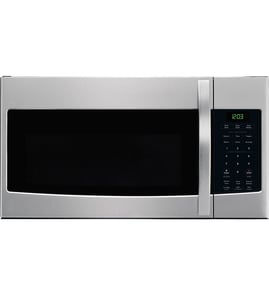




Is there a big difference between 900W and 1000W in a microwave?
Yes. A 1000W microwave typically cooks about 10% faster than a 900W unit, so you will notice slightly shorter cook times and a bit more margin for dense foods. With your GE JVM1540DM5WW, you can also use power levels to fine-tune heating for more even results (especially for defrosting and reheating) using the owner's manual.
What the wattage difference means in real cooking
In most kitchens, the difference shows up as time, not “better” food:
- Speed: 1000W usually finishes a recipe sooner than 900W.
- Timing adjustments: For recipes written for 1000W, add about 5% to 15% time on a 900W microwave.
- Evenness: Higher wattage can reduce time, but even heating still depends on stirring, rotating, and using the right power level.
- Defrosting: Lower power levels help prevent the outside from cooking before the inside thaws.
Quick time conversion guide
Use this as a practical starting point when a package assumes 1000W.
| If directions are for 1000W | Try this on 900W | What to do if it is not done |
|---|---|---|
| 2:00 | 2:10 to 2:20 | Add 10 to 20 seconds |
| 4:00 | 4:25 to 4:40 | Add 15 to 30 seconds |
| 6:00 | 6:35 to 6:55 | Add 20 to 40 seconds |
Use power levels to make either wattage work better
Your JVM1540DM5WW supports variable power levels; the microwave cycles energy on and off to hit the selected percentage. That matters more than most people think for texture and evenness.
- Use Power Level 10 (High) for most quick cooking.
- Use Power Level 3 to 5 for gentler defrosting and to reduce edge-cooking.
- For thick foods, cook partway, rest 1 to 2 minutes, then finish.
- Cover loosely and vent to reduce splatter and help heat circulate.
Why it matters
That 100W difference is mainly a convenience factor. If you cook lots of frozen meals or reheat dense leftovers, 1000W saves time. If you value control, using the right power level and technique often improves results more than wattage alone.
For replacement parts that affect cooking performance and safety, order by model number JVM1540DM5WW from the parts list for this microwave, or search by model on Sears PartsDirect.
Last updated: February 2026
What is the life expectancy of a GE microwave?
Most GE microwave ovens, including over-the-range models like the GE JVM1540DM5WW microwave/hood combo, typically last 9 years with normal household use. Heavy daily cooking, poor airflow, and skipped cleaning shorten life; light reheating and routine care extend it.
Typical lifespan and what changes it
- Usage level: reheating and defrosting is easier on the magnetron than long cook cycles
- Ventilation: blocked grease filters and poor cabinet airflow raise internal heat
- Door wear: a door that does not latch firmly can stop operation and strain switches
- Power quality: frequent breaker trips or surges can damage electronic components
- Cleaning habits: food splatter and grease buildup can lead to odors, arcing, and corrosion
What “end of life” usually looks like
Common symptoms that show up as a microwave ages:
- Runs but does not heat (often in the high-voltage system)
- Intermittent operation when closing the door (door switch or latch issues)
- Loud buzzing or humming during heat cycles
- Touchpad or control problems
- Fan or turntable issues
Quick part examples for this model
If your JVM1540DM5WW is acting up, these are common wear items we see replaced:
| Symptom | Common area | Example part on this model |
|---|---|---|
| Starts then stops when door moves | Door interlock circuit | Microwave door interlock switch WB24X10180 |
| No heat, burning smell, loud hum | High-voltage system | Microwave magnetron WB27X10927 |
| Poor venting over the range | Venting/airflow | Microwave vent damper WB06X10686 |
Why it matters
Microwaves that run hot (from restricted airflow or grease buildup) age faster because heat is the main enemy of the magnetron, wiring, and control components. Following the cleaning and operating guidance in the JVM1540DM5WW owner's manual helps you get the full expected service life.
When repair makes sense
Use this quick rule of thumb:
| Microwave age | Best next step |
|---|---|
| Under 5 years | Repair is usually worthwhile if the cavity and door are in good shape |
| 5 to 9 years | Compare part cost and labor to the microwave’s condition |
| Over 9 years | Replace if the repair involves major high-voltage parts |
For model-specific parts and diagrams, order from the parts list for JVM1540DM5WW or search by model on Sears PartsDirect.
Last updated: February 2026
How do I do a hard reset on my GE microwave?
To hard reset your GE JVM1540DM5WW microwave, disconnect power for about 1 to 2 minutes (unplug it or switch the breaker off), then restore power and set the clock. This full power cycle clears many display glitches, keypad lockups, and minor control errors.
Hard reset steps (power cycle)
- Unplug the microwave from the outlet (or turn the circuit breaker off).
- Wait 1 to 2 minutes.
- Plug it back in (or turn the breaker on).
- Set the clock and test a simple cook cycle (for example, 30 seconds with a cup of water).
- If the display shows LOC, unlock the controls (see below).
Soft reset (control unlock and quick clear)
If you are dealing with a locked control panel or you just need to clear a stuck command, use the keypad reset:
- Press and hold CLEAR/OFF for about 3 seconds to toggle the control lock (this is commonly when LOC appears).
- Press CLEAR/OFF once to cancel a cooking program.
For model-specific button names and feature behavior, follow the steps in the JVM1540DM5WW owner's manual.
If the microwave still will not start after a reset
A reset helps when the control needs a clean restart. If it still will not run, these are the most common causes to check next:
- House fuse blown or circuit breaker tripped
- Power cord not fully seated in the outlet
- Door not closing securely (interlock system not engaging)
- Control lock enabled (LOC)
- Internal electrical failure (fuse, wiring, or control)
Quick symptom guide
| What you see | What it usually points to | What to do next |
|---|---|---|
| Display is on, won’t start | Door not fully latched or control lock | Re-close door firmly; hold CLEAR/OFF 3 seconds |
| Dead display | No power to unit | Check breaker/outlet; then power cycle |
| Starts but no heat | High-voltage circuit issue | Use our troubleshooting steps in why is my microwave not heating |
Why it matters
A hard reset clears the control board’s temporary memory after a power surge or software glitch, which is why it often restores normal operation without replacing parts.
If you end up needing parts for your JVM1540DM5WW (for example, a door switch), you can order model-matched replacements from the parts list for this model or search by model number on Sears PartsDirect.
Last updated: February 2026