Owner’s manual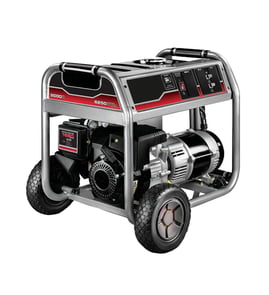

What are diesel generator parts?
Diesel generator parts are the main assemblies that let a diesel engine produce electricity safely: the engine, alternator, fuel system, controls, and protective structure. Your Gentron GG3500 is a portable generator; use the same system-based breakdown to identify what you need and where it fits.
Core generator assemblies (diesel or portable)
- Engine assembly: cylinder head, valves, starter/recoil, air intake, and governor components.
- Fuel system: tank, fuel cap/vent, fuel line, filter, and (diesel) injection components.
- Alternator and output: alternator windings, outlets/receptacles, wiring harness, and breakers.
- Voltage regulation and controls: AVR (automatic voltage regulator) and control panel switches.
- Lubrication: oil fill, drain, seals, and low-oil protection components.
- Cooling and exhaust: cooling air shrouds/fan, muffler, and heat shielding.
- Frame and guards: base frame, mounts, and safety guards that keep you away from moving parts.
Quick reference: what changes on diesel vs portable units
| System | Diesel generator typically uses | Portable generators often use |
|---|---|---|
| Fuel metering | Injection pump and injectors | Carburetor (common on portables) |
| Cooling | Radiator and coolant hoses | Air cooling shrouds and fan |
| Starting | Heavy-duty starter and battery | Recoil start, sometimes electric start |
Why it matters
Grouping parts by system helps you troubleshoot faster (no start, surging, no power) and order the right components. For safety practices like avoiding fuel leaks, keeping guards in place, and preventing shock hazards, follow the GG3500 owner's manual.
Safety checks we use before diagnosing parts
- Shut the generator off and let hot engine and exhaust parts cool.
- Check for fuel odor or wet spots; do not run with fuel leaks.
- Keep guards installed; keep hands, hair, and loose clothing away from moving parts.
- Keep cords and connections dry; avoid connecting or disconnecting loads while standing in water.
Last updated: February 2026
What does 350 ppm mean?
350 ppm means 350 parts per million; it is a concentration measurement used for gases or contaminants in air (or dissolved substances in water). In other words, out of 1,000,000 parts of a sample, 350 parts are the substance being measured.
How to interpret ppm in real terms
PPM is a ratio, so it helps compare “how much” of something is present without needing large numbers.
- 350 ppm = 0.035% (because 350 ÷ 1,000,000)
- In air testing, ppm often refers to gases like carbon monoxide (CO) or carbon dioxide (CO2)
- In water testing, ppm often refers to dissolved solids or chemicals
- The meaning depends on what substance is being measured and where it is measured
- Safety limits are substance-specific; ppm by itself does not tell you if something is safe
Generator safety note (Gentron GG3500)
For a Gentron GG3500 generator, ppm most commonly comes up when discussing exhaust gases, especially CO. We recommend following the operating and safety instructions in the owner's manual to reduce the risk of injury and equipment damage.
Quick reference: ppm depends on the substance
| Measurement shown | Common context | What it tells you |
|---|---|---|
| CO in ppm | Engine exhaust, garages, near running generators | Potential poisoning risk at higher levels |
| CO2 in ppm | Indoor air quality, ventilation | How “stale” air is, not a direct poison at typical levels |
| ppm in water | Drinking water, pools, well water | Dissolved chemical concentration |
Why it matters
PPM is a simple way to express concentration, but the risk depends on the chemical (CO vs CO2), exposure time, and ventilation. With generators, correct placement and operation are critical because exhaust can build up quickly in enclosed or partially enclosed spaces.
Last updated: February 2026
How do I find the model number on my GG3500?
The model number is printed on the generator’s identification label (data plate). On a Gentron GG3500, that label is typically on the frame or near the control panel; match the exact characters on the label to ensure you get the right manual, diagrams, and replacement parts.
Where to look on the generator
Check these common label locations first:
- On the tubular frame rail near the control panel side
- Near the recoil starter (pull-start) side of the engine
- On or near the alternator housing area
- Near the fuel tank support area or under the tank edge
- On the lower frame close to the wheels/handle hardware
What the label should show
Most generator data plates include several fields. Use the model number field for parts lookup.
| Label field | What it’s used for | Example of what you might see |
|---|---|---|
| Model | Parts and manual match | GG3500 |
| Serial | Unit-specific identification | Letters and numbers |
| Rated output | Load planning | Watts/amps |
| Voltage/frequency | Compatibility | 120V, 60 Hz |
Tips to avoid ordering the wrong parts
Small differences in the label details can change the correct parts list.
- Copy the model number exactly (including dashes or suffix letters if present)
- Take a clear photo of the entire label before searching
- If the label is worn, look for a duplicate label on another frame rail
- Use the parts list and diagrams in the [GG3500 owner’s manual] to confirm component names
Why it matters
Generators often share similar frames and engines across multiple versions. Using the exact model number from the data plate helps us match the correct control panel components, fuel system parts, and hardware for your specific Gentron GG3500.
Last updated: March 2026