Error Codes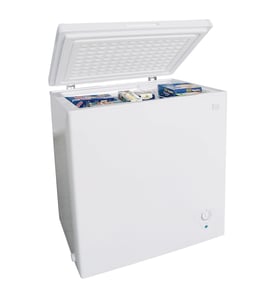




What does manual defrost on a chest freezer mean?
Manual defrost on a Hotpoint HCM9CTBCD chest freezer means the freezer does not automatically melt and drain frost for you; you periodically turn it off, remove food, and manually remove built-up ice so the freezer can cool efficiently again.
- Move food to a cooler or another freezer.
- Unplug the freezer (or switch it off at the control).
- Leave the lid open to let ice soften and melt.
- Collect meltwater with towels or a shallow pan.
- Wipe the interior dry before restarting.
- Let temperatures recover before reloading food.
Frost forms when warm, humid air enters the cabinet and moisture freezes on cold surfaces. This happens most often from frequent lid openings, loading unfrozen food, or a lid that is not sealing tightly.
| Feature | Manual defrost chest freezer | Frost-free freezer |
|---|---|---|
| Defrosting | You remove frost manually | Automatic defrost system |
| Interior frost | Normal over time | Reduced by design |
| Temperature stability | Typically very steady | Can fluctuate during defrost |
| Maintenance | Periodic defrost needed | Less defrost work |
Heavy frost acts like insulation on the interior walls, which can reduce usable space and make the compressor run longer. Defrosting when ice buildup reaches about 1/4 inch helps keep cooling performance and energy use in a normal range.
If you want a step-by-step process and cleanup tips, follow how to defrost a freestanding freezer.
Last updated: January 2026
Does a chest freezer use a lot of electricity?
A Hotpoint chest freezer like model HCM9CTBCD typically uses a moderate amount of electricity; most chest freezers cost less to run than upright freezers because they hold cold air better when opened. Your actual cost depends on size, room temperature, and how often the lid is opened.
Energy use varies by capacity and efficiency, but these are common benchmarks for modern units:
- Many efficient chest freezers use roughly 200 to 300 kWh per year
- That often works out to about $25 to $50 per year (depending on your electric rate)
- Upright freezers are commonly higher because they lose more cold air when opened
- Hot garages and frequent lid openings increase run time
- Heavy frost buildup can increase energy use
| Freezer type | Typical annual use (kWh) | Typical annual cost (USD) |
|---|---|---|
| Chest freezer | 200 to 300 | $25 to $50 |
| Upright freezer | 350 to 500 | $45 to $80 |
- Set the temperature to about 0°F for long-term storage
- Keep the freezer at least 3/4 full (use water jugs if needed)
- Defrost when frost reaches about 1/4 inch thick; see how to defrost a freestanding freezer
- Check the lid closes evenly; a damaged hinge can cause air leaks (see freezer door hinge WR12X27822)
- Keep the condenser area clean and allow airflow around the cabinet
Lower energy use usually means steadier temperatures, less compressor run time, and better long-term reliability. It also helps prevent freezer burn by keeping temperature swings smaller.
Last updated: January 2026
What are the common chest freezer problems?
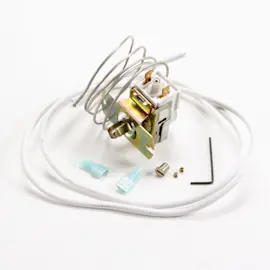
Common problems on the Hotpoint HCM9CTBCD chest freezer include not freezing or freezing too much, heavy frost, long run times, water leaks, and unusual noises. Most issues trace back to airflow restrictions, lid sealing problems, or a failing temperature control such as the Hotpoint thermostat WR09X41899.
- Too warm or not freezing: lid not sealing, warm room location, overloading with unfrozen food, thermostat out of range
- Too cold or items freezing solid: thermostat set too cold or sticking closed
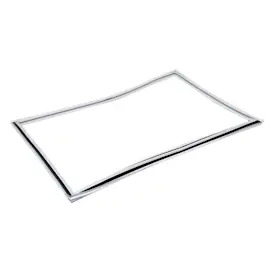
- Excessive frost: lid left ajar, damaged gasket, humid air entering frequently
- Compressor runs constantly: poor ventilation around the cabinet, dirty condenser area, lid leak, thermostat issue
- Water on floor: defrost meltwater during manual defrost, high humidity condensation, cabinet not level
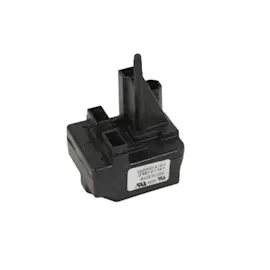
- Clicking or buzzing: normal cycling, or compressor start components struggling
- Confirm the control setting: set to a mid-range position and wait 24 hours for temperature to stabilize.
- Check the lid seal: close the lid on a dollar bill; it should resist being pulled out around the perimeter.
- Improve airflow: keep the freezer a few inches from walls and do not block vents inside.
- Reduce moisture load: cool hot foods before loading; limit lid-open time.
- Listen for patterns: constant running plus warming usually points to sealing, airflow, or control problems.
| Symptom | Part to consider | What it affects |
|---|---|---|
| Temperature swings, too warm, too cold | Hotpoint thermostat WR09X41899 | Senses temperature and cycles the compressor |
| Control area damage or broken knobs/cover | Hotpoint control panel - grey WR09X42369 | User controls and mounting for the temperature control |
| No power or intermittent power | Power cord WR55X38965 | Electrical supply to the freezer |
A chest freezer that runs too warm risks food safety, while heavy frost and constant run time waste energy and shorten compressor life. Catching lid-seal and control issues early prevents bigger sealed-system repairs.
Last updated: January 2026
How long do chest freezers last?
Most chest freezers last 10 to 20 years, and many run reliably for 12 to 16 years with basic care. For a Hotpoint chest freezer like HCM9CTBCD, lifespan depends most on ventilation, lid seal condition, and keeping the cooling system clean and stable.
- Room temperature and airflow: Hot garages and tight spaces make the compressor work harder.
- Lid seal and alignment: A poor seal causes long run times and frost buildup.
- Power quality: Frequent outages or low voltage can stress compressor electricals.
- How often it’s opened: Chest freezers hold cold air better, but frequent openings still add load.
- Frost management: Heavy frost reduces efficiency and can shorten component life.
- Keep the freezer level so the lid closes evenly.
- Leave several inches of clearance around the cabinet for heat to dissipate.
- Defrost when frost reaches about 1/4 inch.
- Wipe the lid gasket area clean so it seals consistently.
- Avoid overpacking; leave space for air circulation around stored items.
| Symptom | Often fixable? | What it usually points to |
|---|---|---|
| Runs constantly, warm temps | Yes | Thermostat/control issue, poor seal, heavy frost |
| No power, no lights | Yes | Outlet/power cord, wiring, start components |
| Loud clicking, won’t start | Sometimes | Compressor start components or compressor electricals |
| Won’t cool even though it runs | Sometimes | Sealed system issue (service required) |
If your HCM9CTBCD is not holding temperature or cycles oddly, these model-matched parts are common starting points:
- Hotpoint thermostat WR09X41899 (temperature control and cycling)
- Power cord WR55X38965 (power delivery issues)
- Compressor harness WR55X41891 (wiring connection problems)
A chest freezer is usually cheaper to keep running than to replace, especially when the issue is a control, wiring, or lid-seal related problem. Catching long run times and frost early helps protect the compressor and reduces energy use.
Last updated: January 2026