Owner’s manual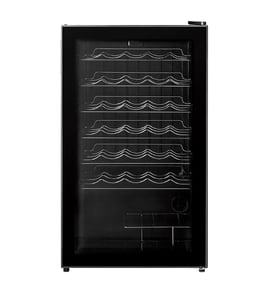





Is KitchenAid considered high end?
Yes. KitchenAid is widely considered a premium (upper-mid-range) brand; it’s known for strong build quality, attractive design, and feature-rich appliances. For the KitchenAid KUWS24LSBS14 wine cellar, that “premium” positioning typically shows up in fit-and-finish, temperature stability features, and serviceable components listed in the KUWS24LSBS14 owner's manual.
In this category, “high end” usually comes down to consistent cooling, good sealing, and long-term serviceability.
- Stable temperature control for wine and beverages
- Tight door seal to reduce warm air leaks and condensation
- Reliable airflow from the fan system
- Repairable design with replaceable parts (gaskets, thermostats, fan components)
- Clear use and care guidance for proper operation
| Tier | What you typically get | What to expect for KUWS24LSBS14 owners |
|---|---|---|
| Premium (KitchenAid) | Strong performance, polished design, good parts support | A well-built cooler with common wear parts you can replace |
| Luxury (specialty brands) | Heavier-duty materials, more customization, higher price | More “boutique” features and higher cost of ownership |
A premium unit is worth maintaining because small issues often have straightforward fixes. For example, if the door isn’t sealing well, replacing the gasket can restore cooling efficiency and reduce compressor run time.
Common “premium cooler” fixes we see:
- Door not sealing or sweating: inspect and replace the wine cooler door gasket WPW10238068
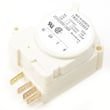
- Temperature swings: check the control/thermostat and airflow path
- Warm cabinet: clean condenser area, confirm fan operation, verify door closes squarely
- Keep the door gasket clean and fully seated
- Avoid overloading shelves so air can circulate
- Give the cabinet ventilation space per the manual
- Set temperatures gradually and allow 24 hours to stabilize
Last updated: February 2026
How many quarts is a KitchenAid KUWS24LSBS14?
KitchenAid model KUWS24LSBS14 is a wine and beverage cooler (wine cellar), so it does not have a “quarts” capacity like a stand mixer. Capacity for this appliance is typically described in bottle count and sometimes cubic feet; we recommend checking the KUWS24LSBS14 owner's manual for the exact rated capacity.
Wine cellars are measured differently than countertop mixers:
- Wine bottle capacity (commonly based on standard 750 ml bottles)
- Beverage can capacity (varies by shelf setup)
- Interior volume (cubic feet) in some specifications
- Usable space can change if you store larger bottles or remove shelves
| Appliance type | Typical capacity unit | What it tells you |
|---|---|---|
| Stand mixer | Quarts | Bowl volume for mixing |
| Wine and beverage cooler | Bottles, cans, cubic feet | Storage space for beverages |
If you are trying to translate what you store into “how much fits,” use these practical checks:
- Count how many 750 ml bottles fit per shelf without forcing the door closed
- Confirm the door seals tightly; a leaking gasket reduces cooling performance
- Keep airflow paths open around the evaporator area and shelves
- Avoid overpacking; it causes warm spots and temperature swings
- Verify the temperature setting is stable after loading (allow several hours)
If the door does not seal well, replacing the wine cooler door gasket WPW10238068 can help the unit hold temperature and protect your stored beverages.
Using the right capacity unit prevents ordering the wrong appliance size and helps you load the cooler in a way that maintains consistent temperature and humidity, which protects wine quality and reduces compressor run time.
Last updated: February 2026
What is the most common problem with a KitchenAid refrigerator?
The most common KitchenAid refrigerator issues are cooling problems (warm fridge or freezer), ice maker or water dispensing problems, water leaks, and unusual noises. These symptoms usually trace back to airflow restrictions, dirty condenser coils, a failing fan motor, or a defrost-related issue; use your KUWS24LSBS14 owner's manual to match symptoms to checks.
- Warm temperatures or temperature swings: restricted airflow, dirty condenser coils, or a fan problem
- Strange buzzing, rattling, or clicking: fan blade hitting ice/debris, or a compressor start issue
- Water leaking inside or under the unit: blocked drain path or condensation from poor door sealing
- Frost buildup: defrost system problem or door not sealing
- Runs constantly: dirty coils, door gasket leak, or warm room conditions
- Confirm the door closes squarely and seals all the way around.
- Clean condenser coils and make sure the unit has proper ventilation clearance.
- Listen for the evaporator or condenser fan; a failed fan often causes warm temps and noise.
- Check for frost or ice buildup that could be blocking airflow.
- Verify the temperature setting and allow 24 hours after adjustments for stabilization.
If your troubleshooting points to a specific failure, these model-matched parts are common fixes:
| Symptom you notice | Likely area | Example KUWS24LSBS14 part to consider |
|---|---|---|
| Door not sealing, excess condensation | Door seal | Wine cooler door gasket WPW10238068 |
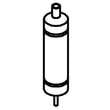
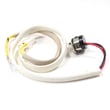
| Clicking and compressor not starting | Start components | Start device WP4344776 |
| Poor cooling with weak airflow or noise | Fan system | Fan blade WPW10299081 |
| Temperature won’t regulate well | Temperature control | Wine cooler temperature control WP4344859 |
Cooling and ice or water complaints often start as simple airflow or sealing problems. Fixing a dirty coil, improving ventilation, or restoring a tight door seal helps the sealed refrigeration system run less, cool more evenly, and reduces noise.
Last updated: February 2026