Installation guide
 Owner’s manual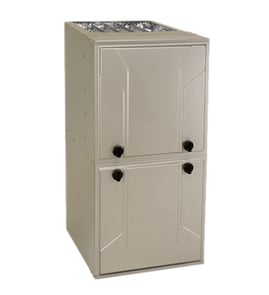


How big of a house will a 70,000 BTU furnace heat?
A 70,000 BTU furnace like the Coleman DGAA070BDTB typically heats about 1,800 to 2,800 sq. ft. in many U.S. climates, assuming average insulation and standard ceiling heights. The right size depends most on climate zone, insulation, ductwork, and how the furnace is set up.
Quick sizing guide (typical ranges)
Use these as planning numbers; your actual load can be higher or lower.
- Warm climates: ~2,400 to 3,200 sq. ft.
- Mixed climates: ~1,800 to 2,800 sq. ft.
- Cold climates: ~1,400 to 2,200 sq. ft.
- Older, leaky homes: subtract ~15% to 30% from the estimate
- Tight, well-insulated homes: add ~10% to 20% to the estimate
What changes the answer the most
A “70,000 BTU” label is only part of the story. These factors usually swing the result the most:
- AFUE efficiency (how much heat actually reaches the home)
- Insulation and air sealing (attic, walls, windows, doors)
- Ceiling height (taller ceilings increase volume to heat)
- Duct condition and sizing (leaks and restrictions reduce delivered heat)
- Thermostat setpoint and setbacks
- Return air and venting setup (especially on sealed combustion/direct vent systems)
Simple rule-of-thumb table
This table shows a common way to translate furnace output into approximate home size.
| Climate/house condition | Typical heat load (BTU per sq. ft.) | 70,000 BTU covers about |
|---|---|---|
| Warm, newer/tight | 20 to 25 | 2,800 to 3,500 sq. ft. |
| Moderate, average | 25 to 35 | 2,000 to 2,800 sq. ft. |
| Cold, average | 35 to 45 | 1,550 to 2,000 sq. ft. |
| Very cold or older/leaky | 45 to 60 | 1,150 to 1,550 sq. ft. |
Why it matters (comfort and equipment life)
Oversizing can cause short cycling (more on/off), uneven temperatures, and noisier operation. Undersizing can mean long run times and trouble keeping up on the coldest days. Proper ductwork setup also matters; the installation guidance calls out setting external static pressure for heating operation within a specified range. Check the installation guide for the setup details that affect real-world performance.
Last updated: February 2026
What is the most common part to fail on a furnace?
On a Coleman DGAA070BDTB furnace, the most common “failure point” we see is not a single part; it is airflow and safety-related issues that make the furnace shut down, especially a dirty air filter, a dirty flame sensor, or an overheating condition caused by restricted duct airflow.
Most common causes (and what they look like)
- Dirty air filter or restricted return air: furnace runs briefly, then shuts off on limit (overheating).
- Dirty flame sensor: burners light, then shut off after a few seconds.
- Ignition component issue (hot surface igniter or spark): inducer runs but burners never light.
- Limit switch or rollout switch trip: repeated shutdowns, often tied to overheating or venting problems.
- Thermostat or low-voltage wiring issue: furnace does not start a heat cycle reliably.
Why airflow problems are so common on this model
Your installation guidance emphasizes that improper duct sizing, dirty filters, incorrect gas setup, or a faulty limit switch can push supply air temperature above the nameplate maximum, which overheats the heat exchanger and triggers safety shutdowns. Use the temperature rise procedure and limits in the installation guide to keep operation in the correct range.
Quick checks we recommend first
- Replace the air filter (start with the simplest, highest-impact fix).
- Confirm supply and return vents are open and not blocked.
- Watch the ignition sequence: inducer, igniter, flame, then blower.
- If flame drops out quickly, clean the flame sensor (lightly) and re-test.
- If the unit short-cycles, check for overheating signs (very hot supply air, frequent limit trips).
Symptom-to-likely-cause table
| Symptom | Most likely cause | What to check next |
|---|---|---|
| Starts then shuts off in 1 to 5 minutes | Overheating, limit opening | Filter, duct restrictions, temperature rise |
| Flame lights then goes out in 2 to 10 seconds | Flame sensor dirty | Clean sensor, verify good flame |
| Inducer runs, no flame | Ignition or gas delivery issue | Igniter, gas valve signal, pressure setup |
| No response at all | Thermostat, power, door switch | Breaker, control fuse, door panels seated |
Why it matters
These “common failures” are often protective shutdowns. Fixing airflow and temperature rise issues helps prevent repeated overheating, nuisance trips, and premature heat exchanger damage.
Last updated: February 2026
What are the specs of DGAA070BDTB?
The Coleman DGAA070BDTB is a high-efficiency, sealed-combustion, single-stage downflow gas furnace in the DGAA series. The installation guide lists DGAA cabinet dimensions of 19-1/2 inches wide, 24-3/4 inches deep, and 76 inches tall; use the installation guide for the full rating and setup details.
Key specifications (DGAA070BDTB)
- Furnace type: high-efficiency sealed combustion gas furnace
- Configuration: single-stage, downflow (DGAA series)
- Input class covered by the guide: 56 to 90 MBH input (DGAA and DGAH models)
- Cabinet width: 19-1/2 in
- Cabinet depth: 24-3/4 in
- Cabinet height: 76 in
Dimensions at a glance
| Spec | Value |
|---|---|
| Width | 19-1/2 in |
| Depth | 24-3/4 in |
| Height | 76 in |
| Series covered | DGAA / DGAH |
Where these specs matter
- Replacement fit: Confirms the cabinet footprint for closets, alcoves, and manufactured-home compartments.
- Ductwork compatibility: Duct systems must be designed for the furnace’s required airflow and installed to applicable standards.
- Roof jack and venting: DGAA installations often use a roof jack system; correct sizing and sealing are critical for safe sealed-combustion operation.
Helpful tips when matching parts and installation details
- Match parts by the full model number DGAA070BDTB.
- Keep both access panels installed during operation; if yours is damaged, common replacements include the Coleman furnace upper door panel 7900-7631 and the furnace door panel, lower 7900-7611.
- Use the wiring diagram and installation sections in the guide before changing any electrical components.
- If you are measuring for a replacement furnace, measure the cabinet and also confirm clearances and duct connector requirements.
Last updated: February 2026
How old is my furnace by serial number?
Your Coleman DGAA070BDTB furnace’s age is encoded in the serial number on the rating plate, typically located behind the upper or lower front door panel. We use the serial format shown on the unit label to identify the manufacturing month and year; confirm the exact location and label details in the installation guide.
Where to find the serial number on DGAA070BDTB
On this Coleman downflow furnace, the serial number is usually on the data label inside the front panel area. Access is commonly behind the upper door.
- Turn off electrical power to the furnace at the disconnect or breaker
- Remove the upper front door to view the burner/control compartment label
- Check the inside of the lower door area if you do not see the label up top
- Write down both the model (DGAA070BDTB) and the serial number exactly as printed
- Take a clear photo of the label for reference
How serial numbers typically encode the date
Coleman and similar mobile-home style furnaces commonly use one of these patterns:
- MMYY (month, year) near the beginning of the serial
- YYWW (year, production week)
- A letter for month plus digits for year
Quick decode examples (common formats)
| Serial snippet | Common meaning | Example result |
|---|---|---|
| 0424 | Month/Year | April 2024 |
| 2416 | Year/Week | Week 16 of 2024 |
| A24 | Letter month + year | January 2024 |
Why it matters
Knowing the manufacture date helps us match the correct Coleman furnace parts (like door panels, filters, and safety controls) and plan maintenance. For example, the installation instructions note filter location and airflow requirements; age plus maintenance history can affect performance and heat exchanger life.
Related parts that affect access to the label
If the data label is hard to reach because a panel is missing or damaged, these model-matched panels can restore proper access and fit:
Last updated: February 2026