Owner’s manual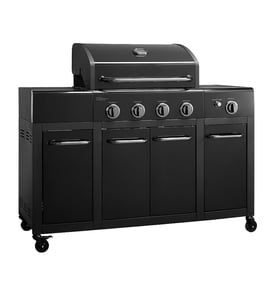



Is it worth fixing a gas grill?
Yes, fixing a gas grill is worth it when the grill body is still solid and the repair is limited to service parts (burners, igniter, regulator, carryover tube). For Char-Broil model 463227315, repairs are usually a good value when you can restore safe ignition and steady heat without replacing the firebox.
Quick decision checklist
- Fix it if the firebox and lid are structurally sound and you mainly need wear items like a burner or igniter.
- Replace it if you see rust-through holes, major warping, or a weakened frame that makes the grill unstable.
- Fix it if the problem is inconsistent lighting, weak flame, or uneven heat that points to clogged burners or ignition issues.
- Replace it if multiple major assemblies are failing at once and the grill cannot hold heat even after cleaning.
- Fix it if parts are readily available and the grill is otherwise in good condition.
Common repairs that are usually worth it (463227315)
These are typical, high-impact fixes that often restore performance:
- Replace a clogged or rusted burner: char-broil gas grill main burner G517-7300-W1
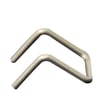
- Restore cross-lighting between burners: char-broil gas grill carryover tube G614-0095-W1A
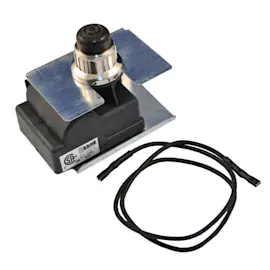
- Fix no-spark or intermittent ignition: gas grill ignition module G513-0021-W1
Cost and effort comparison
| Situation | Typical outcome | Usually worth fixing? |
|---|---|---|
| Lights but won’t stay hot | Cleaning or burner/carryover replacement | Yes |
| Won’t ignite reliably | Igniter/module replacement, check wiring | Yes |
| Rust holes in firebox or severe warping | Unsafe heat containment | No |
| Regulator or valve issues | Replace regulator assembly, leak test | Often |
Why it matters
A grill that cannot ignite consistently or maintain a stable flame can lead to flare-ups, poor cooking results, and unsafe operation. Focusing on the ignition system, burners, and gas delivery parts usually gives the biggest improvement for the least cost.
What we recommend before you decide
Use the 463227315 owner's manual to confirm the correct lighting procedure and maintenance steps, then evaluate these items:
- Firebox condition (no holes, no severe corrosion)
- Burner ports (not blocked, not collapsing from rust)
- Carryover tube alignment (burners cross-light properly)
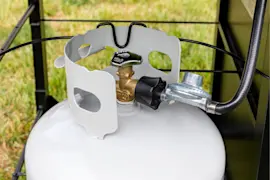
- Gas hose and regulator condition (no cracking, no damage)
- Knobs and valves operate smoothly (no sticking)
Last updated: January 2026
What is the average lifespan of a gas grill?
Most gas grills last 5 to 15 years. For the Char-Broil gas grill model 463227315, lifespan depends mainly on how often you cook, how well you clean and cover it, and whether you replace wear items like burners and igniters as they age; consistent maintenance pushes you toward the high end.
Typical lifespan ranges (what to expect)
| Grill type and care level | Typical lifespan |
|---|---|
| Budget grill, minimal cleaning, stored outdoors uncovered | 2 to 5 years |
| Mid-range grill, regular cleaning, covered between uses | 5 to 10 years |
| Heavier-duty grill, frequent cleaning, parts replaced as needed | 10 to 15 years |
| Premium materials, excellent care, protected from weather | 15 to 20 years |
What shortens a gas grill’s life fastest
- Grease buildup that causes flare-ups and overheats the firebox
- Leaving the grill uncovered in rain, snow, or salty coastal air
- Running burners on high for long periods without cleaning ports
- Skipping annual checks of the hose, regulator, and burner flames
- Letting rust spread on the firebox, lid, or fasteners
Parts that commonly determine “end of life” (and are replaceable)
On model 463227315, these are common wear items that often restore performance when heat output or ignition gets unreliable:
- Char-broil gas grill main burner G517-7300-W1 (weak heat, uneven flames, rusted burner ports)
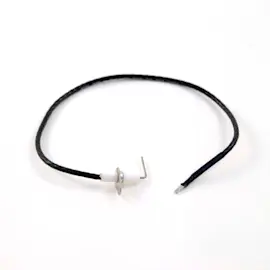
- Gas grill igniter G515-0014-W1 (no spark at the electrode)
- Gas grill ignition module G513-0021-W1 (no clicking/spark across multiple burners)
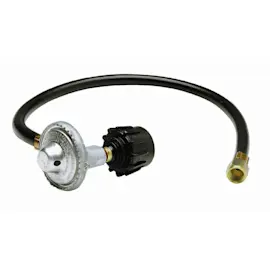
- Char-broil hose valve regulator G614-6600-W1 (low flame, inconsistent gas flow)
Why it matters
A grill usually gets replaced because it will not heat evenly, will not ignite reliably, or has advanced rust. Replacing a burner, igniter, or regulator at the right time often costs far less than replacing the entire grill and can bring back safe, consistent cooking temperatures.
For model-specific maintenance intervals, cleaning steps, and lighting instructions, follow the 463227315 owner's manual.
Last updated: January 2026
How do I find the model number on my 463227315?
Your grill’s model number is typically printed on a rating label attached to the cart or firebox area. For Char-Broil model 463227315, check the label first before ordering parts so you match the correct burner, igniter, and regulator.
Where to look on a gas grill
Check these common label locations (use a flashlight and wipe off grease first):
- Inside the cart cabinet on a side panel or back panel
- On the rear of the grill cart near the propane tank area
- Under the control panel (behind the knobs)
- On the firebox (side or back), near where the lid hinges mount
- On the inside of a door or on the frame rail
What the label looks like
Most labels include a few identifiers. Use the model number for parts lookup.
| Label item | What it means | Use it for parts? |
|---|---|---|
| Model number | The exact grill version (example: 463227315) | Yes |
| Serial number | Unique ID for your specific unit | No (usually) |
| Gas type | LP (propane) or NG (natural gas) | Yes (for correct regulator/valves) |
Tips to avoid ordering the wrong parts
- Match the model number exactly, including any extra digits
- If the label is damaged, compare your grill’s layout to the diagrams in the 463227315 owner’s manual
- When replacing ignition or fuel parts, confirm gas type (LP vs NG) before ordering
Why it matters
Char-Broil grills often share similar frames, but internal components like the main burner, carryover tube, and hose valve regulator can vary by model. Using the correct model number helps ensure proper fit and safe operation.
Last updated: March 2026