Owner’s manual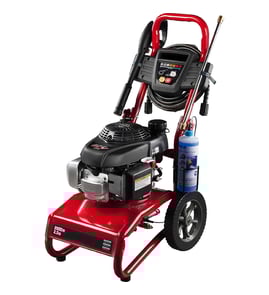

Can you put 87 gas in a pressure washer?
Yes. For the Craftsman 580752120 gas pressure washer, clean, fresh unleaded gasoline with a minimum 87 octane (87 AKI) is the correct fuel; do not use E85 and do not mix oil into the gasoline. For exact fuel guidance and safety notes, follow the owner's manual.
Fuel requirements for model 580752120
Use fuel that matches these basics:
- Clean, fresh, unleaded gasoline
- Minimum 87 octane (87 AKI)
- Up to 10% ethanol (E10) is acceptable
- Do not use E85 or other unapproved fuels
- Do not mix oil into the gasoline
Quick fuel compatibility table
| Fuel type | OK to use? | Notes |
|---|---|---|
| Unleaded 87 octane (87 AKI) | Yes | Standard recommended minimum |
| Unleaded 88 to 93 octane | Yes | Fine to use; not required for normal operation |
| E10 (up to 10% ethanol) | Yes | Acceptable blend |
| E15 | Use only if allowed in the owner's manual | Some engines allow it; follow the manual for this model |
| E85 | No | Not approved |
High-altitude note
If you operate above about 5,000 feet, lower octane fuel (down to 85 octane/85 AKI) is acceptable, but the engine typically needs a high-altitude adjustment to run correctly and stay emissions compliant.
Why it matters
Using the right gasoline helps prevent hard starting, surging, and fuel-system varnish; it also protects the engine and helps you avoid performance problems during storage.
Last updated: February 2026
Is it worth repairing a pressure washer?
Yes, repairing a pressure washer is worth it when the fix is small (hose, nozzle, chemical pickup) or when the machine is in otherwise good condition; for a Craftsman 580752120, we use the practical 50% rule: if the repair total is more than half the cost of replacing the unit, replacement is the better value.
Quick decision checklist (use this first)
- Repair it if the problem is a wear item: spray tip/nozzle, hose leak, loose fitting, clogged inlet screen
- Repair it if the engine runs well and pressure loss is isolated to the pump or valves
- Replace it if the pump is badly damaged and multiple major parts are needed
- Replace it if the frame/base is bent or the unit has repeated failures from poor storage or freezing
- Repair it if you can do the work yourself and parts are readily available
Common repairs that are usually worth it
These are typical “high value” fixes because parts cost is controlled and downtime is low.
| Symptom | Likely cause | Typical fix | Example part for 580752120 |
|---|---|---|---|
| Low pressure or pulsing | Clogged/worn spray tip | Clean or replace nozzle | Pressure washer spray nozzle 195983RGS |
| Water leaking at hose | Worn/kinked hose or damaged coupling | Replace hose (do not patch) | Pressure washer hose 84006753 |
| No soap draw | Chemical pickup issue | Check cap, hose, injector | Chemical cap 199955GS or pressure washer chemical hose A1040NGS |
When replacement makes more sense
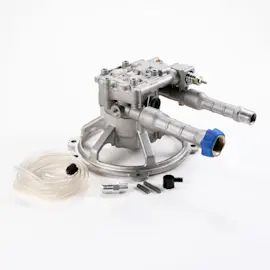
Major pump failures can push costs up quickly. If you need a pump head plus additional internal pump parts, the total can approach the price of a new homeowner-grade unit.
- Multiple pump components needed (head, valves, seals)
- Severe corrosion, cracked pump housing, or freeze damage
- Engine issues plus pump issues at the same time
Why it matters
A pressure washer that is maintained and stored correctly lasts longer and costs less to own. The manual calls out routine checks like inspecting the high-pressure hose for leaks and replacing it rather than repairing it; those small steps prevent bigger pump and safety problems. Use the owner's manual to follow the maintenance schedule and storage steps.
Tips to keep repair costs down
- Inspect the high-pressure hose before each use; replace it if it’s cut, bulging, or leaking
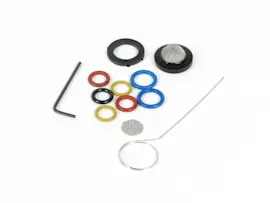
- Keep the inlet screen clean to protect the pump
- Purge air from the pump before spraying
- Store the unit properly if it will sit longer than 30 days
Last updated: February 2026
What is a good PSI for a gas pressure washer?
A good PSI for a gas pressure washer depends on the job. For typical home cleaning, about 1,300 to 2,800 PSI covers most tasks. Your Craftsman pressure washer model 580752120 is rated up to 2,200 PSI, which is a solid all-purpose range for siding, decks, and driveways (with the right spray tip). See the owner's manual for the model-specific specifications and spray tip guidance.
Recommended PSI by common home tasks
- Cars, patio furniture, delicate rinse: lower pressure (use a wider fan tip)
- Siding and general cleaning: mid-range pressure
- Decks and fences: mid-range pressure with careful technique to avoid gouging wood
- Concrete and stubborn stains: higher pressure, tighter spray pattern, and more distance control
- Soap application: low pressure (chemical mode)
What your 580752120 can do (based on the manual)
The manual lists a maximum outlet pressure of 2,200 PSI and a maximum flow rate of 2.2 GPM. It also notes that your water supply should provide more than 3.2 GPM and at least 20 PSI at the pressure washer end of the garden hose.
| Cleaning need | Typical PSI approach | Tip choice (general) |
|---|---|---|
| Delicate surfaces | Lower PSI | Wider fan (example: 40°) |
| General outdoor cleaning | Medium PSI | Medium fan (example: 15°) |
| Stubborn grime, paint prep | Higher PSI | Narrow fan (example: 0°) |
Spray tips matter as much as PSI
On this Craftsman model, changing spray tips changes both the spray pattern and the effective cleaning force. Use these best practices:
- Lock the trigger before swapping tips
- Start with a wider fan tip and step down only if needed
- Increase distance from the surface before increasing pressure
- Never point the spray at skin; high-pressure water can cause serious injury
Why it matters
Choosing the right PSI and spray tip helps you clean faster while preventing surface damage (etched concrete, stripped paint, gouged wood) and reducing wear on the pump and hose.
Last updated: February 2026