




How do I reset my central AC not blowing cold air?
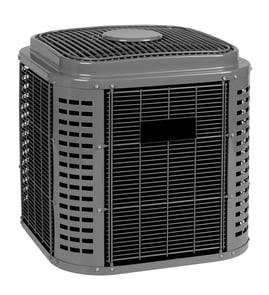
To reset your Icp ACS042A2C1 central air conditioner when it is not blowing cold air, turn the system completely off at the thermostat and the outdoor unit disconnect or breaker for 2 minutes, then restore power and call for cooling again. This clears many temporary control lockups.
Safe reset steps (thermostat + power)
- Set the thermostat mode to OFF.
- Turn OFF power to the outdoor condenser at the disconnect box (if present) or the circuit breaker.
- Wait 2 full minutes (this lets controls fully power down).
- Turn power back ON at the disconnect or breaker.
- Wait 5 minutes before calling for cooling (many systems have a built-in anti short-cycle delay).
- Set thermostat to COOL and lower the set temperature 3 to 5 degrees.
Quick checks if it still is not cooling
These are the most common reasons a central AC runs but does not cool:
- Dirty air filter restricting airflow (replace it if it is loaded with dust).
- Outdoor unit not running (fan not spinning, compressor not starting).
- Indoor blower not running or weak airflow at vents.
- Frozen evaporator coil (ice on the refrigerant line or indoor coil area).
- Tripped breaker or blown fuse feeding the outdoor unit.
- Thermostat settings (fan set to ON can make air feel warmer between cycles).
Parts that commonly affect “not cooling” symptoms
If the outdoor unit hums, clicks, or will not start reliably, these parts are often involved:
| Symptom at outdoor unit | Common suspect | What it does |
|---|---|---|
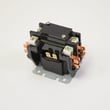
| Clicking but no start | Contactor | Sends line voltage to the compressor and fan |
| Fan runs, cooling is weak | Fan blade issue | Moves air through the condenser coil |
| Intermittent operation | Wiring problem | Delivers power/control signals reliably |
Model-matched parts we list for ACS042A2C1 include the plug wire 1083654 and fan blade 1085958.
Why it matters
Resetting correctly prevents rapid cycling that can stress the compressor and helps you separate a simple control issue from a real airflow, electrical, or component problem.
Last updated: February 2026
How to find AC parts?
To find the right replacement parts for your Icp central air conditioner model ACS042A2C1, use the model number from the outdoor unit data plate, then match the exact part by name and part ID or part number in the model-specific parts list. You can order parts from this model’s parts list or search by model on Sears PartsDirect.
Step-by-step: how we recommend finding the correct part
- Confirm the model number on the outdoor condenser data plate is ACS042A2C1.
- Identify the system you’re repairing (condenser fan, electrical controls, wiring).
- Use the model parts diagrams to match the part by location and description.
- Match identifiers exactly: part number, part ID, and any notes about revisions.
- For electrical parts, shut off power at the disconnect and breaker before inspecting.
Model-matched examples from the ACS042A2C1 parts list
| System area | Part example | What it does |
|---|---|---|
| Electrical controls | Central air conditioner contactor 94-394 (replaces 14306502) | Switches high voltage to the compressor and condenser fan circuit |
| Wiring | Plug wire 1083654 | Replaces a damaged lead/connector in the outdoor unit wiring |
| Condenser fan | Fan blade 1085958 | Moves air through the outdoor condenser coil |
Why it matters
Central air conditioner parts are not one-size-fits-all. Even similar-looking contactors, fan blades, and wires can differ by electrical rating, mounting pattern, shaft size, and connector style. Matching parts to ACS042A2C1 prevents fit and performance problems.
Last updated: February 2026
What is the average lifespan of a central air conditioning unit?
Most central air conditioning units last 15 to 20 years with normal use and regular maintenance; in harsher conditions (coastal air, heavy runtime, poor airflow), 10 to 15 years is more typical. For your Icp ACS042A2C1 central air conditioner, consistent electrical and airflow health usually makes the biggest difference.
Typical lifespan ranges (what to expect)
- 15 to 20 years: common for well-maintained systems with correct sizing and good airflow
- 10 to 15 years: common when the unit runs long hours, sits in corrosive environments, or maintenance is inconsistent
- 20+ years: possible, but efficiency and repair frequency usually become the deciding factors
| Situation | Typical lifespan | What usually limits life |
|---|---|---|
| Regular maintenance, clean coil, stable power | 15 to 20 years | Wear on compressor and fan motor |
| Heavy cooling demand, dirty coil, restricted airflow | 10 to 15 years | Overheating, high pressures, electrical stress |
| Corrosive/coastal environment | 10 to 15 years | Coil corrosion, contactor wear |
What shortens (or extends) the life of a central AC
- Dirty condenser coil: raises operating temperature and pressure
- Restricted airflow (dirty indoor filter, blocked returns): increases runtime and stress
- Electrical wear: pitted contacts and weak connections can cause hard starts and overheating
- Oversized or undersized system: short cycling or nonstop running
- Poor installation details (clearances, refrigerant charge): chronic strain over time
Parts that commonly affect reliability
If your outdoor unit is not starting, is chattering, or is cycling erratically, these parts are often involved:
- Plug wire 1083654 (damaged insulation or loose connection can cause intermittent operation)
- Fan blade 1085958 (bent or cracked blades can overload the motor and reduce airflow)
Why it matters
Once a central air conditioner gets near the end of its typical lifespan, small issues (airflow restrictions, electrical arcing, vibration) tend to cascade into bigger failures. Catching problems early helps protect high-cost components like the compressor.
Last updated: February 2026