Owner’s manual
 Error Codes



What is the average life of a gas water heater?
A gas water heater typically lasts 8 to 12 years. For Kenmore model 153336261, lifespan depends most on water quality, how often the tank is flushed, and whether key wear items (like the anode rod) are maintained per the 153336261 owner's manual.
Typical lifespan ranges (what to expect)
Most residential gas tank water heaters fall into these ranges:
| Condition | Typical life | What you usually notice |
|---|---|---|
| Normal use, average water quality | 8 to 12 years | Gradual loss of hot water capacity |
| Excellent maintenance | 12 to 15 years | Fewer burner and sediment issues |
| Hard water, little maintenance | 6 to 10 years | Rumbling, slow recovery, early leaks |
What shortens (or extends) water heater life
These factors have the biggest impact:
- Sediment buildup in the tank (reduces efficiency and can overheat the bottom)
- Hard or corrosive water (accelerates tank and fitting wear)
- High temperature settings (increases stress and scald risk)
- Anode rod condition (a worn anode rod speeds up tank corrosion)
- Combustion and venting health (poor combustion can cause soot and performance problems)
Maintenance that helps you reach the high end of lifespan
Use these as practical targets for a gas water heater like the Kenmore 153336261:
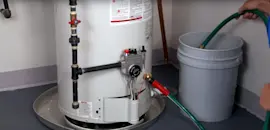
- Flush the tank periodically to reduce sediment
- Inspect for water leaks around fittings and the base
- Keep the burner area clean and make sure combustion air flow is not blocked
- Check temperature settings; water over 125°F increases scald risk
- Replace corrosion protection parts as needed, such as the anode rod 100109434
Why it matters
Once a gas water heater reaches the end of its typical service life, the risk of tank leakage rises quickly, and performance often drops (less hot water, longer recovery, more noise). Planning maintenance and replacement timing helps avoid sudden loss of hot water.
Last updated: January 2026
What is the most common problem with a gas hot water heater?
The most common gas water heater problem is ignition failure, usually when the pilot goes out or the pilot flame is not heating the thermocouple correctly. On Kenmore model 153336261, the manual’s troubleshooting points to pilot outage causes (thermocouple position, pilot assembly failure, or gas control issues) as frequent reasons for no hot water. See the 153336261 owner's manual.
Most common symptoms and what they usually mean
- No hot water and no burner flame: pilot outage, failed pilot assembly, or gas control problem
- Not enough hot water: thermostat set too low, heater undersized for demand, low gas pressure, or plumbing leaks
- Water too hot: thermostat set too high (scald risk increases above about 125°F)
- Rumbling or sizzling sounds: sediment or calcium buildup in the bottom of the tank
- Sooting or gas odors: combustion or venting problem that needs professional service
Quick checks you can do safely
Before any inspection, follow the safety steps in the 153336261 owner's manual.
- Confirm the thermostat setting is appropriate (avoid overly hot settings)
- Look through the inspection area for a steady pilot flame (if your unit has a viewing/inspection port)
- Check for lint or dust restricting combustion air; clean the intake area if accessible
- Listen for rumbling that points to sediment buildup (often improves after tank maintenance)
- If you smell gas or suspect venting issues, stop and have the gas supplier or a qualified technician check it
Common causes: at-a-glance
| Symptom | Most likely cause | Typical fix path |
|---|---|---|
| Pilot won’t stay lit | Thermocouple not in flame, pilot assembly failure | Reposition or replace pilot assembly |
| Burner won’t light | Defective gas control, lighting procedure issue | Follow lighting steps; replace control if failed |
| Rumbling/popping | Sediment in tank | Drain/flush tank per maintenance steps |
| Rotten egg smell | Anode rod reaction with water | Inspect/replace anode rod |
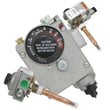
If you’re replacing ignition-related parts for this model, the pilot 100109261 is the correct pilot assembly listing for Kenmore 153336261.
Why it matters
Pilot and combustion issues stop heating completely, while sediment buildup quietly reduces efficiency and can shorten tank life. Temperature problems also matter for safety; the manual warns that hotter water increases scald risk.
Last updated: January 2026
How to check a water heater model?
For Kenmore gas water heater model 153336261, check the rating plate on the front of the tank; it lists the model number and key specifications. Use the information exactly as shown when ordering parts or looking up service instructions in the 153336261 owner's manual.
Where to find the model number (rating plate)
On this Kenmore gas water heater, the manual identifies the rating plate as a labeled component on the front of the water heater.
What to look for on the rating plate:
- Model number (use this to match parts and manuals)
- Serial number (helps identify production run)
- Gas type (must match your supply)
- Input rate and other key specs
Quick steps to check and record the model correctly
Use this checklist so you capture the information in a way that prevents ordering the wrong part.
- Turn a light on or use a flashlight so the plate is easy to read
- Write the model number exactly: 153336261
- Copy the serial number exactly as printed
- Note the gas type shown on the plate (do not assume)
- Take a clear photo for reference when ordering parts
Why the model number matters
The model number ties your water heater to the correct parts list and service procedures. For example, ignition and burner components can vary by model even when tanks look similar.
| If you need to… | Use this information | Example for this model |
|---|---|---|
| Order replacement parts | Model number from rating plate | 153336261 |
| Diagnose ignition or pilot issues | Model number plus symptom details | Consider the pilot 100109261 or water heater igniter 100109221 if testing confirms failure |
| Confirm safety and venting requirements | Manual procedures and diagrams | Follow the 153336261 owner's manual |
Related troubleshooting help
If you are checking the model because the heater is showing a status light or fault pattern, use the model number to match the right diagnostic chart.
Last updated: January 2026
What is the average cost of a 50 gallon gas water heater?
A 50-gallon gas water heater typically costs $600 to $2,000+ for the unit, and $1,000 to $3,000+ installed once you include labor, venting changes, and code-required items. For Kenmore model 153336261, confirm capacity and vent type in the 153336261 owner's manual before pricing replacements.
What drives the price most
- Venting type: atmospheric vent units usually cost less than power-vent or direct-vent models.
- Efficiency level: higher efficiency models cost more up front but can reduce fuel use.
- Warranty length: longer warranties often correlate with higher unit cost.
- Installation complexity: gas line work, venting changes, and water piping updates add labor.
- Local code items: expansion tank, drain pan, seismic strapping (where required), and shutoff upgrades.
Typical price ranges (unit vs. installed)
| Type of 50-gallon gas water heater | Typical unit price | Typical installed total |
|---|---|---|
| Standard atmospheric vent | $600 to $1,200 | $1,000 to $2,200 |
| High-efficiency atmospheric | $900 to $1,600 | $1,400 to $2,700 |
| Power vent / specialty venting | $1,200 to $2,000+ | $2,000 to $3,000+ |
What to check before you buy
Use these quick checks so you price the right replacement:
- Tank capacity: confirm it is actually 50 gallons (the manual covers multiple sizes).
- Fuel type: natural gas vs. propane (LP) affects burner and orifice setup.
- Venting and location: attic, closet, or tight utility spaces can increase labor.
- Water connections: 1/2-inch vs. 3/4-inch plumbing and any needed adapters.
- Condition of safety components: a leaking or weeping T&P valve or corroded piping can add parts and labor.
Why it matters
A “cheap” unit can become expensive if venting or code upgrades are needed. Matching capacity, gas type, and venting to your existing setup helps control total installed cost and avoids performance issues.
Last updated: January 2026