


How old is my Briggs and Stratton engine serial number?
On a Briggs 122K02-0353-E1 engine, the age is determined from the engine’s date code (often stamped on the blower housing or valve cover area), not from the model number itself. In most cases, the first two digits are the year, the next two are the month, and the last two are the day (for example, 120515 = May 15, 2012).
How to find the date code on your 122K02-0353-E1
Look for a stamped or printed numeric code on the engine shroud (blower housing), near the muffler heat shield, or near the valve cover.
- Clean the area with a rag so the digits are readable
- Write down the full code exactly as shown
- Ignore the model/type code when you are decoding the build date
- If the tag is missing, check for a stamped code on the metal housing
How to decode the code (common format)
Most Briggs engines use a 6-digit date code in this pattern:
| Digits | Meaning | Example (120515) |
|---|---|---|
| 1-2 | Year | 12 = 2012 |
| 3-4 | Month | 05 = May |
| 5-6 | Day | 15 = 15th |
If your engine is hard to start, age-related fuel issues are common
Older engines often develop fuel delivery problems from stale fuel, cracked lines, or restricted filters. These parts are common maintenance items for this model:
- Replace a brittle or leaking fuel line with the Briggs & stratton lawn & garden equipment engine fuel line, red 791766
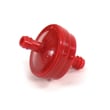
- If fuel flow seems weak, install the Briggs & statton lawn & garden equipment engine fuel filter 298090S
- If it starts then dies, a carburetor service or replacement may be needed (check the parts list for carburetor options)
Why it matters
Knowing the build date helps us match the correct carburetor, gaskets, and ignition-related parts for your exact engine version, and it also helps you plan maintenance intervals (fuel system refresh, starter rope wear, and gasket condition).
Last updated: February 2026
How to read a Briggs & Stratton model number?
A Briggs engine ID is read as Model, Type, and Code. On your Briggs 122K02-0353-E1 engine, 122K02 is the model family, 0353 is the type (build variation), and E1 is the trim or revision used to match the correct parts list.
Where to find the numbers on the engine
We use the engine’s stamped or printed ID (often on the blower housing, valve cover area, or near the muffler) to identify the exact configuration.
- Look for a line that starts with MODEL or MOD
- Then find TYPE on the same label or the next line
- Then find CODE (often a longer number) if present
- Write the characters exactly as shown (including dashes)
- Clean the area first so every character is readable
What each section means (and why it matters)
Even small differences in Type or suffix can change which carburetor, fuel line, or gasket fits your engine.
| Section | Example on your engine | What it tells us | Used for |
|---|---|---|---|
| Model | 122K02 | Engine series and core design | Base parts grouping |
| Type | 0353 | Specific build and component set | Correct part variations |
| Suffix/trim | E1 | Revision/trim level | Final parts match |
Quick parts-matching tips for 122K02-0353-E1
When you are ordering or troubleshooting, match parts to the full engine ID (not just 122K02).
- Fuel delivery issues often point to the Briggs & stratton lawn & garden equipment engine fuel line, red 791766
- Hard starting after storage often points to the Briggs & statton lawn & garden equipment engine fuel filter 298090S
- No-start after a sudden stop or impact can involve the Briggs & stratton lawn & garden equipment engine flywheel key 222698S
- Surging or running rich/lean often relates to carburetor components such as the Briggs & stratton lawn & garden equipment engine carburetor float bowl gasket 693981
Why it matters
Using the full 122K02-0353-E1 identification prevents wrong-part returns and speeds up repairs because we can match the exact carburetor setup, fuel system routing, and ignition timing components for your engine.
Last updated: February 2026
How to tell what HP a Briggs and Stratton engine is?
On your Briggs 122K02-0353-E1 lawn and garden engine, the most reliable way to identify horsepower is to use the engine’s model, type, and code numbers stamped on the blower housing (or valve cover area) and match them to the engine’s published power rating; many engines no longer show “HP” on a decal.
Where to look on the engine
Check these common locations on the 122K02-0353-E1:
- Blower housing (recoil starter shroud) stamp or label
- Valve cover area stamp
- Emissions label (may list displacement in cc, not HP)
- Equipment label on the mower or lawn vacuum frame (sometimes lists HP class)
What numbers actually matter (and why)
Briggs engines are identified by model, type, and code. Those identifiers are what you use to confirm the correct power rating and to buy the right carburetor, fuel system, and ignition parts.
Quick reference table
| What you find | Example format | What it tells you |
|---|---|---|
| Model | 122K02 | Engine family and displacement class |
| Type | 0353-E1 | Specific build configuration |
| Code | 6 digits (YYMMDD) | Build date used for parts lookups |
If the engine runs but feels weak
Low power is often caused by fuel delivery or carburetor issues rather than “wrong HP.” We recommend checking these items first:
- Replace old fuel and inspect the fuel line for cracks or soft spots
- Check for restricted fuel flow through the filter
- Clean the carburetor bowl and verify the float and needle valve move freely
- Inspect the air intake sealing surfaces for leaks
Helpful model-matched parts from this page include:
Why it matters
Horsepower labels vary by year and rating method, but your model/type/code stays consistent for identifying the correct engine configuration. That prevents ordering the wrong carburetor, gasket, or fuel system parts for your Briggs 122K02-0353-E1.
Last updated: February 2026
How do I find the specs on my Briggs & Stratton engine?
To find specs for your Briggs engine model 122K02-0353-E1, start by locating the engine identification numbers (Model, Type, and Code) stamped on the engine. Once you have those numbers, you can match them to the correct parts and configuration for tune-ups and repairs.
Where to find the Model, Type, and Code
On most Briggs lawn and garden engines, the ID is stamped directly into the metal (not on a sticker). Common locations include:
- On the blower housing (recoil starter shroud)
- On the valve cover area
- Near the muffler heat shield
- Near the spark plug
- On the engine shroud above the carburetor
How to use those numbers to identify specs
Once you have the full ID, it tells you the exact build configuration, which controls key specs such as carburetor style, governor setup, and fuel system routing.
- Model: engine family and basic design
- Type: specific component configuration (carburetor, tank, controls)
- Code: production date code (helps confirm correct revisions)
Quick reference table
| Number | What it identifies | Why you need it |
|---|---|---|
| Model | Engine series | Narrows down the correct parts list |
| Type | Exact build configuration | Prevents ordering the wrong carburetor or fuel tank |
| Code | Build date | Helps match updated or superseded parts |
Why it matters for parts and troubleshooting
Two engines that look the same can use different fuel lines, carburetors, or gaskets based on Type and Code. Using the full ID helps you avoid hard-starting, surging, fuel leaks, and poor performance after a repair.
Parts that commonly tie to engine “specs”
If you are chasing a performance or fuel issue, these parts are often involved:
- Fuel delivery: Briggs & stratton lawn & garden equipment engine fuel line, red 791766, Briggs & statton lawn & garden equipment engine fuel filter 298090S
- Carburetion: Briggs & statton lawn & garden equipment engine carburetor 799868, Briggs & stratton lawn & garden equipment engine carburetor float bowl gasket 693981
- Ignition timing after impact: Briggs & stratton lawn & garden equipment engine flywheel key 222698S
Last updated: February 2026