


How can I tell what wattage my microwave is?
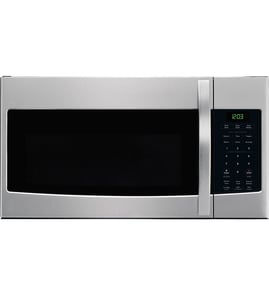
For your GE JNM3163DJ3BB microwave/hood combo, the wattage is usually listed on the model and serial label (often visible when you open the door, or on the unit’s frame). If you cannot find it, we use a simple “time-to-boil” test to estimate cooking power.
- Open the door and look around the door frame for the model and serial label; wattage is often printed there.
- Check the back or side of the microwave cabinet for a rating label.
- Look inside the upper cabinet above the microwave if the label is not visible from the front.
- If labels are worn or missing, use the estimate test below.
- Measure 1 cup (8 fl oz) of room-temperature water in a microwave-safe glass measuring cup.
- Microwave on High and time how long it takes to reach a full rolling boil.
- Use the table below to estimate the microwave’s cooking wattage.
| Time to boil 1 cup water | Typical cooking wattage estimate |
|---|---|
| 1:45 to 2:00 | ~1200W |
| 2:00 to 2:30 | ~1000W |
| 2:30 to 3:00 | ~800W |
| 3:00 to 4:00 | ~600 to 700W |
Knowing wattage helps us set realistic cook times and troubleshoot performance. For example, if food is consistently undercooked even after adjusting time, we check for heating-system issues (high-voltage components) rather than assuming the recipe is wrong.
If your JNM3163DJ3BB runs but does not heat well, common repair paths include checking the high-voltage circuit and safety devices.
- Start with basic symptoms: runs, light on, fan on, but food stays cold.
- Check for a blown fuse after a power surge or door-slam event.
- If the unit is completely dead, the fuse or interlock system is a common cause.
- For heating failures, high-voltage parts can be involved and require careful, safe diagnosis.
Helpful resources and parts we commonly see used in these repairs:
Last updated: February 2026
How can I tell what size my microwave is?
For your GE JNM3163DJ3BB microwave/hood combo, “size” usually means the exterior cutout fit (width, height, depth) plus the interior cooking capacity (cubic feet). We recommend measuring the installed space and the microwave’s outside dimensions so you can match an over-the-range replacement correctly.
Use a tape measure and record in inches.
- Width: measure the microwave cabinet from left edge to right edge (front face).
- Height: measure from the bottom of the microwave to the top of the cabinet.
- Depth: measure from the back wall to the front of the door (include the handle if it sticks out).
- Mounting and venting clearance: note any tight cabinet trim, backsplash, or duct cover space.
- Cooktop clearance: measure from the cooktop surface to the bottom of the microwave.
Most over-the-range microwave/hood combos are built to fit standard cabinet widths.
| Measurement | What it affects | Typical range |
|---|---|---|
| Width | Fits between upper cabinets | ~29 7/8 in to 30 in |
| Height | Cabinet fit and cooktop clearance | ~16 in to 18 in |
| Depth | Door swing and reach over cooktop | ~15 in to 17 in |
| Capacity | How large a dish fits inside | ~1.6 to 2.0 cu ft |
If you are replacing an existing unit, the most reliable approach is to match the installation footprint.
- Compare your measurements to the replacement’s listed dimensions.
- Check whether your setup is recirculating (charcoal filter) or vented (ducted); that can affect fit and airflow.
- If your microwave is recirculating, plan to replace the charcoal filter regularly; see filter WB02X33061.
- If the vent flap is sticking or noisy, inspect the damper; see microwave vent damper WB06X10686.
A microwave/hood combo that is even 1 inch off in width, depth, or mounting alignment can cause cabinet interference, poor venting performance, or a difficult install. Measuring first helps you avoid returns and ensures the door clears surrounding cabinets.
Last updated: February 2026
Is the JNM3163DJ3BB easy to use?
Yes. The GE JNM3163DJ3BB microwave/hood combo is designed for straightforward daily use with simple time-entry cooking, common one-touch shortcuts, and basic vent and cooktop light controls. Most ease-of-use complaints on over-the-range microwaves come from visibility and setup, not complicated operation.
Most GE over-the-range microwaves like the JNM3163DJ3BB are easiest to live with when these basics work smoothly:
- Clear, responsive keypad for time cook and power level
- Quick-add time (commonly 30-second increments)
- Simple defrost and reheat options
- Vent fan speeds that are easy to toggle while cooking
- Cooktop light that is bright enough for your range
If the microwave seems confusing or finicky, we focus on the few issues that most often create “not user-friendly” experiences:
- Door feel or closing effort: A worn latch area can make the door feel misaligned; the latch board WB10X25380 is a common related part.
- No response when you press Start: Door safety switches can prevent operation; check the microwave door interlock switch WB24X25397 and microwave primary interlock switch WB24X10047.
- Display works but it will not run: A blown microwave fuse WB27X25389 can stop operation after a surge or door-slam event.
- Cooktop light is dim or out: Replace the halogen lamp WB02X35488 so the hood light is usable.
| Symptom | Most common cause | Part often involved |
|---|---|---|
| Nothing happens when you try to start | Door interlock not made | Interlock switch, latch board |
| Dead unit (no display) | Open fuse or power issue | Fuse |
| Hard-to-close door | Latch alignment or wear | Latch board |
| Light not working | Burned-out bulb | Halogen lamp |
When the door interlocks, fuse, and lighting are in good shape, the JNM3163DJ3BB feels “easy” because it behaves predictably: the door closes smoothly, the keypad responds consistently, and the vent and light controls do what you expect.
For safe microwave use habits that also prevent nuisance problems (like arcing or repeated fuse blows), follow the guidance in never do these things with a microwave.
Last updated: February 2026
What's the average lifespan of a GE microwave?
Most GE microwaves, including over-the-range microwave/hood combos like model JNM3163DJ3BB, typically last 7 to 10 years with normal household use. Heavy daily cooking, poor airflow, and skipped cleaning shorten life; basic care and prompt part replacement help you reach the full lifespan.
A microwave’s life is mostly driven by heat, grease, and door safety wear.
- Light use (reheat/defrost): often closer to 10 years
- Heavy use (multiple cook cycles daily): often closer to 7 years
- Poor venting or heavy grease buildup: shortens life noticeably
- Door slamming or misalignment: accelerates interlock switch wear
- Running empty or arcing events: can damage internal components quickly
When a microwave stops heating, won’t start, or goes dead, these parts are frequent suspects on this GE platform:
- Door safety switches such as the microwave primary interlock switch WB24X10047 and microwave door interlock switch WB24X25397
- A blown line fuse such as the microwave fuse WB27X25389
- High-voltage components (advanced repair) such as the hi capacitor WB27X26368
- Venting-related upkeep items like the filter WB02X33061 (for recirculating setups)
| What you’re seeing | Most common direction | Why |
|---|---|---|
| Completely dead, no display | Diagnose fuse and door switches first | Often a lower-cost electrical/safety failure |
| Runs but does not heat | Diagnose heating circuit | Repairs can be more involved |
| Door won’t latch or unit won’t start | Check latch and interlocks | Safety circuit prevents operation |
| Loud buzzing, burning smell, repeated failures | Stop using and diagnose | Prevents further damage |
Microwave/hood combos live above the range, so grease and heat stress are higher than countertop units. Keeping the vent path clean and the door closing smoothly reduces strain on safety switches, the fuse, and internal wiring.
For heating problems, we use the troubleshooting steps in why is my microwave not heating to narrow down whether the issue is a door-safety problem, a power problem, or a high-voltage heating problem.
Last updated: February 2026