Owner’s manual
 Error Codes



How do I read my water heater model number?
On the Kenmore gas water heater model 153339362, the model number is printed on the rating plate (model rating plate) on the front of the tank. Read the model number and serial number exactly as shown; those are the key identifiers for parts and service.
Look for a label or metal plate on the front of the water heater. In the manual, this is identified as the rating plate.
- Check the front of the tank near the burner access doors
- Look for a section labeled Model No. and Serial No.
- Write the characters exactly (numbers, dots, and letters if present)
- Take a clear photo so you can zoom in later
- Keep the information with your home records
When ordering parts or getting service, we use the model and serial information first.
| On the rating plate | Use it for | Notes |
|---|---|---|
| Model number | Matching parts diagrams and part fit | Most important identifier |
| Serial number | Production details and service reference | Helps confirm exact build |
| Gas type (natural or propane) | Correct burner and pilot components | Must match your installation |
| BTU and other specs | Setup and reference | Usually not needed for basic part lookup |
The manual recommends providing key details when ordering repair parts.
- Model number and serial number from the rating plate
- Gas type: natural gas or propane (LP)
- Part description (example: pilot assembly, drain valve)
- If you are troubleshooting ignition, confirm whether you have a piezo igniter
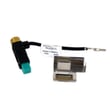
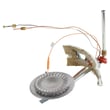
If you are replacing ignition or pilot components, common examples for this model include the water heater pilot assembly 100109290 and the water heater igniter 100109221.
Kenmore water heaters can look similar across multiple model series. Using the exact rating-plate model number (153339362) prevents ordering a burner, pilot, or valve that does not match your gas type or mounting style.
For diagrams and label location details, use the 153339362 owner's manual.
Last updated: January 2026
What is the life expectancy of a Kenmore water heater?
Most Kenmore tank-style gas water heaters, including model 153339362, typically last 8 to 12 years with normal residential use. Regular maintenance (especially flushing sediment and checking corrosion protection) helps you reach the upper end of that range; see the owner's manual for the recommended schedule.
A water heater’s service life depends more on water conditions and maintenance than brand name alone.
- Hard water and heavy hot-water use shorten lifespan
- Sediment buildup reduces efficiency and overheats the tank bottom
- Corrosion protection (anode rod condition) is a major factor
- Poor combustion air or improper venting can accelerate failure
- Small leaks or recurring pilot issues often signal end-of-life wear
These are the most practical steps for a Kenmore gas water heater:
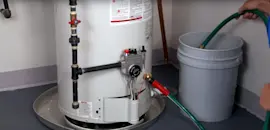
- Flush a few gallons from the tank periodically to reduce sediment
- Inspect for moisture at fittings, the drain valve, and around the burner door
- Keep the area around the heater free of chemical vapors and flammables
- Make sure combustion and ventilation air openings are not blocked
- Check the anode rod condition and replace when significantly depleted
| Maintenance item | Why it matters | Common interval |
|---|---|---|
| Tank flushing | Reduces sediment and overheating | 6 to 12 months |
| Anode rod inspection | Slows tank corrosion | 2 to 5 years |
| Visual leak check | Catches failures early | Monthly |
If the tank is sound, replacing wear items can keep performance steady.
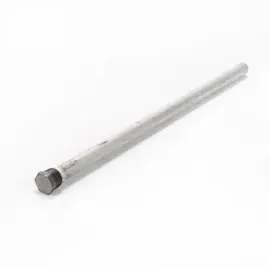
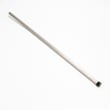
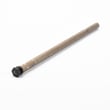
- Water heater anode rod 100108660 (corrosion protection)
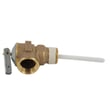
- Drain valve (helps with flushing and draining)
- Pilot and burner components (restore reliable ignition and heating)
Once a tank begins leaking, replacement is the practical fix. Knowing the typical 8 to 12 year lifespan helps you decide whether to repair a pilot, burner, or valve issue, or plan for a full replacement.
Last updated: January 2026
How old is my water heater by the serial number?
You can estimate the age of your Kenmore gas water heater model 153339362 by finding the serial number on the rating plate and decoding it using the manufacturer’s date format. The exact format varies by manufacturer, so we use the model’s documentation and common serial patterns to narrow it down; see the 153339362 owner's manual for rating plate location details.
Look on the model rating plate on the front of the tank (this is where the model number is also listed).
- Check the front of the water heater for the rating plate label
- Write down the full serial number exactly as shown (letters and numbers)
- Note the fuel type listed (natural gas or propane), since it helps when ordering parts
- Keep the serial number with your home records for service and warranty reference
Kenmore water heaters are often built by a major water-heater manufacturer, and the serial number format depends on that maker. These are the most common patterns you’ll see:
| Serial number pattern (example) | What it usually means | Example “manufactured on” |
|---|---|---|
| First 2 digits = year, next 2 = week (1220) | YYWW (year, week) | Week 20 of 2012 |
| First 2 digits = month, next 2 = year (0915) | MMYY (month, year) | September 2015 |
| Letters plus numbers | Maker-specific code | Use the maker’s chart to decode |
- Look for a manufacturer name on the rating plate (AO Smith, Rheem, Bradford White, State, etc.)
- If the serial starts with 4 digits, try both YYWW and MMYY interpretations
- If the serial includes letters, treat it as a maker-specific code and match the letter positions
- If you’re ordering repair parts, have the model and serial ready; the manual notes both are needed
Knowing the manufacture date helps you plan maintenance (like tank flushing and anode rod checks), compare repair cost versus replacement, and order the correct parts for your exact build.
Last updated: January 2026