Owner’s manual
 View engine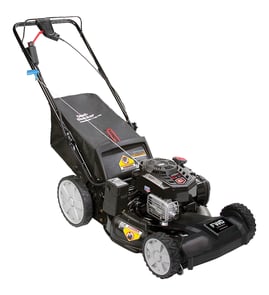


How to find Craftsman model number?
On the Craftsman walk-behind mower model 9174790B, the model and serial numbers are printed on a decal on the rear of the lawn mower housing. Once you have the model number, match it to the parts list and diagrams in the 9174790B owner's manual to order the correct replacement parts.
Where to look on model 9174790B
Check these common spots on the mower:
- Rear of the mower deck (housing) near the back edge
- Rear skirt area (behind the engine, above the discharge opening)
- Near the height-adjuster brackets on the back of the deck
- On a decal that includes both model and serial fields
What to write down (and why)
Record the information exactly as shown on the decal.
| Item on decal | Example format | Why it matters |
|---|---|---|
| Model number | 9174790B | Ensures the parts diagram matches your mower |
| Serial number | Varies | Helps confirm the correct production run |
| Date of purchase | Your date | Useful for maintenance records and warranty paperwork |
Tips to make the decal readable
If the label is dirty or faded, these steps usually help:
- Brush off dry grass and debris first
- Wipe the area with a damp rag and mild soap
- Use a flashlight at a low angle to highlight embossed printing
- Take a close-up photo and zoom in to read small characters
Why it matters
Craftsman walk-behind mowers can look similar across multiple model numbers, but parts like the blade, blade adapter, and control cable can differ. Using the exact model number helps you avoid ordering the wrong part and saves time during repair.
Last updated: February 2026
Is it cheaper to repair or replace a lawnmower?
If your Craftsman 9174790B needs a repair that costs more than about half the price of a comparable new walk-behind mower, replacement is typically the better value. For smaller issues (blade wear, cable problems, damaged guards), repairing is usually cheaper and restores safe operation.
A quick way to decide
- Add up parts plus labor (or your time if DIY).
- Compare that total to the cost of a similar new mower.
- If the repair is over 50% of replacement cost, replace.
- If the repair is under 50%, repair.
- If the mower has repeated engine starting issues or major drive problems, replacement usually makes more sense.
Repairs that are usually worth it on the 9174790B
These are common wear items that are straightforward and often cost-effective:
- Replace a worn or bent blade (see lawn mower blade 532406712).
- Replace a damaged blade adapter (see lawn mower blade adapter 532418373).
- Replace a torn or deteriorated grass catcher (see lawn mower grass bag 532410666).
- Replace a missing or damaged discharge guard (see discharge guard 589482402).
- Fix control issues by replacing the zone control cable (see lawn mower zone control cable 532183281).
Repairs that often push you toward replacement
These problems commonly drive costs up because they involve major components or extensive troubleshooting:
- Internal engine damage (low compression, severe knocking, seized engine)
- Persistent no-start after basic tune-up items are addressed
- Significant deck or housing damage that affects safety or cut quality
- Multiple major issues at once (for example: engine plus deck plus wheels)
Cost comparison table
| Situation | Typical best choice | Why |
|---|---|---|
| Blade is dull/bent, mower vibrates | Repair | Wear item; quick improvement in cut quality |
| Grass catcher is damaged | Repair | Restores safe bagging and reduces debris throw |
| One or two small parts broken (guard, cable, fasteners) | Repair | Low parts cost; limited downtime |
| Major engine failure or repeated major breakdowns | Replace | Repair cost and time usually exceed value |
Why it matters
A mower that is worn or damaged can cut poorly and become unsafe. Your owner's manual calls out routine maintenance (like checking blade condition and replacing worn components) to keep performance up and help the engine last longer.
Last updated: February 2026
What is the life expectancy of a gas-powered lawn mower?
Most gas-powered walk-behind lawn mowers typically last 8 to 10 years with normal residential use and basic maintenance. For your Craftsman 9174790B, consistent oil changes, clean fuel practices, and regular deck cleaning are the biggest factors that extend engine and cutting performance; see the owner's manual for the maintenance schedule.
What most affects mower lifespan
- Oil maintenance: change engine oil about every 25 hours of operation or at least once a year.
- Fuel freshness: use fuel within 30 days; for storage longer than 30 days, run the engine until the tank, fuel lines, and carburetor are empty.
- Cooling and cleanliness: keep the engine and mower housing free of grass and debris.
- Blade condition: a dull or bent blade increases load on the engine and reduces cut quality.
- Storage habits: dry storage and off-season prep reduce corrosion and fuel-system issues.
Quick maintenance schedule (typical)
| Item | When to do it | Why it helps |
|---|---|---|
| Check oil level | Before each use and about every 5 hours of continuous use | Prevents low-oil engine wear |
| Change engine oil | Every 25 hours or yearly | Extends engine life |
| Clean underside of deck | After each use | Prevents buildup and rust |
| Keep fuel fresh | Use within 30 days | Reduces carburetor problems |
When it is time to repair vs replace
If the mower still starts reliably, holds a steady idle, and cuts evenly, repairs usually make sense. If you are seeing repeated starting issues, heavy smoking, or chronic power loss, the engine is typically nearing end-of-life.
Common wear items we replace to restore performance include:
- Lawn mower blade 532406712
- Husqvarna lawn mower blade adapter 532418373
- Lawn mower zone control cable 532183281
Why it matters
A mower that is maintained to spec runs cooler, burns cleaner, and puts less stress on the crankshaft, blade adapter, and control system. That directly translates into more seasons of reliable mowing and fewer mid-season breakdowns.
Last updated: February 2026
What kind of gas do you put in a Craftsman push mower?
For a Craftsman 9174790B gas walk-behind mower, we use fresh, clean unleaded gasoline with up to 10% ethanol (E10). Avoid fuels over 10% ethanol (such as E15 or E85) because they can cause running problems and can void the warranty per the mower’s manual.
What to use (and what to avoid)
- Use fresh unleaded gasoline (regular pump gas is fine).
- Use ethanol blends up to E10.
- Avoid E15 and E85 (ethanol content over 10%).
- Do not use old or stale fuel; it can cause hard starting and rough running.
- Keep fuel clean; rust or dirt in the gas can lead to performance issues.
Quick fuel guide
| Fuel at the pump | Ethanol content | Use in Craftsman 9174790B? |
|---|---|---|
| Regular unleaded (often E0 to E10) | 0% to 10% | Yes |
| E15 | 15% | No |
| E85 | 51% to 85% | No |
Tips that prevent fuel-related no-start problems
If your mower won’t start or starts and dies, fuel quality is one of the first things we check.
- Drain and refill with fresh gasoline if the fuel is old.
- Replace a rusty gas can; rust and dirt can contaminate fuel.
- If you suspect bad fuel, empty the tank and refill with fresh gas (the manual lists stale fuel and water in fuel as common no-start causes).
- Store fuel in an approved container with a tight cap.
Why it matters
Small engines are sensitive to ethanol and contamination. Using the right fuel helps protect the carburetor and fuel system, improves starting, and reduces issues like surging, stalling, and hard starts.
For the exact wording and operating notes for your mower, check the owner's manual.
Last updated: February 2026