Owner’s manual
 Error Codes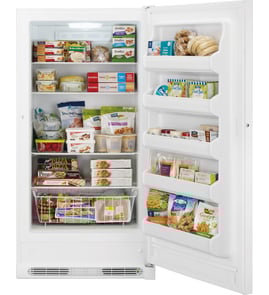


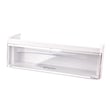
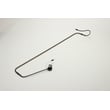
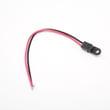
What size is a Kenmore freezer by model number 25328093806?
The Kenmore Elite upright freezer model 25328093806 is an upright (freestanding) freezer in the 253.2809 model series; its exact exterior dimensions and cubic-foot capacity vary by sub-model and are listed in the 25328093806 owner's manual. For planning space, most upright freezers in this class are roughly 28 to 33 inches wide and 60 to 72 inches tall.
How to find the exact size for your 25328093806
Use the model-specific specifications section in the 25328093806 owner's manual. If you are measuring for a move, cabinetry, or a tight doorway, measure the unit directly as well.
- Measure width at the widest point (often the hinge side)
- Measure height to the top of the hinge cover (if present)
- Measure depth with the door closed, then again including the handle
- Confirm you have clearance for door swing and airflow
- If the freezer is in a garage or utility room, allow extra space for ventilation
Quick planning guide (typical upright freezer ranges)
These ranges help with rough fit checks when you do not have the spec page in front of you.
| Measurement | Typical range for upright freezers | What to measure on your unit |
|---|---|---|
| Width | 28 to 33 in. | Cabinet edge to cabinet edge |
| Height | 60 to 72 in. | Floor to top of hinge area |
| Depth | 28 to 34 in. | Back to front of door (and handle) |
Why it matters
Getting the size right prevents delivery problems and helps the freezer cool properly. Tight installs can restrict airflow, which can lead to longer run times and temperature swings. The manual also covers proper cool-down time (allow about 4 hours before loading unfrozen food).
Last updated: January 2026
Why is my Kenmore Elite freezer not freezing?
If your Kenmore Elite upright freezer model 25328093806 is running but not freezing, the most common causes are incorrect temperature control settings, poor airflow from overloading, a door seal leak, or a cooling-system/defrost problem. Start by confirming the control is not set to OFF and allow several hours for temperatures to stabilize per the 25328093806 owner's manual.
Quick checks we recommend first
- Make sure the temperature control is not in the OFF position.
- Confirm the power cord plug is pushed tightly into the outlet.
- Keep the door closed as much as possible; frequent openings quickly warm the cabinet.
- Allow a full 4 hours for the freezer to cool down after startup before judging performance.
- Avoid overloading with unfrozen food; freeze only about 3 lb of fresh food per cubic foot at one time.
What to check next (most likely causes)
1) Temperature control and cool-down time
The manual notes the freezer needs time to stabilize after changes. If you recently adjusted the control, wait several hours before changing it again.
2) Door not sealing (warm air leak)
A leaking gasket can cause constant running with weak freezing.
| What you notice | What it usually points to | What to do |
|---|---|---|
| Frost near the door, cabinet sweating | Door not sealing | Clean gasket and mating surface; check for gaps |
| Door pops open or won’t stay shut | Leveling or overloaded door bins | Re-level, reduce door load |
| Paper slips out easily when closed | Worn gasket | Replace the gasket |
If the gasket is torn, hardened, or warped, replacing the freezer door gasket 5304507205 is a common fix.
3) Frost buildup from a defrost failure
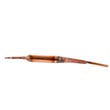
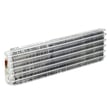
If the evaporator area is packed with frost, airflow drops and temperatures rise. A failed defrost heater is a frequent culprit; for this model, the defrost heat 5304496284 is a key part in that circuit.
4) Weak airflow inside the freezer
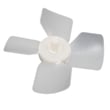
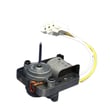
If you hear the freezer running but feel little or no air movement, the evaporator fan system is suspect. For this model, common related parts include the freezer evaporator fan motor 297309000 and the blade 5308000010.
Why it matters
A freezer that is not freezing can quickly put food at risk. The manual notes frozen foods can stay frozen for at least 24 hours during a failure if the door stays closed, so minimizing door openings buys you time while you troubleshoot.
Last updated: January 2026
What is the most common problem on a freezer?
The most common freezer problem is poor cooling caused by restricted airflow or warm air leaking in through the door. On Kenmore model 25328093806, frequent door openings, a door that is slightly open, or a worn gasket can make the freezer run too long and build frost; the troubleshooting chart in the 25328093806 owner's manual covers these symptoms.
Most common causes (and what you can check first)
- Door not sealing: door left ajar, door not seating properly, or gasket dirty, cracked, or poorly fitted.
- Warm air getting in: doors opened too frequently or kept open too long.
- Unit not level: cabinet can twist slightly and misalign the door.
- Recent loading or power interruption: warm food or a recent unplug can make run time seem excessive.
- Dirty condenser area: reduced heat release can lead to longer run times (common on many upright freezers).
Quick symptom-to-likely-cause guide
| What you notice | Most likely cause | What to do next |
|---|---|---|
| Freezer runs “too much” | Door openings, warm food load, door slightly open | Reduce door time; confirm door closes fully |
| Frost building up inside | Door not sealing or opened often | Inspect gasket and door alignment |
| Moisture/frost outside cabinet | Warm, moist air meeting cold air at the door | Improve seal; clean gasket |
| Rattling/vibration | Freezer not level or touching wall | Level unit; move slightly away from wall |
Steps we recommend (in order)
- Confirm the door closes and seals: close the door on a thin sheet of paper; it should drag when you pull it out.
- Clean the gasket: warm water and mild soap; dry fully so it grips.
- Level the freezer: adjust feet so it does not rock; this helps the door seat correctly.
- Give temperatures time to stabilize: after changes, allow several hours for the control setting to take effect.
- If the gasket is torn or hardened: replace the freezer door gasket 5304507205.
Why it matters
Air leaks and airflow restrictions force the compressor to run longer, which increases frost buildup, raises energy use, and can lead to temperature swings that affect food quality.
Last updated: January 2026